

Every crypto cycle breeds its outliers, the ones that refuse to play by the old rules. In 2025, that role belongs to BitMine Immersion Technologies, ticker BMNR, a company that decided plain old Bitcoin mining wasn’t bold enough. Instead of chasing hashpower like everyone else, BitMine is building what it calls Ethereum’s largest treasury company. A hybrid model that mines Bitcoin, manages data centers cooled in liquid, and stacks ETH on its balance sheet like a hedge fund with mining rigs.
BitMine’s bet is simple. While most miners dump their Bitcoin to stay solvent, it’s trying to turn its mined profits into a growing vault of digital assets, particularly ETH. That’s the “bold strategy” institutional investors can’t ignore, a miner that behaves like a crypto asset manager, chasing alpha across two ecosystems.
Quick Facts About Bitmine
| Category | Details (as of 2025) |
|---|---|
| Company Name | BitMine Immersion Technologies Inc. |
| Ticker Symbol | BMNR (NASDAQ) |
| Headquarters | Nevada, United States |
| Industry | Blockchain technology & digital asset infrastructure |
| Core Focus | Bitcoin mining, immersion cooling, and Ethereum treasury accumulation |
| Primary Assets | Immersion-cooled data centers in the U.S. (notably Nevada and other expansion zones) |
| Mining Model | Combination of self-mining and hosted operations |
| Flagship Goal | Build one of the largest Ethereum treasuries among publicly traded crypto firms |
| Leadership | CEO-led team with backgrounds in mining operations, data infrastructure, and digital asset management |
| Stock Type | Small-cap blockchain stock with limited liquidity and high volatility |
| Recent Market Context | BMNR trades in a sector hit by the 2024 Bitcoin halving, with a new focus on efficiency and treasury diversification |
| Unique Selling Point | Integration of immersion cooling for thermal efficiency and ETH accumulation as a treasury reserve |
| Key Risks | Cash burn, dilution, immersion system maintenance, and Ethereum price exposure |
Key Takeaways
BitMine Immersion Technologies (BMNR) blends Bitcoin mining, immersion cooling, and Ethereum treasury accumulation into a single business model.
The company positions itself as “Ethereum’s largest treasury company”, converting mining profits into long-term ETH holdings.
BitMine operates immersion-cooled data centers in Nevada and beyond, improving energy efficiency and machine longevity.
BMNR’s small-cap status and limited liquidity make the stock highly volatile, a high-risk, high-reward play in the crypto infrastructure space.
The firm’s success depends on managing cash burn, dilution risk, and ETH market exposure while scaling efficiently.
BitMine’s hybrid approach, combining hardware operations with asset accumulation, appeals to institutional investors seeking diversified crypto exposure.
BitMine Immersion Technologies (BMNR): Summary
This article breaks down what BitMine Immersion Technologies (BMNR) really is and why it’s turning heads across the crypto markets. You’ll learn how this Nevada-based blockchain company blends Bitcoin mining, immersion cooling, and Ethereum treasury accumulation into a single, high-risk, high-conviction strategy.
We’ll explore BitMine’s business model, history, and leadership, along with how its mining operations and data centers differ from traditional setups. You’ll also see how immersion technology works, what it costs, and why it’s become central to the company’s energy efficiency push.
Later, we’ll examine BitMine’s financials, including revenue trends, stock performance, and its growing reputation as a potential Ethereum treasury pioneer. Expect a realistic look at both sides, the bold vision driving its expansion, and the risks that could sink it, from cash burn to dilution.
By the end, you’ll have a clear picture of how BitMine operates, where it fits in the broader crypto industry, and whether its BMNR stock has genuine upside or just another speculative story wrapped in blockchain heat and ambition.
What is Bitmine?
BitMine Immersion Technologies is a Nevada-based blockchain company building infrastructure for the next era of crypto mining and asset management. BitMine operates immersion-cooled data centers, facilities where mining rigs are submerged in a special dielectric fluid that keeps them cool, quiet, and efficient.
The company’s purpose goes beyond traditional Bitcoin mining. While it still earns revenue from mining operations, BitMine is positioning itself as an Ethereum-focused treasury company, using mined Bitcoin profits to accumulate ETH and other digital assets for long-term holding. It’s a strategy that blends hardware, finance, and speculation into one business model.
For institutional and private investors, BitMine represents a rare combination: a miner that’s also an asset manager. Instead of selling mined coins to cover electricity costs, it’s trying to build an on-chain treasury, a store of crypto wealth designed to grow in value as both Bitcoin and Ethereum mature.
This dual focus makes BitMine stand out in a crowded crypto industry. Most miners chase efficiency; BitMine chases ownership. Most asset managers buy crypto; BitMine earns it directly from the network. It’s an unorthodox approach, part infrastructure play, part treasury experiment, but it captures where mining and finance increasingly overlap.
Still, it’s worth remembering: ambition doesn’t guarantee success. BitMine’s immersion systems require heavy upfront spending, its BMNR stock remains volatile, and its success depends on how effectively it can balance energy efficiency, growth, and cash management.
BitMine Immersion Technologies History and Leadership
BitMine Immersion Technologies (BMNR) traces its roots back to a transition-phase miner that recognised the post-halving world demanded more than raw hashrate. The company shifted from being simply another Bitcoin mining operations firm to a blockchain company marrying infrastructure with treasury ambitions.
Key leadership profiles:
Jonathan Bates – Chairman & CEO. Appointed CEO in May 2022.
Erik S. Nelson – President & Director. Broad finance background.
Raymond Mow – CFO & Director. Over 28 years in financial markets.
Thomas J. Lee – Appointed Chairman of the Board on June 30, 2025. Known for his role at FundStrat Global Advisors.
Under this team, BitMine has articulated a strategy of scaling immersion cooling infrastructure, raising institutional capital, and redefining itself as an asset operator rather than just a hardware fleet. The appointments reflect the company’s drive to attract both technical and institutional credibility.
Still, the leadership face high hurdles. Mining margins are thin, liquidity is tight, and the transition to an “Ethereum-treasury company” raises questions about execution risk and governance breadth. Their skill sets lean toward capital markets and finance; whether they can scale a large physical infrastructure business remains a core open question.
How Bitmine Works?
BitMine Immersion Technologies operates at the intersection of hardware and high finance. The company designs immersion-cooled data centers that mine Bitcoin and convert part of the proceeds into Ethereum holdings, a hybrid model blending traditional mining infrastructure with a digital-asset treasury.
Its pitch is simple: mine smarter, not louder. By swapping fans for fluid, BitMine squeezes more computing power out of every kilowatt while extending machine lifespan and reducing thermal failures. That efficiency keeps its operations lean in an industry where energy is the real enemy.
Bitmine Immersion Technologies Core Business
BitMine’s business rests on three main pillars: its Bitcoin mining infrastructure, hosting services, and native mining operations. Together, they form a vertically integrated model that lets the company generate steady revenue while building long-term crypto exposure.
Bitcoin Mining Infrastructure
At the foundation are BitMine’s immersion-cooled data centers, located primarily in Nevada and other energy-friendly regions of the U.S. Each site houses racks of ASIC miners submerged in dielectric fluid, a setup that reduces thermal stress and allows tighter density without overheating.
This infrastructure gives BitMine more control over efficiency metrics such as joules per terahash (J/TH) and overall uptime. Critical numbers in post-halving economics. The facilities are designed for energy efficiency and cost optimization, allowing BitMine to compete with larger miners despite its smaller footprint.
Hosting Services
Beyond self-mining, BitMine rents out excess capacity through hosting agreements with institutional and private investors. Clients deploy their own mining machines in BitMine’s facilities and pay fees for electricity, maintenance, and cooling.
Hosting adds a recurring revenue stream and diversifies income beyond the volatility of crypto markets. It also gives investors access to immersion cooling technology without building full-scale data centers themselves, an attractive option for funds and institutions looking to enter Bitcoin mining with reduced operational risk.
Native Mining Operation
BitMine’s native mining remains its backbone. The company operates its own fleet of ASICs, using its infrastructure to mine Bitcoin directly and convert part of those rewards into ETH holdings.
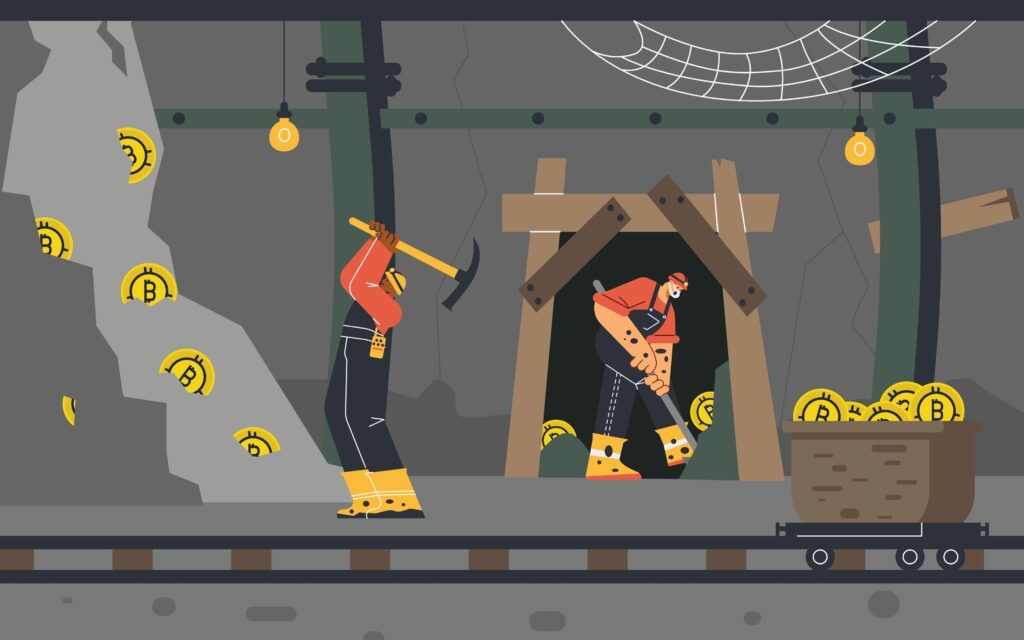
This approach supports its ambition to become Ethereum’s largest treasury company. A miner that doesn’t just earn block rewards but reallocates them into long-term crypto reserves. It’s a bold strategy that reflects the shifting mindset of miners: from short-term cash flow to digital-asset accumulation.
While the model could create a powerful balance sheet if prices rise, it exposes BitMine to double volatility, both from mining economics and Ethereum’s market performance. Managing that balance will define whether BMNR evolves into a true crypto asset institution or struggles under the weight of its own ambition.
Financials and Operating Metrics
BitMine Immersion Technologies (BMNR) operates like a small-cap blockchain company with big ambitions and thin margins. Its revenue comes from hosting services and native Bitcoin mining, with growth tied closely to power costs and network difficulty.
Immersion cooling gives BitMine a slight edge. By reducing thermal stress and downtime, it squeezes better efficiency out of each rig, critical in a post-halving economy where every watt counts. Still, operating expenses remain high due to electricity, maintenance, and infrastructure spending.
The company has funded much of its expansion through equity raises, leaving investors wary of dilution risk. BMNR’s balance sheet also includes Ethereum and digital-asset holdings, a unique twist that adds upside potential but introduces exposure to market swings.
In short, BitMine’s financial story is one of controlled risk: lean margins, rising efficiency, and a treasury bet that could pay off, or punish shareholders, depending on how the crypto markets move.
Bitmine Tokenomics and Payment Model
BitMine doesn’t issue its own cryptocurrency, but its operations mimic tokenomics in practice. The company’s model is built around three value flows: mining rewards, hosting fees, and digital asset accumulation. Each piece feeds the next.
Bitcoin mined through BitMine’s immersion operations provides the core revenue. Instead of liquidating all holdings to cover expenses, a portion is strategically converted into Ethereum, creating a self-reinforcing treasury that grows with the market. It’s not token inflation, it’s treasury rotation. This structure gives BMNR exposure to both Bitcoin mining economics and Ethereum price appreciation, a rare combination among public miners.
For investors, this approach resembles a yield model. As Bitcoin rewards decline post-halving, BitMine’s ETH holdings act as a counterbalance, potentially offsetting compression in mining margins. It’s a hybrid cash-flow system, half mining, half treasury management; one that depends entirely on execution and market timing.
Bitmine Earnings Structure
BitMine earns revenue from two main sources: self-mining and hosting services. Self-mining provides direct exposure to Bitcoin’s block rewards and transaction fees, while hosting offers a predictable, service-based income from third-party clients.
In strong markets, mining returns dominate; during downturns, hosting revenue steadies the books. This split makes BitMine less vulnerable to short-term difficulty spikes than miners relying solely on self-mining. The company’s future earnings growth will hinge on scaling its hosting business while keeping energy efficiency high across immersion-cooled sites.
From Bitcoin Mining to Ethereum Treasury Pioneer
BitMine Immersion Technologies started as a Bitcoin mining outfit, but its long-term play is far more ambitious. The company wants to evolve from a mining firm into what it calls an Ethereum treasury pioneer: a publicly traded entity that uses mining proceeds to accumulate a significant share of the ETH supply.
The idea flips the standard mining model. Instead of selling coins for operating capital, BitMine holds them, then diversifies that reserve into Ethereum and other digital assets. The end goal: create a balance sheet that grows alongside the broader crypto markets, not one constantly drained by electricity bills. It’s a bold move in an industry built on short-term survival.
Ethereum and Digital-Asset Holdings
BitMine’s digital-asset strategy revolves around Ethereum. Management has repeatedly described ETH as the “smart money layer” of the blockchain economy, with deeper institutional traction than any other crypto asset after Bitcoin.
Public filings and company updates show that BitMine allocates part of its mining profits into ETH and related crypto assets, treating them as long-term treasury positions rather than speculative trades. These holdings fluctuate with the market, meaning their value and, by extension, BitMine’s net asset value rise or fall with Ethereum’s price action.
For a blockchain technology company, it’s an unconventional but potentially lucrative play: using mining revenue to build a digital reserve that could rival smaller funds or ETFs in scale.
How BitMine Executes Its ETH Accumulation?
BitMine’s ETH accumulation process mirrors an automated treasury management system. The company mines Bitcoin, converts a set portion of profits into Ethereum, and stores those tokens in controlled custody accounts.
This system gives BitMine exposure to both sides of the crypto economy: proof-of-work production and proof-of-stake ownership. While Bitcoin mining generates cash flow, Ethereum holdings act as a growing store of value, particularly as more ETH becomes locked in staking contracts or institutional portfolios.

It’s an elegant strategy on paper: let one asset fuel the accumulation of another, diversifying exposure without relying on external financing.
Why BitMine is Targeting 5% of the Ethereum Network?
BitMine’s leadership has stated an audacious goal to control up to 5% of the Ethereum network’s circulating supply through long-term accumulation and potential staking. It’s a statement designed to grab attention, signaling confidence in ETH’s role as the backbone of future institutional adoption. As said by Thomas “Tom” Lee of Fundstrat, Chairman of BitMine:
In just a week, BitMine increased its ETH holdings by $1.7 billion to $6.6 billion (adding over 373,000 tokens from 1.15 million to 1.52 million tokens), as institutional investors have expressed interest and support for our pursuit of the ‘alchemy of 5%’ of ETH. As we continue to say, we are leading crypto treasury peers by both the velocity of raising crypto NAV per share and by the high trading liquidity of our stock.
While that target is more aspirational than immediate, it reflects a shift in thinking. Traditional miners measure success in terahashes; BitMine measures it in on-chain ownership. The company is betting that institutions will value ETH reserves the same way treasuries value gold, scarce, programmable, and yield-bearing through staking.
Risks of the ETH Treasury Approach
BitMine’s Ethereum strategy carries serious risks. ETH’s market is volatile, regulatory treatment remains uncertain, and accumulating large positions ties up liquidity. Holding a volatile asset on the balance sheet amplifies both upside and downside moves, especially for a small-cap stock like BMNR.
There’s also execution risk. The company must maintain mining revenue, manage power costs, and navigate treasury conversion without eroding margins. If crypto markets turn or ETH underperforms, BitMine could find itself overexposed with limited cash flow flexibility.
In short, BitMine’s ETH play could define it or destroy it. The bet is binary: dominate a growing ecosystem or get crushed by volatility before it matures.
BitMine Immersion Technologies Stock Analysis (BMNR)
BitMine Immersion Technologies (BMNR) trades like a typical small-cap blockchain stock, volatile, thinly liquid, and highly sensitive to sentiment in the crypto markets. Investors see it as a speculative bet on two narratives at once: the survival of immersion-cooled Bitcoin mining and the rise of Ethereum as an institutional asset.
While its fundamentals remain modest, BitMine’s public listing gives it something most miners lack: market access. It can raise capital quickly, issue shares, and expand faster than private operators. That flexibility, however, cuts both ways.
Stock Performance & Market Metrics
Since its listing, BMNR stock has traded with high volatility, often mirroring the price swings of Bitcoin and Ethereum. Volume remains light, making the stock prone to sharp intraday moves. When crypto markets rally, BMNR tends to outperform; when they correct, it falls harder.
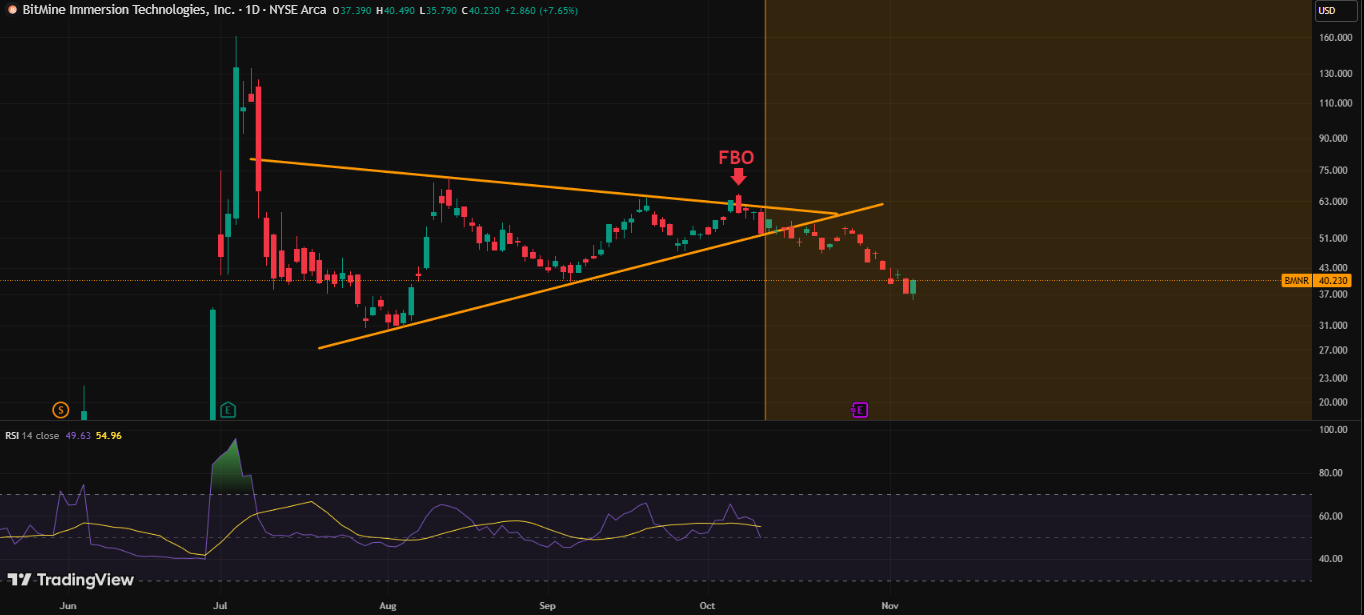
Market data from early 2025 places BitMine’s valuation well below larger miners like Riot Platforms (RIOT) and Marathon Digital (MARA), reflecting its smaller scale and limited hashrate capacity. Still, its exposure to Ethereum sets it apart from pure miners, a differentiator that could attract institutional interest if ETH continues gaining traction.
The company’s market capitalization remains modest, with BMNR trading closer to the microcap range. Analysts describe it as an “option on execution”, cheap exposure to a bold strategy, but with the caveat that liquidity and operational consistency are ongoing risks.
Capital Raising, Share Issuance & Dilution Risks
BitMine relies heavily on equity financing to fund its expansion. The company has completed multiple private placements and share issuances, using proceeds to grow its immersion data centers and support its ETH accumulation program.
While necessary for scaling, this model introduces dilution risk. Each new issuance reduces existing shareholder value, and without rapid revenue growth, that dilution compounds over time. BMNR’s management must balance its need for cash against its duty to protect shareholder equity, a difficult task in a market where miners burn capital faster than they earn it.
Institutional investors may tolerate dilution if it fuels growth, but retail shareholders often bear the cost. Future capital raises will be a key indicator of how well BitMine can sustain its growth strategy without overextending.
Valuation Considerations and Analyst Views
At current levels, BMNR stock trades more on narrative than on earnings. Traditional valuation metrics like price-to-sales or forward earnings offer limited insight for a company still building infrastructure and accumulating crypto assets. Analysts instead assess BitMine based on operational milestones, hashrate growth, uptime, and Ethereum holdings.
Most analyst commentary frames BMNR as a high-risk, high-upside equity. Bulls see a company bridging mining and asset management; bears see a miner with a treasury problem. Until BitMine demonstrates consistent profitability and sustainable growth, its valuation will remain speculative, driven more by market momentum than by fundamentals.
BMNR Competitive Advantages and Risks
BitMine Immersion Technologies operates in a brutal sector where even giants like Riot and Marathon fight for survival each cycle. Yet BitMine’s willingness to experiment gives it certain competitive advantages, even if they come with serious trade-offs.
Competitive Advantages
Here are some advantages that you should be aware of –
1. Immersion-Cooling Infrastructure
BitMine’s use of immersion cooling separates it from most small-cap miners still using air-cooled systems. This design reduces thermal stress, boosts machine performance, and allows higher density per megawatt. It also positions BitMine as an early adopter of what many expect to become the mining industry’s standard.
2. Hybrid Business Model
By blending hosting services with self-mining, BitMine gains both recurring income and upside exposure. Hosting provides predictable cash flow; mining adds torque to rising Bitcoin prices. This dual structure gives BMNR some insulation from the market’s violent swings.
3. Ethereum Treasury Strategy
No other public miner is openly pursuing a large ETH accumulation strategy. If Ethereum continues attracting institutional adoption, BitMine’s treasury could become a major differentiator, similar to how MicroStrategy used Bitcoin to transform its valuation profile.
4. Early Institutional Positioning
BitMine’s narrative of bridging mining, finance, and Ethereum could attract institutional investors and funds seeking diversified exposure to both digital assets and mining infrastructure. That positioning might prove valuable as crypto ETFs normalize institutional capital flows into the sector.
Key Risks
Now that you have read the advantages, you should also take note of the risks –
1. Liquidity and Market Volatility
As a microcap stock, BMNR’s low float makes it vulnerable to extreme volatility. Even small trades can trigger sharp price swings, which complicates institutional entry and retail confidence.
2. Dilution and Capital Dependence
BitMine’s reliance on equity financing exposes shareholders to dilution risk. Without substantial revenue growth or debt alternatives, this could limit upside for long-term investors.
3. Operational and Technical Challenges
Immersion cooling is efficient, but expensive. Maintenance, fluid degradation, and component reliability add complexity. Scaling that model without spiraling costs will be one of BitMine’s hardest tests.
4. Market Exposure to ETH and BTC
Holding Ethereum and Bitcoin makes BitMine’s valuation doubly sensitive to crypto prices. A drawdown in either asset could pressure both its balance sheet and investor confidence.
5. Regulatory Uncertainty
Energy consumption, digital-asset holdings, and potential classification of ETH as a security remain open legal questions in the U.S. Any new regulation could raise compliance costs or limit BitMine’s treasury operations.
In short, BitMine’s edge lies in its innovation, not its size. It’s a company betting that immersion cooling, energy efficiency, and ETH accumulation can redefine what a miner looks like. The question is whether that innovation can survive the brutal economics of mining long enough to matter.
Future Outlook & Strategic Priorities of Bitmine
BitMine’s path forward depends on execution more than vision. The company has already positioned itself as a hybrid between a mining operator and a digital asset institution, but scaling that identity into sustainable profitability is the real test.

Over the next few years, BitMine’s leadership is expected to focus on three key areas:
1. Expansion of Immersion Infrastructure
The company plans to continue growing its immersion-cooled data centers across Nevada and other low-cost energy regions. Each new site strengthens its hashrate capacity and hosting revenue, but expansion must stay disciplined. Overbuilding is a common trap among miners chasing scale faster than cash flow.
2. Deepening Its Ethereum Treasury Strategy
BitMine’s ambition to become Ethereum’s largest treasury company will define its identity in 2025 and beyond. The firm’s roadmap points toward a gradual increase in ETH accumulation, potentially followed by participation in staking programs once it reaches critical mass. If executed effectively, that move could transform BitMine from a miner into a yield-generating blockchain company.
3. Institutional Integration and Partnerships
Attracting institutional investors remains a top priority. BitMine aims to position itself as a bridge for traditional finance looking to enter the crypto infrastructure space. Strategic partnerships with energy providers, custodians, or even ETFs could give it the scale and credibility it currently lacks.
That said, the risks haven’t gone away. Rising energy costs, market volatility, and dilution pressures remain constant threats. To survive, BitMine will need to keep its operational efficiency high and its capital spending precise.
The next 18 months will determine whether BitMine matures into a lean, forward-looking blockchain technology company or fades into another overextended miner chasing momentum. Its ETH holdings give it leverage; its immersion systems give it efficiency. The only question left is whether both can deliver before the market turns again.
Conclusion
BitMine Immersion Technologies (BMNR) is one of the more unconventional players in the crypto mining industry; a company trying to rewrite what it means to be a miner in 2025. Instead of chasing hashrate like its peers, BitMine is turning its operations into a bridge between Bitcoin mining and Ethereum accumulation.
Its thesis is daring but simple: use immersion-cooled infrastructure to mine efficiently, convert profits into ETH, and build one of the largest Ethereum treasuries among public blockchain companies. It’s an experiment in how mining, finance, and institutional capital can merge inside a single balance sheet.
The upside is obvious. If crypto markets expand, BitMine could become a small-cap success story, riding both Bitcoin’s network growth and Ethereum’s institutional adoption. The downside is equally clear: dilution, execution risk, and market volatility can wipe out momentum just as quickly as it forms.
For now, BitMine sits in that rare spot between innovation and uncertainty, a blockchain company trying to survive the heat it helped create.


