

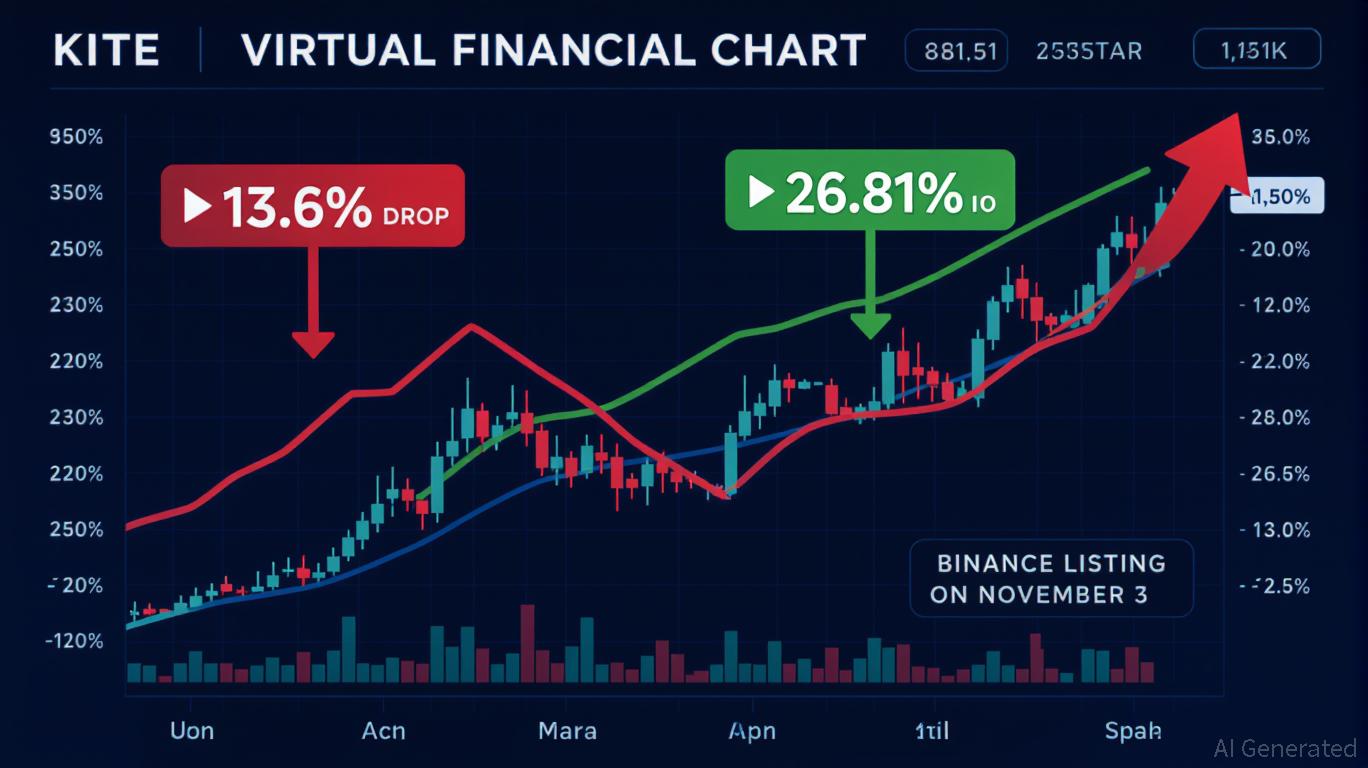
The debut of Kite (KITE) on Binance on November 3, 2025, represented a significant milestone for this AI-driven blockchain initiative. The token started trading at $0.11 but quickly dropped 13.6% to $0.095 within a few days, highlighting the typical volatility seen after new crypto listings, as reported by Lookonchain's KITE data. This rapid price adjustment, alongside a current market cap of $167 million and a fully diluted valuation (FDV) of $929 million, prompts a key question: Is KITE merely a speculative bubble, or does it represent a calculated investment in the emerging agentic AI sector?
Short-Term Volatility: Opportunity and Risk
Immediately after KITE's listing, the market displayed a classic "buy the rumor, sell the news" pattern. The token's integration with BingX's Xpool—a staking platform where users could earn KITE points later exchangeable for tokens—attracted early institutional attention, but BingX's Kite AI announcement emphasized the platform's expanding ecosystem for tokens before official listings. However, the price movement told a different tale. After surging 26.81% within 24 hours of being listed on Binance, KuCoin, and Coinbase, the token quickly retraced, revealing the instability of momentum driven by retail traders, according to
CoinMarketCap's KITE price analysis. Experts warn that leveraged products, such as perpetual futures with up to 50x leverage, can intensify these swift market swings, as highlighted in the same analysis.
This instability is further heightened by KITE's early development stage. Unlike more established digital assets, KITE's value is tied to its SPACE Framework—a blockchain built for AI agents—but its practical adoption is still untested. As one observer put it, "AI remains a hot topic, but whether KITE can deliver real-world applications will determine if it’s just another trend or a foundational asset," as referenced in the CoinMarketCap analysis.
Long-Term Institutional Adoption: The Road Ahead
Despite recent price swings, KITE is gaining momentum among institutional players. BingX's Xpool program, which lets both institutional and retail participants stake assets like USDT or BNB
to earn KITE points, serves as a strategic entry point for capital, as detailed in the BingX announcement. This system—where points are converted into tokens after the token generation event—helps mitigate liquidity risks and aligns incentives for those with a long-term outlook.
Wider industry trends also support KITE’s institutional prospects. The anticipated approval of U.S. spot crypto ETFs, following the resolution of the recent government shutdown, could pave the way for a surge of institutional investment in digital assets, as discussed in StockTwits' commentary. Although KITE is not yet included in these ETFs, the increased regulatory clarity and improved infrastructure accompanying their rollout could indirectly benefit tokens like KITE by further legitimizing crypto investments.
Strategic or Speculative? Assessing the Stakes
The discussion around KITE’s long-term value versus its speculative appeal centers on two main factors: its technological uniqueness and its ability to attract institutional support. The SPACE Framework’s emphasis on AI agents—a field expected to expand rapidly—positions KITE as a possible backbone for the next era of digital innovation, according to CoinMarketCap. At the same time, the token’s $929 million FDV points to considerable growth potential if adoption increases, but also highlights the gap between current market value and future promise.
For investors focused on crypto, whether to include KITE in their portfolios depends on their risk appetite. Traders may seek to profit from its volatility using leveraged products, while those with a strategic mindset may focus on its institutional partnerships and AI-driven narrative. As one analyst observed, "KITE offers both high risk and high reward. The challenge is to separate hype from genuine progress as the project develops," as mentioned in the CoinMarketCap analysis.
Conclusion: Navigating Uncertainty
Kite (KITE) encapsulates the dual nature of today’s crypto landscape: a highly volatile, speculative asset that could also become a key player in the AI economy. While its recent price swings and leveraged trading highlight immediate risks, its growing institutional adoption through BingX and alignment with AI trends provide a strong case for its long-term potential. Investors must weigh the prospects of quick profits against the uncertainties inherent in a new technology.


