

Welcome to the US Crypto News Morning Briefing—your essential rundown of the most important developments in crypto for the day ahead.
Grab a coffee because as JPMorgan reveals Wall Street’s shift from spot ETFs to complex Bitcoin-linked derivatives designed around the halving cycle. What you read here today may be a hint at a new approach to trading BTC, amid a deeper shift in how institutions plan to approach the 2026-2028 halving cycle.
Crypto News of the Day: JPMorgan’s “Halving-Synced” IBIT Note Promising 50% Returns—or Total Loss
JPMorgan has filed a new structured note linked to BlackRock’s IBIT Bitcoin ETF. It offers fixed double-digit returns if BTC reaches preset targets, but exposes investors to a complete principal loss if the ETF falls by more than 30%.
The proposed note, disclosed in a recent regulatory filing, is engineered around Bitcoin’s historic four-year halving cycle. The structure offers investors 16% fixed returns if IBIT reaches the bank’s price target by the end of 2026, and more than 50% returns if the target is hit by 2028.
However, the offer comes with a major caveat: if the ETF drops more than 30% at any point before maturity, investors could lose their entire principal.
“The spot ETF narrative is done, Wall Street’s institutions are starting to offer derivatives to everyone,” wrote analyst AB Kuai Dong.
Indeed, this model is similar to derivatives trading in the sense that returns don’t come from holding Bitcoin or the ETF itself. Rather, they come from a contract whose payout depends on the ETF’s performance.
With the client never owning IBIT or BTC, they ideally trade wins or losses based on Bitcoin price performance. In this regard, JPMorgan writes a contract saying:
If IBIT hits X by 2026 → you get 16%
If it hits X by 2028 → you get 50%+
If it drops 30% → you lose your principal
JPMorgan states clearly that the notes “do not guarantee any return of principal,” with losses matching the ETF’s decline once the 30% barrier is breached.
This trade-off, amplified upside with the risk of total loss, positions the note squarely in the high-yield/high-volatility category that institutional desks typically reserve for sophisticated clients.
Furthermore, it utilizes barriers and auto-call triggers, the same mechanisms employed in equity-linked structured derivatives.
Mechanics unique to the product, unlike what spot ETFs offer, include:
Auto-call in 2026 = derivative feature
30% downside barrier = derivative-style risk protection
Amplified upside (1.5x) = derivative leverage
The note offers 1.5x upside, a textbook leveraged derivative payoff built into traditional banking products. Losing 100% if IBIT drops beyond a 30% barrier is almost identical to holding a long option that expires worthless when conditions break.
Why 2026 and 2028 Matter and What This Signals for Wall Street and Crypto Markets
Meanwhile, the timing is deliberate as historically, Bitcoin tends to enter a deep drawdown roughly two years after each halving event.
The most recent halving occurred in April 2024, placing the next expected contraction in 2026, followed by a renewed surge into 2028, the next halving year.
This pattern aligns tightly with the note’s design:
2026: If IBIT hits JPMorgan’s early target, the note auto-calls, paying a fixed 16%.
2026–2028: If IBIT remains below the target, the note stays active, offering 1.5x leveraged upside with no cap if BTC rallies into 2028.
By 2028: Investors recover principal only if IBIT avoids a 30% decline.
The launch suggests that the era of spot ETFs is giving way to structured products engineered for yield, leverage, and asymmetric risk exposure.
These tools mirror the derivatives that traditional banks have used for decades in equities, commodities, and FX, now ported into the digital-asset arena.
For investors, the appeal lies in the potential to amplify returns without directly holding volatile BTC.
However, the risks are equally stark. Bitcoin has historically experienced drawdowns of 70%–85%, and hitting a 30% barrier is not uncommon in even mild bear markets.
JPMorgan’s filing acknowledges this, warning that investors “could lose all” principal if the underlying ETF breaks the threshold.
The note’s approval process will determine how soon it reaches institutional desks, but its design signals:
More Wall Street-engineered products,
More yield-seeking structures tied to Bitcoin ETFs, and
More traditional capital entering crypto through derivatives rather than spot instruments.
As the market approaches the 2026 mid-cycle phase, demand for protected-yield and leveraged-upside products is likely to surge. Such an outcome would make JPMorgan’s move an early preview of the next wave of institutional Bitcoin exposure.
Chart of the Day
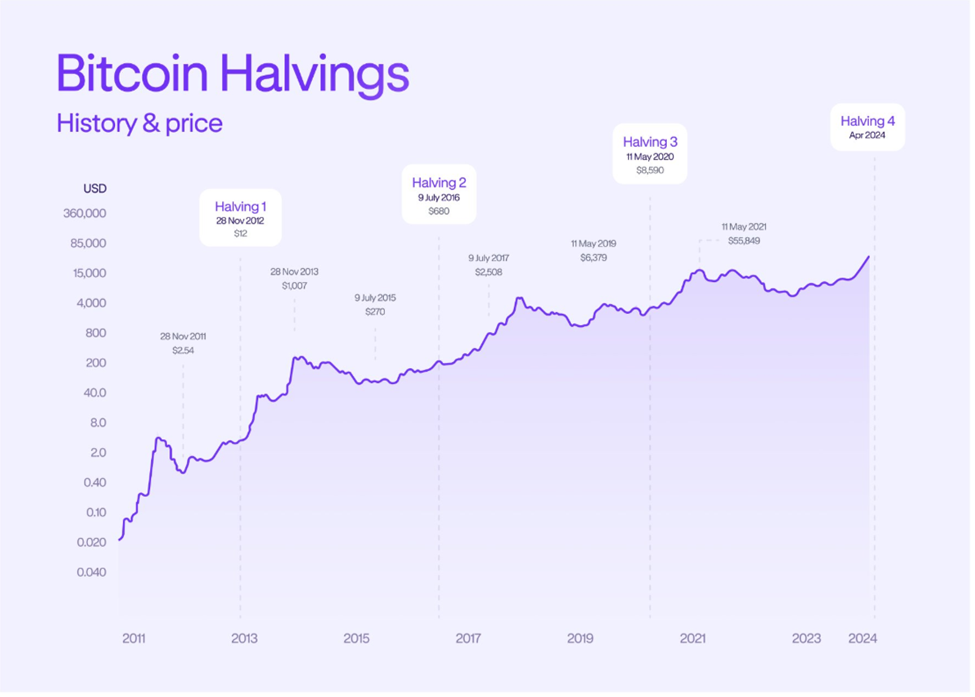
Bitcoin Halving History of Price Performance. Source: Harrison Frye, Co-founder & CGO at Acquire.Fi on X
Byte-Sized Alpha
Here’s a summary of more US crypto news to follow today:
Fake deliveryman steals $11 million in crypto from Sam Altman’s ex’s home.
The crypto Fed? Trump’s Chair Search Takes a Strange New Turn
Strategy says even a Bitcoin crash to $25,000 wouldn’t break its balance sheet.
This one bearish setup could flip Bitcoin’s bottom theory ‘upside down.’
Trump pardons CZ—Now Binance faces $1 billion terror allegations.
Grayscale’s spot Dogecoin ETF misses analyst targets on opening day.
BSV Financier behind Wirecard? New probe revives $2.2 billion mystery around Calvin Ayre.
Crypto Equities Pre-Market Overview
| Company | At the Close of November 25 | Pre-Market Overview |
| Strategy (MSTR) | $172.19 | $169.30 (-1.68%) |
| Coinbase (COIN) | $254.12 | $252.88 (-0.49%) |
| Galaxy Digital Holdings (GLXY) | $25.48 | $25.64 (+0.63%) |
| MARA Holdings (MARA) | $11.17 | $11.15 (-0.18%) |
| Riot Platforms (RIOT) | $14.39 | $14.41 (+0.14%) |
| Core Scientific (CORZ) | $15.55 | $15.52 (-0.19%) |
Crypto equities market open race: Google Finance


