

Understanding the S&P 500
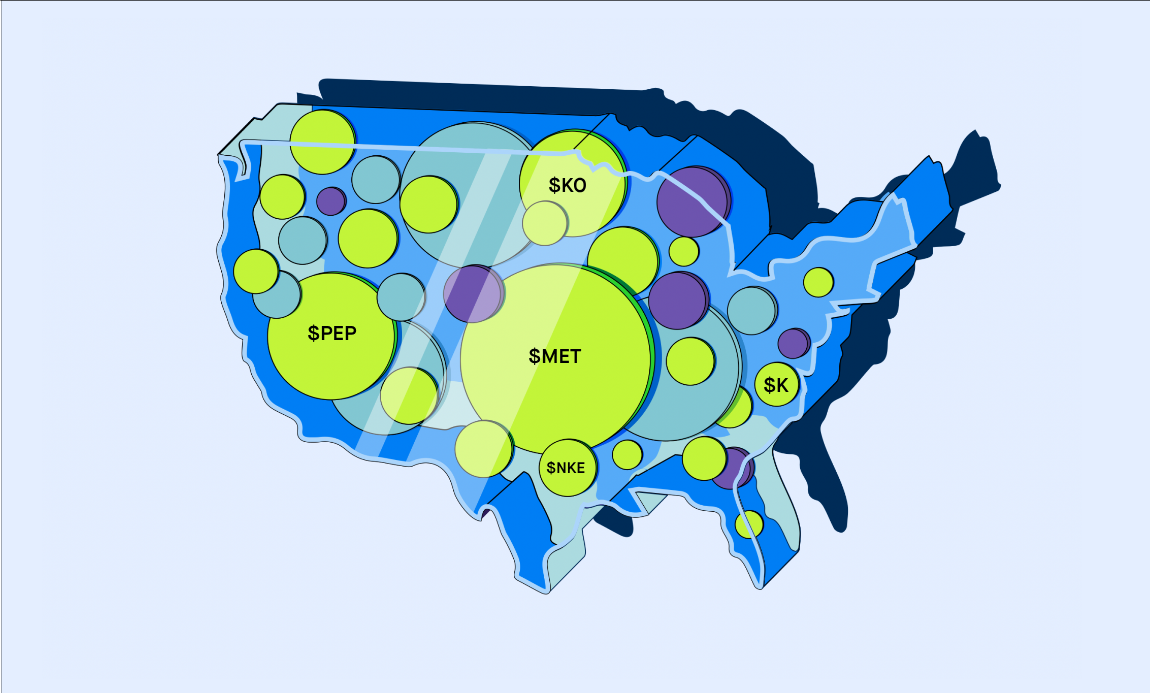
Standard & Poor’s is a financial services company best known for the signature stock market index it created in 1957: the S&P 500 Index (its ticker symbol is "SPX"). This index’s formula boils down the stock prices of 500 companies from a variety of industries into a single number to quickly answer the question “how is the US stock market doing?” It’s weighted using each company’s value by market capitalization, so the most valuable and biggest companies move the index the most, making it an even more useful reflection of the US stock market.
Takeaway
The S&P 500 is like a stock scoreboard...
When you want a helpful snapshot of what stocks are up to, go to the S&P 500. Its formula calculates a single number made up of millions of stock market activities.
New customers need to sign up, get approved, and link their bank account. The cash value of the stock rewards may not be withdrawn for 30 days after the reward is claimed. Stock rewards not claimed within 60 days may expire. See full terms and conditions at rbnhd.co/freestock. Securities trading is offered through Robinhood Financial LLC. Futures trading offered through Robinhood Derivatives, LLC.
Who are the members of the S&P 500?
Generally, the top 500 publicly traded US companies by market capitalization are included in the S&P 500. As of January 2023, the cutoff for size was $13.1B in market cap — companies worth that or more make the list. Those firms must be based in the US, have publicly traded shares available for all to buy or sell, and be profitable in the past year. That’s right — highly-valued companies that are unprofitable are not eligible to be added to the S&P 500, even though their value is in the top 500 of American public traded companies. Combined, the 500 members account for about 80% of all the publicly-traded stock in the United States. The final say for membership goes to S&P Dow Jones Indices, the administrator of the index.
How is the S&P 500 calculated?
Getting from many numbers to a single one takes some calculation. The S&P 500 index is weighted by market capitalization — the total value of all the shares for a company (this is calculated by multiplying a stock’s share price by the number of shares outstanding).
The S&P 500 follows a relatively simple formula: The numerator is the sum of all the market caps (the values) of the 500 members. The denominator is a secret figure that the S&P doesn’t reveal to the public. What’s important to understand though is that the stock prices of the 500 companies drive the S&P 500 up or down, and the companies with the highest market caps (aka the most valuable companies) have the greatest weight in moving the index.
How to calculate a company’s weight in the S&P 500
Apple, Microsoft, and Amazon — the first three companies to reach $1 trillion market caps — have high weights in the S&P 500, so their stock movements affect the S&P 500 more than less valuable companies do.
To calculate the proportion of weight a certain company has in the S&P 500, divide the company’s market cap by the total market cap of the S&P 500. For example, a company with a market cap of $50 billion when the S&P 500’s total market cap is $5 trillion has a 1% weighting.
How is the S&P 500 useful?
It measures “how stocks are doing”: Since the S&P 500 captures 80% of the public stock available in the US, it’s a helpful measurement of how the US stock market is doing in general.
It’s a benchmark against your portfolio: Investors may own a collection of stocks, which they call a stock “portfolio.” To assess whether your portfolio is performing well, you could look at the raw percentage gain (up or down). But relative performance to the S&P 500 is a more nuanced way to do it. Comparing your portfolio’s performance to the S&P 500 is a good way to assess whether your portfolio is out-performing or underperforming the market. An alternative to building your own portfolio is to just “track the S&P 500” (more on that below).
It’s tracked by funds: Many investors prefer not to pick their own stocks, preferring instead to invest broadly in the US stock market. A simple way to do that is to purchase shares of a mutual fund or ETF. Many mutual funds are built with underlying stocks that mimic the makeup of the S&P 500. This way, with one single purchase, an investor can own a piece of the S&P 500, and benefit or fall as the S&P 500 does.
S&P 500 vs. the Dow
Both the Dow Jones Industrial Average (“the Dow”) and the S&P 500 are used as proxies to measure how the stock market is doing in general. But there are some key differences between the two:
Number of companies included:
The Dow is super exclusive — it’s like getting knighted by the queen. While that brings prestige to the Dow’s 30 members, it also weakens the Dow as a tool of measuring the stock market in general. What happens to stocks of the 30 largest companies isn’t necessarily the same as what happens to the whole market.
The S&P 500’s name tells it all — 500 companies. It’s more inclusive and better equipped to answer the key question “what happened to the stock market today?”
How the stocks are weighted:
The number you see for the Dow was about 34,000 as of January 2023. That number is calculated using the index method, and based on its 30 stocks, with the weighting based on stock price. So the company with the highest dollar stock price has the most weight, and will therefore affect the index the most.
The S&P 500, on the other hand, is weighted by market capitalization. Market capitalization makes more sense to weight by because market capitalization accounts for both stock price and number of shares outstanding in the market. The Dow’s weighting only accounts for one of those, and stock price alone isn’t the best measure of what matters in the stock market.
Keep in mind: Companies with a higher share price affect the Dow the most, while companies with the highest market cap affect the S&P 500 the most.
S&P 500 = weighted by market capitalization = stock price and shares outstanding
Dow = weighted by stock price only
S&P 500 vs. the Nasdaq
The S&P 500 is a broad based index that includes companies from most sectors of the S&P 500, and is a good cross-section of US stocks. The Nasdaq is more heavily skewed by tech stocks. For that reason, the S&P 500 is a more accurate proxy of the US stock market, while the Nasdaq is a more accurate proxy of the tech sector.
Limitations of the S&P 500
It’s not an accurate measure of economic well being
The S&P 500 is often cited to reflect the performance of the US stock market. Sometimes commentators take it a step further, interpreting its performance as a reflection of the US economy. While the S&P 500 does influence Americans’ well being, it’s just one factor.
Since stock prices are driven primarily by companies’ abilities to generate profits, the S&P 500 will tend to rise as companies’ profits rise. But companies’ profits don’t necessarily correlate with workers’ incomes, or workers’ economic happiness.
However, since the stocks of companies in the S&P 500 are owned by millions of Americans, an increase in the S&P 500 increases the wealth of Americans indirectly, and vice versa.
It doesn't include small companies, or private companies
While the S&P 500 does include 80% of all the publicly traded stock in America, it doesn’t include small businesses, private companies, or even middle or large-sized companies that don’t make the top 500 cut. For that reason, it’s important not to interpret the performance of the S&P 500 as including companies and sectors that aren’t represented in it.


