

What Is BIO Protocol?
BIO protocol is a decentralized science platform that uses blockchain technology to fund, develop, and share biotech innovations, enabling global collaboration, IP ownership, and efficient research through community-driven tools like BioDAOs and tokenized governance.
Key Takeaways
BIO protocol uses blockchain technology to fund and support biotech research with shared ownership of IP.
BioDAOs foster collaboration and innovation with globally pooled resources, and rewards like Bio/Acc tokens encourage active contributions to the ecosystem.
The decentralized curation and IP tokens streamline decision-making and auditing, and projects like VitaDAO and HairDAO showcase its impact in advancing critical biotech research.
Decentralized Science (DeSci) has gained significant attention in recent times, and BIO protocol is a leading player driving innovation and collaboration in this transformative on-chain science ecosystem.
The Decentralized Science (DeSci) space has experienced a massive growth surge, compared to its performance from January to December 2024. During this period, DeSci saw a 2,640% increase, way higher compared to other hot sectors like AI or chain abstraction.
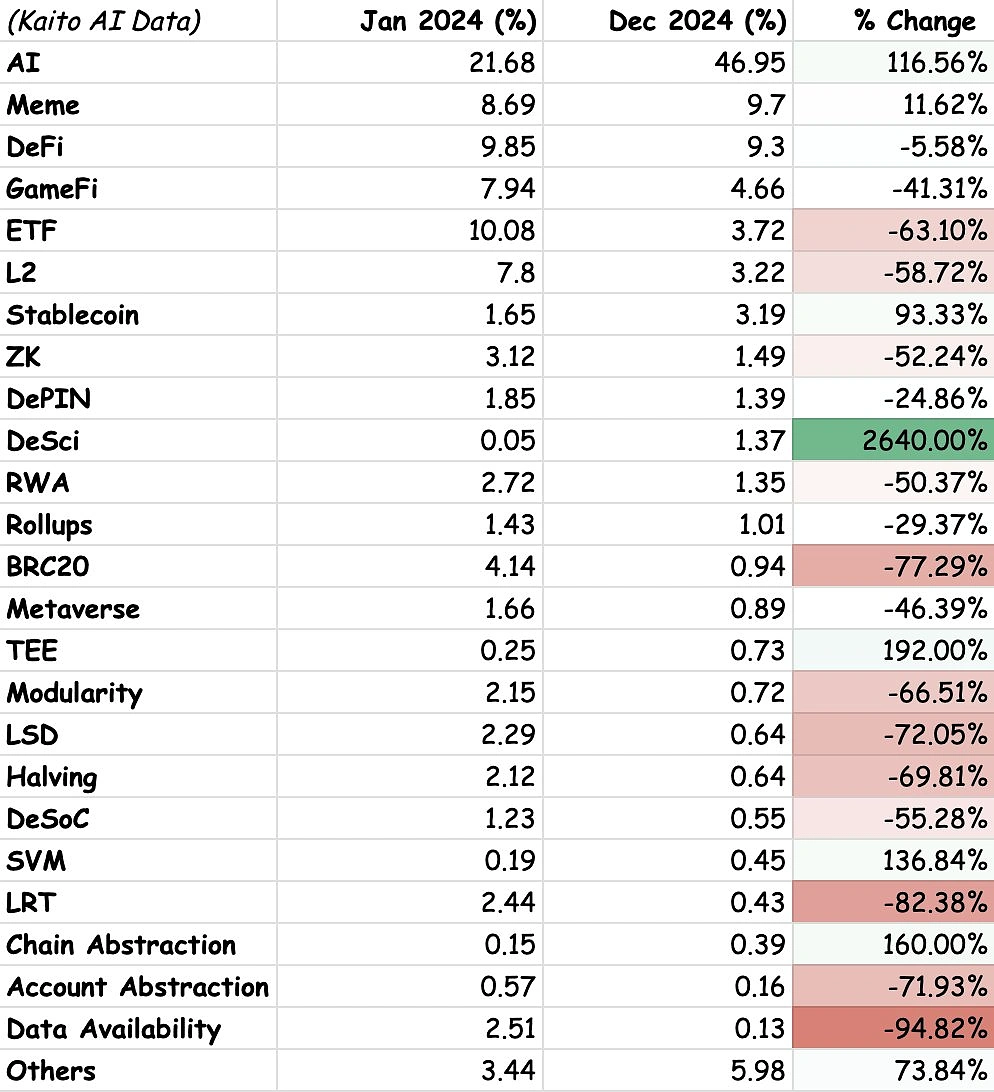
Image Source
BIO protocol is stepping into the spotlight as a potential game-changer, ready to reshape the landscape of DeSci and push the boundaries of biotech innovations. Its innovative approach and strong backing position it to reshape how decentralized research and collaboration unfold in the future.
This article will cover the basics of DeSci, the BIO protocol, its notable components and ecosystem, the BIO token, and its successful projects.
What Is Decentralized Science (DeSci)?
In traditional science (TradSci), the progress of discovery has long been tethered to centralized institutions (think universities, publishers, and funding bodies).
While these entities have played pivotal roles in shaping modern research, they have also introduced systemic inefficiencies: restrictive gatekeeping, opaque peer review processes, exorbitant paywalls, and inequitable funding distributions.
Decentralized Science (DeSci) rethinks how we conduct, fund, share, and incentivize research. It uses blockchains and allows opportunities for collaboration, decentralized research, open access, and more possibilities.
Prominent figures in the crypto space, including Ethereum co-founder Vitalik Buterin and Coinbase CEO Brian Armstrong, have expressed strong optimism about the potential of DeSci. Notably, Vitalik and Binance co-founder Changpeng Zhao (CZ) attended a DeSci event in Thailand, underscoring their belief in its transformative power.
Since 2024, DeSci projects have gained remarkable momentum, driven by their capacity to accelerate science-based innovation. For instance, the top five DeSci projects, led by BIO protocol, collectively boasted a total market cap exceeding $2.3 billion at its height in January 2025.
Understanding BIO Protocol
BIO is a DeSci-based liquidity and curation protocol aimed at transforming biotechnology globally. Specifically, the mission involves empowering biotech professionals, patients, and scientists, offering them a platform to build, fund, and own numerous intellectual properties (IPs) and tokenized projects.
BIO protocol enables the offering of a financial layer to DeSci that fuels more capital inflow and attracts talent to strengthen on-chain science. By providing an adequate amount of funding based on the project’s requirement, valuable scientific IP and data are effectively generated and commercialized for wider applications.
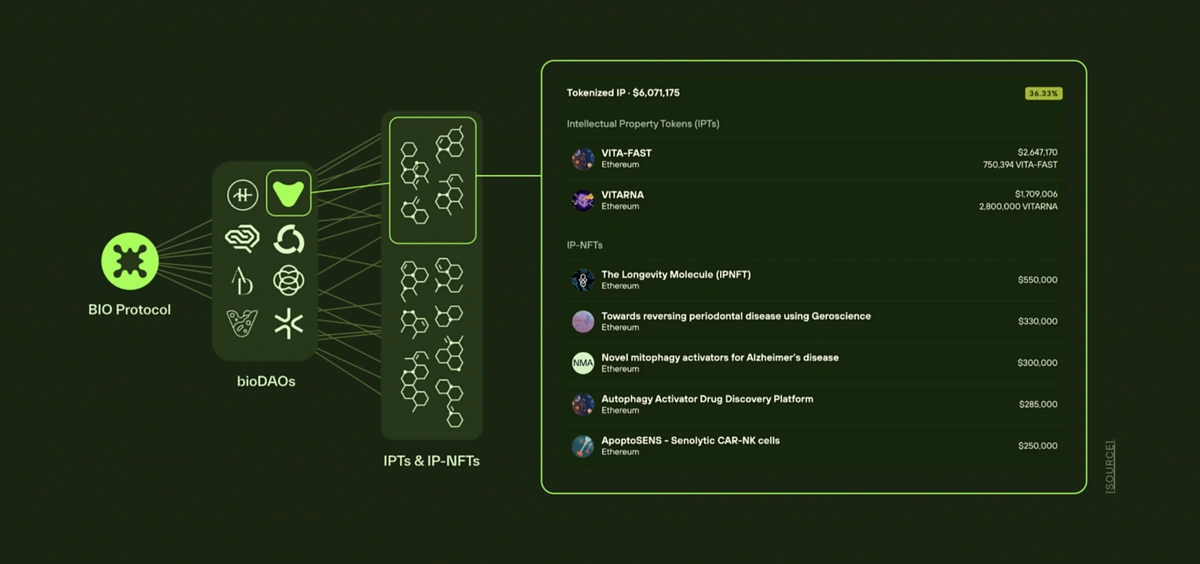
Image Source
Imagine a team of biotech innovators bringing up an innovative project that solves a major problem that society faces on a large scale. In this case, the ones that come forward to fund that project become early backers, similar to venture capitalists or angel investors with an early stake.
Besides being a funding space, BIO protocol also offers other valuable services such as incubation programs, resources for building projects in the DeSci space, and more. The availability of this extended support, along with funding, encourages more entrepreneurs without a business background to develop and benefit from the untapped potential of on-chain science.
Key Features of BIO Protocol
Here are some notable features of BIO protocol.
BioDAOs
BIO protocol has its community-owned scientific research networks named BioDAOs, which are specified in scientific or medical areas based on their focus. The availability of stakeholders like biotech developers, scientists, etc., globally will power up the research and development of the projects at an accelerated pace.
BioDAOs conduct token sales to raise funds and use them to develop biotech projects with collectively shared IP ownership distributed among the members. BioDAOs also sell the products and IPs, which are reinvested back into the treasuries for future R&D, expansion, and innovation.
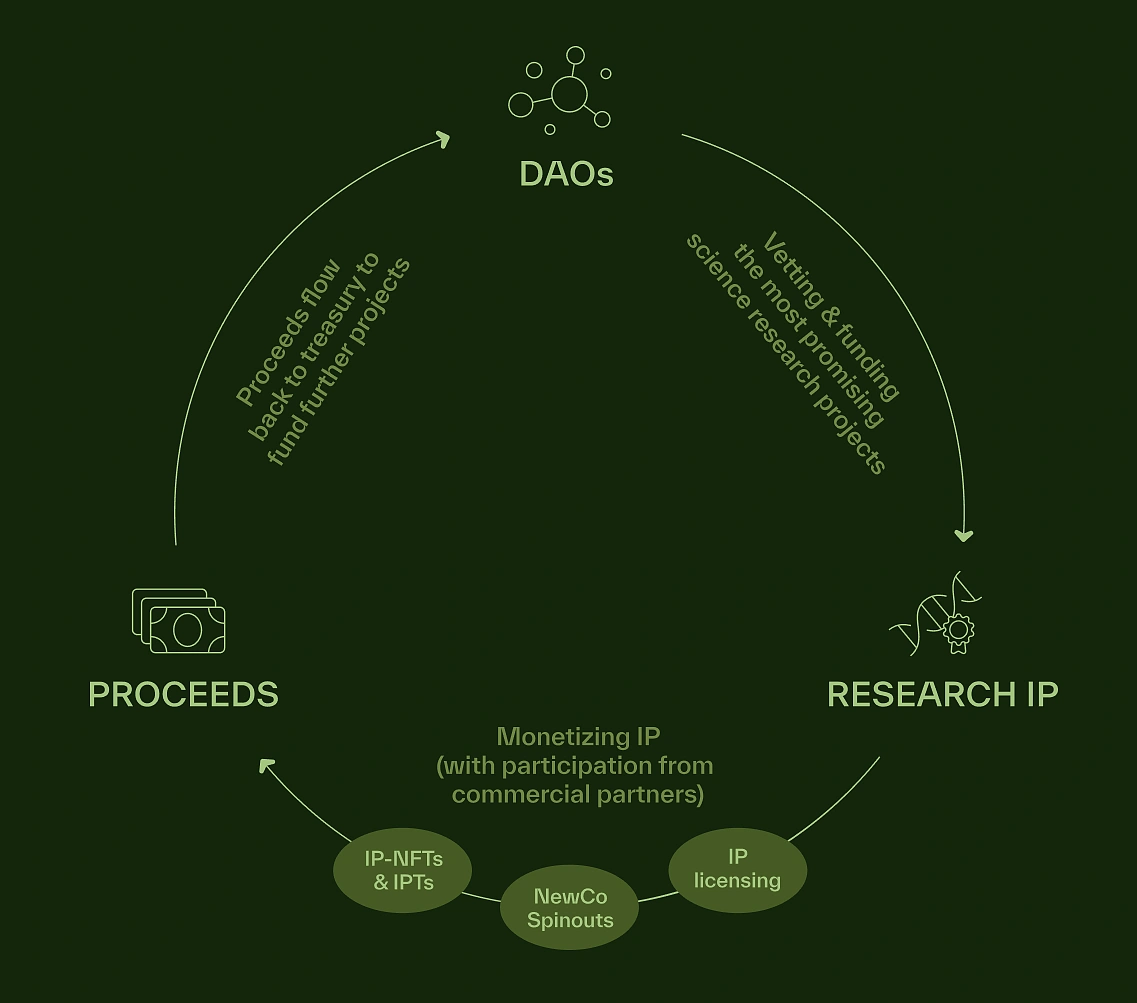
Image Source
Bio/Acc Rewards
BIO protocol’s Bio/Acc reward program is used to incentivize BioDAOs and the members who participate and work towards growing the network’s value. Based on the approval of the BIOPSY-5 proposal, around 133 million tokens, which constitute 4% of the BIO token supply, are used as rewards. These rewards aim to motivate active involvement and contributions, ensuring the continued growth and success of the BioDAO ecosystem.
These rewards are available for contributors and biohackers with different eligibility criteria, reward pools, and vetting periods. For example, Bio/Acc rewards can be earned by using bioproducts, clinical trial contributions, trading tokens, and more.
Curation
Curation involves the BIO token holders who can participate in voting activities of accepted BIO protocol ecosystems to provide support for projects and initiatives that advance the goals of bio-scientific initiatives and communities worldwide. Here, the funding allocated post-voting is received through the BIO Launchpad, which is then used to fuel the project and incentivize the contributors.
The curation mechanism helps to create a global liquid market around on-chain science by leveraging the wisdom of the crowd from the DeSci sector. Along with unlocking funds for projects with a bullish community-driven outlook, curation also ensures the community's voice is heard and valued.
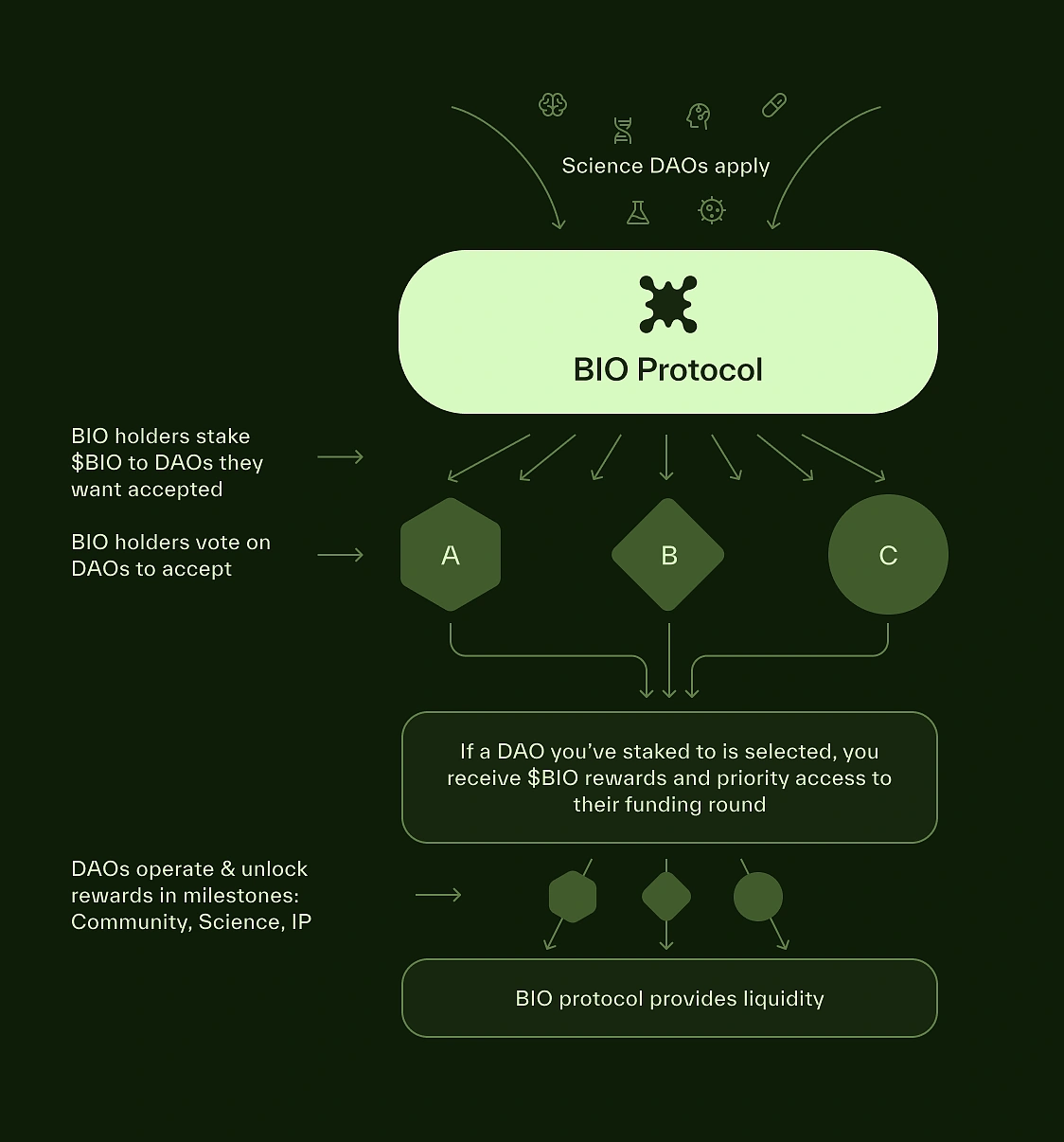
Image Source
IP Tokens (IPTs)
Intellectual Property Tokens (IPTs) pioneered by decentralized biotech protocol Molecule offer IP-based fractional governance rights. These token holders can leverage their ownership stakes to participate in the governance process for the allocation of resources and involvement in decision-making, building, and goals that drive innovation and collaboration in research and development efforts.
IPT holders benefit from exclusive updates and information on the research and development progress, providing a clear view of the project's direction and potential. These tokens play a crucial role in involving a broader user base in scientific research activities, fostering advancements in R&D, collaborative innovation, transparency, and many other transformative opportunities.
Potential of BIO Protocol
BIO protocol represents a brilliant effort at the intersection of crypto, AI, and decentralized science (DeSci). Below is a look at a few different ways how BIO protocol can contribute to the next generation of research.
Real-World Utility: Auditing Scientific Papers
One of the standout aspects of BIO protocol is its ability to audit and identify errors in published scientific papers using blockchain technology and AI. This functionality addresses the reproducibility crisis, a critical issue in the scientific community where up to 50% of published studies in some disciplines fail to replicate successfully.
By providing a decentralized and transparent mechanism to validate research, BIO protocol ensures that errors are caught, corrected, or flagged at scale, boosting trust in scientific literature.
Public Goods As A Core Offering
BIO protocol delivers a public good that traditional systems struggle to support — scaling the validation and audit of scientific work. This task is often unaddressed because it lacks a direct profit incentive. Traditional funding sources, such as grants or private investments, prioritize projects with clear financial returns.
BIO protocol’s tokenized funding mechanism circumvents this limitation, demonstrating that crypto-backed initiatives can scale essential, yet previously neglected, scientific services.
Crypto's Unique Funding Paradigm
In the traditional financial system, accessing capital comes with burdens like equity dilution, rigid repayment terms, or investor control over the project’s direction. Crypto flips this model by enabling capital without these constraints.
Projects that successfully capture community attention and (via effective storytelling, genuine utility, or innovative tokenomics) can secure the required funds without the traditional strings attached.
This environment allows initiatives like BIO Protocol to:
Focus purely on impact and innovation without being overshadowed by investor demands for profitability.
Build a sustainable funding pipeline through tokenized ecosystems and community involvement.
Offer contributors fractional ownership or governance rights, aligning incentives between funders and project teams.
What Is BIO Token?
BIO protocol has its native governance and utility token, BIO, which allows holders to participate in curation and vote on the distribution and issuance of BIO tokens in the future. Along with the voting mechanism, BIO tokens can also be used to implement accelerator programs that support the development of the project’s network, incentivize contributors, and fund initiatives aimed at advancing the ecosystem's growth and innovation.
Apart from all these benefits, token holders gain exclusive access to the BioDAO funding round’s whitelist opportunities. Not just that, they may also be eligible for rewards for their contributions and clinical trial participation with the launch of innovative newly developed health products from BioDAOs.
The total supply of BIO tokens is 3.32 billion, and it is kept as an uncapped supply that can be adjusted as needed based on BIO governance votes in the future. For this reason, there is a possibility of minting new tokens by deploying a new token contract that could be implemented by replacing the existing BIO token to support the future growth of the protocol or network.
Regarding tokenomics, the total supply of BIO tokens at genesis mostly focuses on the community, with 56% allocation for community-driven activities such as auctions, airdrops, incentives, and the Molecule ecosystem fund. The remaining 46% is allocated to early backers, early contributors, advisors, and Molecule team members at 13.6%, 21.2%, 4.2%, and 5%, respectively.
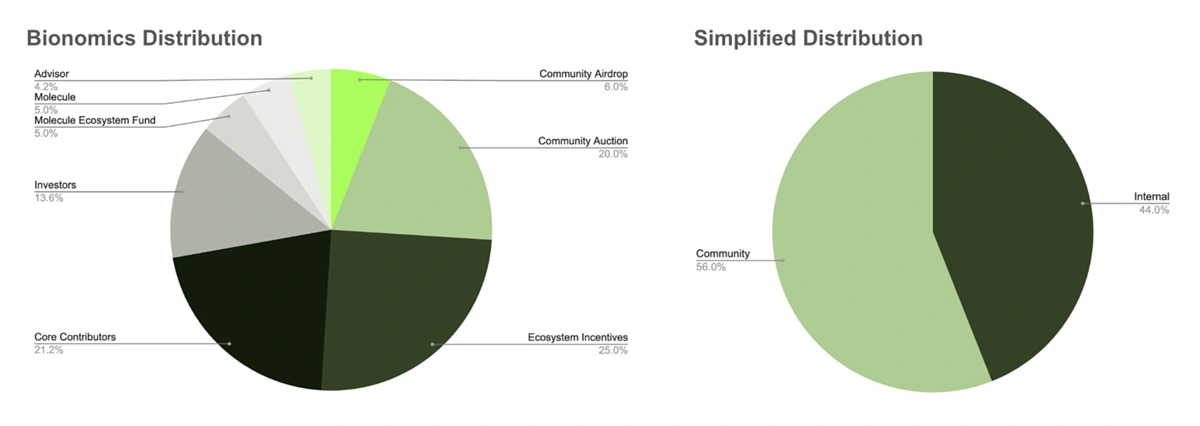
Image Source
The circulating supply of tokens is distributed with a 6-year vesting period for the investors and core team to avoid early sell-offs that might destabilize the market. BIO tokens have a wide range of utilities, which support IP token sales, discounts on BioDAO-based health products or services, staking opportunities, BIO emissions, protocol upgrades, treasury allocations, and many more.
Enter BIO Protocol Ecosystem
BIO fosters collaboration among diverse stakeholders in the biotech ecosystem, including researchers, investors, and patients, creating an inclusive space where every voice is heard. Some of the notable initiatives include the following:
BIO Launchpad
The primary goal of the BIO Launchpad is to give the BIO community a say in which DAOs they want to see launched, ensuring these projects get the support they need from the Bio ecosystem. On top of that, it’s designed to provide the DAOs with initial capital and create deep liquidity, helping to establish efficient markets once they go live.
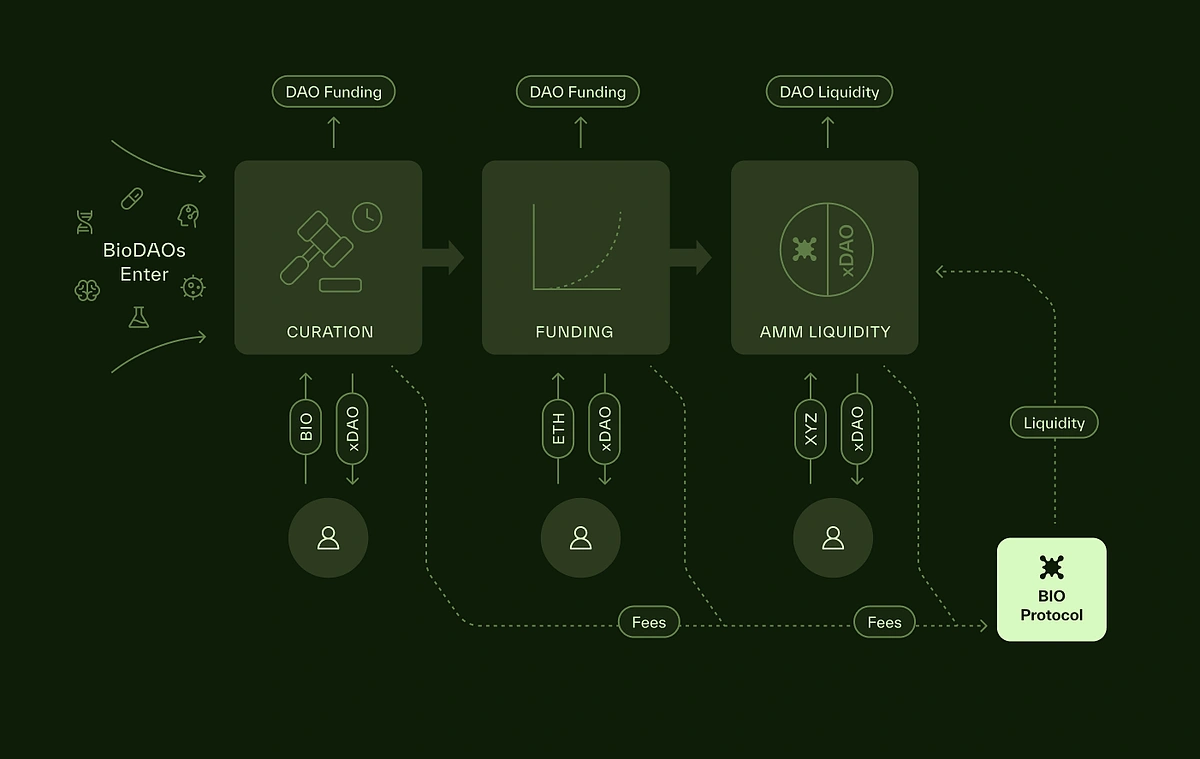
Image Source
The first phase of this launchpad is curation, where the possibility of whether the project should be launched through the BIO protocol will be evaluated. The other two stages are acceleration and separation, where the project raises funds from users and is released into the supported open market with liquidity pool support.
BioDAO Incubator
The goal is to incubate DeSci and biotech DAO-based projects by providing adequate funding and support to the builders and researchers working to power innovative solutions in the field of on-chain science. This incubator also helps to educate entrepreneurs and researchers on addressing the challenges that arise from building and growing such cutting-edge projects
A 16-week duration program, with the implementation of a hybrid model, is used to aid projects in aspects such as mentorship, knowledge guidance, support, liquidity, networking, fundraising, and more. For example, with this program’s technical support, frameworks and resources are provided to build, launch, and maintain biotech DAOs.
BioDAO Bible
BioDAO Bible is a vast collective knowledge base that encompasses a wide range of resources and information, allowing users to learn and build within the DeSci space. This comprehensive guide helps even beginners gain confidence by starting with simple concepts and then diving into the depth of on-chain science and its applications.
For instance, the sections of the BioDAO Bible, like “community building and awareness,” teach the mere basics and core principles of engaging with the community. Along with understanding the basics, readers are also provided with practical, actionable tips, tools, and examples so that they can apply the knowledge to start building, fostering collaboration, and creating an impact in the DeSci ecosystem.
A Journey of Progress: Successful BIO Protocol Projects
VitaDAO: Focused on providing funding and support to early-stage longevity research and IP ownership among the global community. VitaDAO has deployed over $4.2 million for 24 research projects and manages over $6 million in liquid funds while involving more than 10,000 community members in its mission to advance the field of longevity science. In August 2024, VitaDAO was awarded 21 million BIO tokens through Bio protocol's Bio/Acc rewards program.
HairDAO: An open-source research and development network, HairDAO connects researchers and patients globally to collaborate on developing new treatments that address hair loss. HairDAO has spent over $660,000, of which almost 77% was allocated for treatment research and development.
CryoDAO: Established to support and contribute to projects that conduct research advancing the potential and quality of cryopreservation, which involves the process of preserving tissues, organs, or cells. CryoDAO, with over $20 million in its treasury, has funded five projects and successfully built a community of over 6,000 members.
Conclusion
BIO protocol plays a notable role in pushing forward the DeSci sector to a more community-based and collaborative framework involving thousands of members associated with biotech.
Unlike the traditional science sector, which has limited access and participatory opportunities, the BIO protocol helps bring together a global base with incubation programs, funding initiatives, and educational resources.
The launch of BIO protocol on platforms like Binance Launchpool has significantly raised its profile, with notable market reactions seen in other related DeSci projects.
This article is only for information and education purposes and should not be taken as financial advice. Always do your own research before investing in any protocol or narrative.


