Vitalik Buterin has waded into Bitcoin’s long-running dispute over “spam” policy and node software philosophy, amplifying a blistering post by Bitcoin developer Gregory Maxwell that frames the controversy as a clash between open, market-driven neutrality and what he calls populist calls for censorship. “Greg Maxwell defends a principled commitment to freedom and open market-based resource allocation against the populist desire to censor the Current Hated Thing,” Buterin wrote on X, quote-tweeting BitMEX Research’s summary of “fighting talk” in the “Core v Knots” debate.
Buterin Takes A Stance: Supports Bitcoin Core
The immediate spark was a fresh message from Maxwell—posted “Today at 06:40:27 PM” on Bitcointalk—responding to pressure on Bitcoin Core maintainers to ship code perceived as filtering or degrading disfavored transaction types. Maxwell argues that Bitcoin Core’s position, “going all the way back to Satoshi, AFAICT,” is that “Bitcoin is a system secured by economics and self interest.” In his telling, proposals associated with Bitcoin Knots and its advocates amount to building “weapons that can be used against Bitcoin,” a direction he insists Core contributors will not take.
Maxwell’s post is unsparing about both the substance and tone of the current push to constrain on-chain activity. “The knots vision of Bitcoin seems to be a system (in)secured by altruistic hope and populist theocracy—by cancel culture and paper straw bans,” he writes, adding that such campaigns “are really popular on social media and (I expect) a big fail in the real world.”
He acknowledges widespread distaste among Core regulars for “NFT/shitcoin traffic,” but says that commitment to permissionless use must override aesthetic preferences: “Core’s commitment to individual freedom, self determination, and related principals is great enough that they recognize that some wasteful or stupid traffic is the cost of an open system, and that speculative small improvements related to ‘spam’ aren’t worth risking properties that underlie Bitcoin’s entire reason for existence.”
The through-line of Maxwell’s argument is that the project must not bend to “would-be censors” merely because they are “loud and obnoxious,” deploy legal threats, or invite government action. Instead, contributors will “route around them by using and improving Bitcoin just as they would with the weapons of any other attacker.”
He emphasizes that Bitcoin Core is not a vendor optimizing for customers, but a group building a network they themselves want to use: “The people who work on Bitcoin do so for themselves— to create and protect a system they want to use. They’re not making a product for customers… Everyone is invited to share in the benefits of their work if you want what they’ve created, sure. But they’re not going to work against their own interest in a open system secured by economics and resistant to human influence because of popular outcry.”
That “not a product for customers” line quickly became a flashpoint. “Everyone who runs Core IS a customer. This is the dumbest thing I’ve ever read,” X user BaconBitz objected. Buterin, who had elevated the exchange earlier, pushed back on that framing with a terse aesthetic defense: “No, it’s a paragraph written by someone who understands that a good protocol is a work of art.”
Maxwell also ties today’s agitation to a broader cultural reaction against the popularity of on-chain experiments. In his post, he argues that “filter fundamentalism is a thing at all” largely because of “the popular success of NFT/shitcoin bullshit,” and offers a pointed aside about Luke Dashjr’s long-standing advocacy for what Maxwell characterizes as “personal transaction morality police.”
In a characteristically caustic turn, he suggests that advocacy recently “picked up a little traction” not just because of sentiment shifts but also funding dynamics, alleging “he got handed millions in charity investment after becoming an involuntary no-coiner, and now can pay people to work with him and promote his positions since few would previously do it voluntarily.”
The backdrop to all of this is the practical question of what, if anything, Bitcoin Core should do at the code level to address surges in block space demand stemming from inscriptions, NFTs, or other fads that critics label “spam.” Maxwell’s answer is unequivocal: permissionless design and economic incentives are the defense, not discretionary filters.
“It’s nothing new that there is a sizable portion of the population that understand ‘I disapprove of what you say, but I will defend to the death your right to say it’ and a sizable (and vocal!) portion that don’t understand it or don’t agree with it.” In that spirit, he warns against meeting censors “half way” and rejects the idea that threats of state action should steer protocol stewardship.
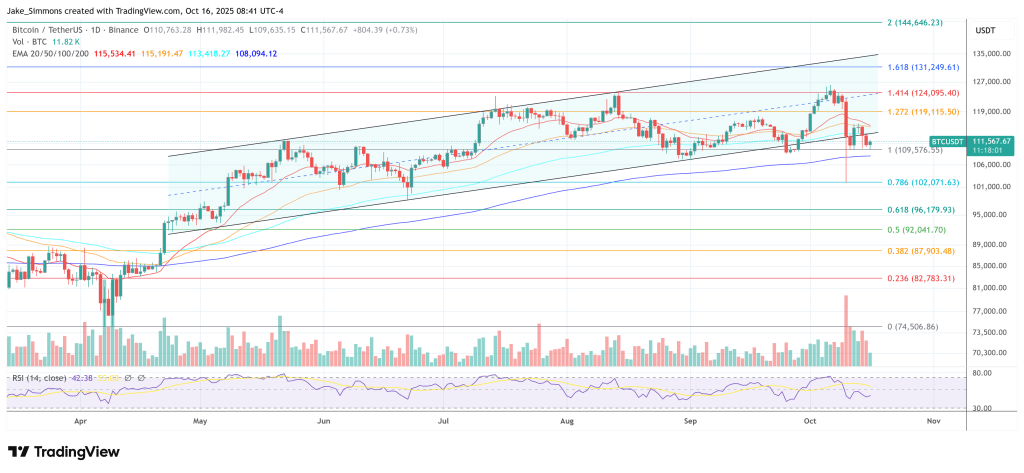
At press time, Bitcoin traded at $111,567.