

What Is Hyperlane?
Hyperlane is a cross-chain messaging protocol tailored for dApps (decentralized application) and developers with a focus on secured communication and data transfers between dApps on different blockchains.
Hyperlane Airdrop Update
Airdrop registration for the HYPER airdrop opened on 3 April 2025, eligible users will have until 14 April to register themselves before their claims are forefeited. Users may check their eligibility and register for the airdrop at https://claim.hyperlane.foundation/.
Key Takeaways
Hyperlane is an interoperability protocol that allows dApps to easily connect and communicate with other blockchains.
Hyperlane’s modular architecture makes it an ideal solution for many developers, with many notable projects including Eclipse, Karak and more utilizing Hyperlane.
Hyperlane has announced the launch of the “Hyperlane Foundation” and the upcoming release of their native token, HYPE, this suggests that a future airdrop is likely to happen.

Understanding Hyperlane and How It Benefits the Everyday Crypto User
Hyperlane is a permissionless interoperability protocol that is highly customizable and designed with a modular future in mind. It enables cross-chain communications between blockchains and can easily be deployed by any blockchain/decentralized application (dApp) with no intermediaries needed. Hyperlane utilizes Cosmos SDK’s Interchain Security Modules (ISM) as its main security feature.
Where Hyperlane differs from other cross chain infrastructure projects such as LayerZero is the flexibility and options it offers to decentralized application (dApp) developers. The ISM allows developers to configure, compose, and customize their security model according to their application's needs, making it especially suitable for cross-chain dApps.
An example of how this benefits users is Renzo protocol’s restaked ETH (ezETH). Renzo protocol is a liquid restaking dApp with its ezETH token existing on 12 different blockchains. As a relatively new token, ezETH is not supported by most bridges, as a result if a user wishes to bridge ezETH to another blockchain they would have to swap ezETH back to ETH before bridging which can be costly.
The 12 different blockchains ezETH exists on.
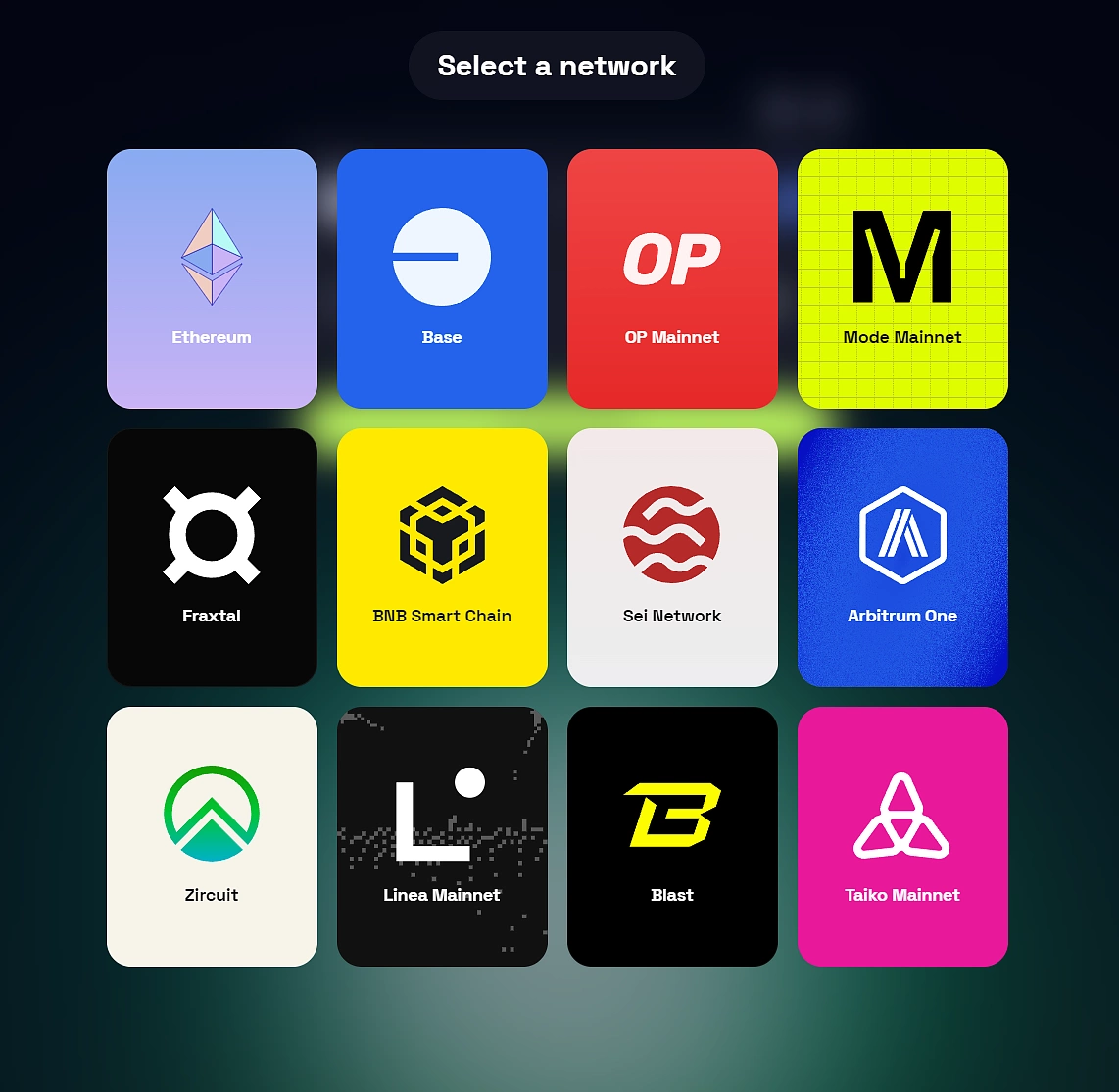
Utilizing Hyperlane, Renzo Protocol deployed “Warp Routes”, a smart contract written by Hyperlane to enable ezETH to move effortlessly between chains. With Hyperlane’s Warp Routes, ezETH is able to go multi-chain without additional support from other bridges.

In summary, Hyperlane is an ideal solution for newly launched tokens to go multi-chain and be natively bridged without the need for interim conversions to ETH, USDC or any other commonly supported asset in crypto bridges.
Notable Projects Using Hyperlane
Hyperlane’s developer centric suite of tools did not go unnoticed with many upcoming projects and blockchains seemingly opting to use Hyperlane as their cross-chain solution.
You may find the full list of projects utilizing Hyperlane here but a breakdown of some of the notable projects include:
Elixir: Cross-chain liquidity infrastructure for orderbook DEXes.
Injective: A Cosmos DeFi layer 1 that is highly interoperable with Ethereum and Solana.
Eclipse: The first Ethereum Layer 2 that utilizes the Solana Virtual Machine (SVM).
Mitosis: Upcoming Layer 1 that aims to unify cross-chain liquidity provision.
Karak: Restaking platform designed for multi-chain assets.
LogX: Cross-chain decentralized perpetuals (perps) aggregator.
Likelihood of a Hyperlane Airdrop
On 9 August 2024, Hyperlane introduced the Hyperlane Foundation along with their upcoming token, HYPE. The HYPE token will be used to establish the Hyperlane Alliance, presumably a decentralized autonomous organization (DAO) that will award grants to contributions made to the Hyperlane network.
While no airdrop has been confirmed with this announcement, their plans to launch a token alongside their promise to make Hyperlane a “developer owned network” suggests that protocols and projects who use Hyperlane’s technologies will be airdropped HYPE tokens. It is likely that these projects such as Renzo, Elixir, Mitosis and more will redistribute any allocated HYPE tokens to their users. Historically, based on the airdrops of other similar projects such as LayerZero and Wormhole, Hyperlane users are also likely to be included in their airdrop but it cannot be confirmed as of this writing.
How to Farm the Hyperlane Airdrop
As mentioned above, there are many projects currently using Hyperlane, below we will go through two simple ways to interact with Hyperlane to increase your chances of being eligible for the airdrop. Check out this link for the full list of Hyperlane integrations.
Merkly Hyperlane Token Bridge
Merkly is a dApp known for its ‘gas token refuel’ feature. Merkly was/is popular for being used as a method to farm the LayerZero airdrop because of its simple interface and low fees. Merkly has since integrated Hyperlane, making it potentially an attractive method to farm the Hyperlane airdrop as well.
Step 1: Go to https://minter.merkly.com/hyperlane/token and connect your wallet.
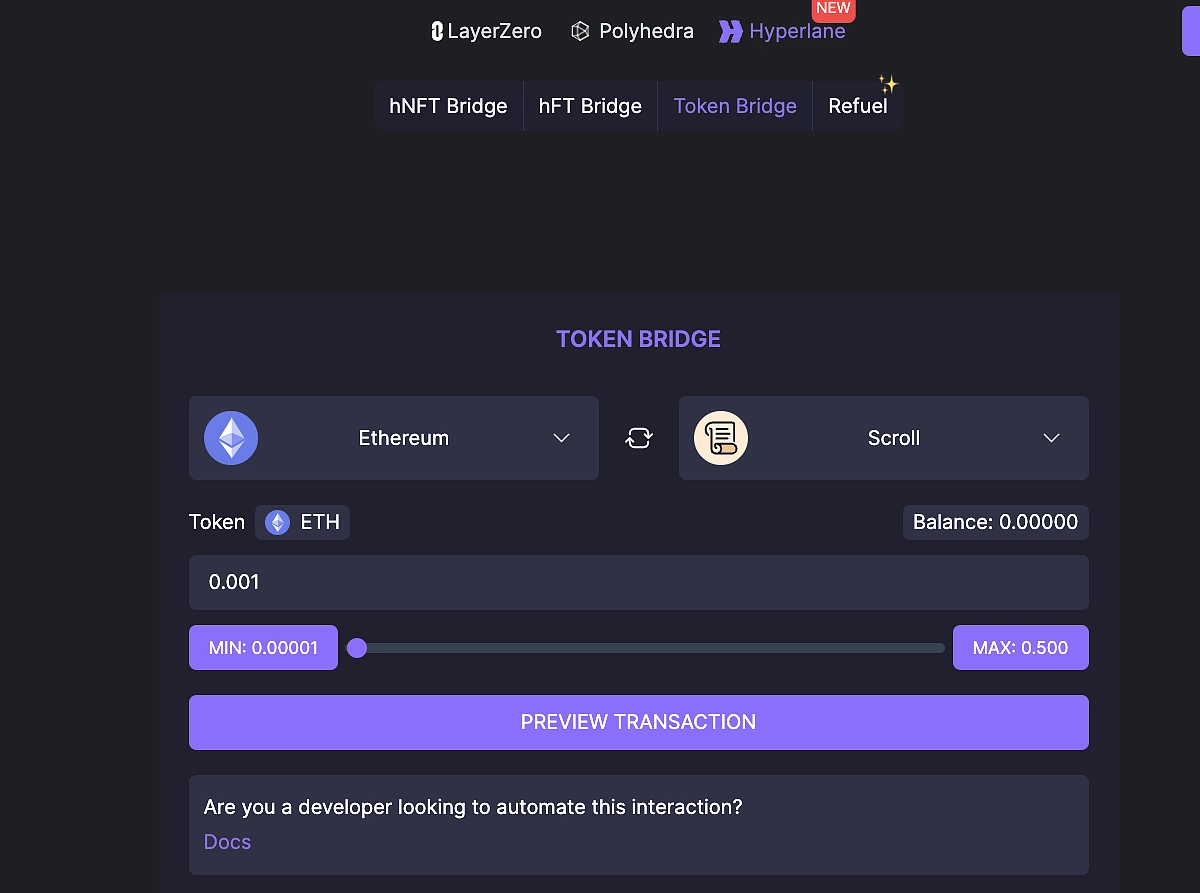
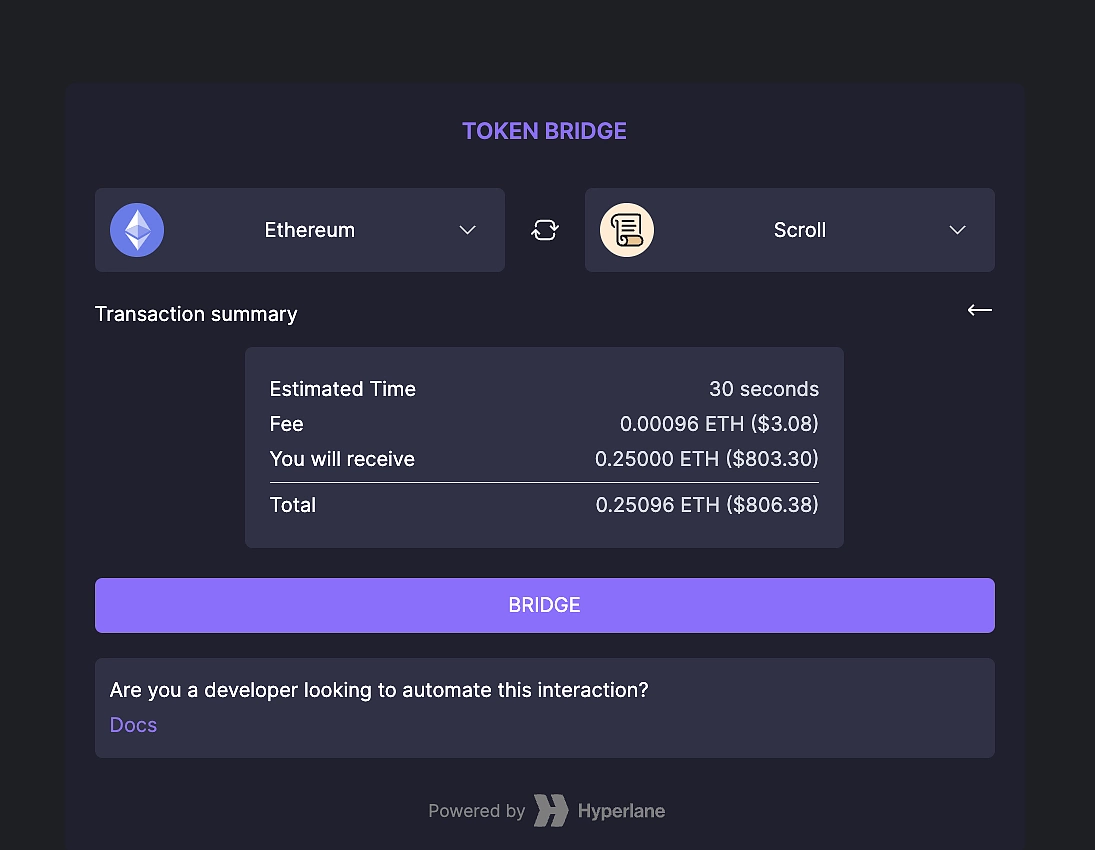
Step 2: Select the token you wish to bridge and the network you wish to bridge to and click ‘Bridge’.
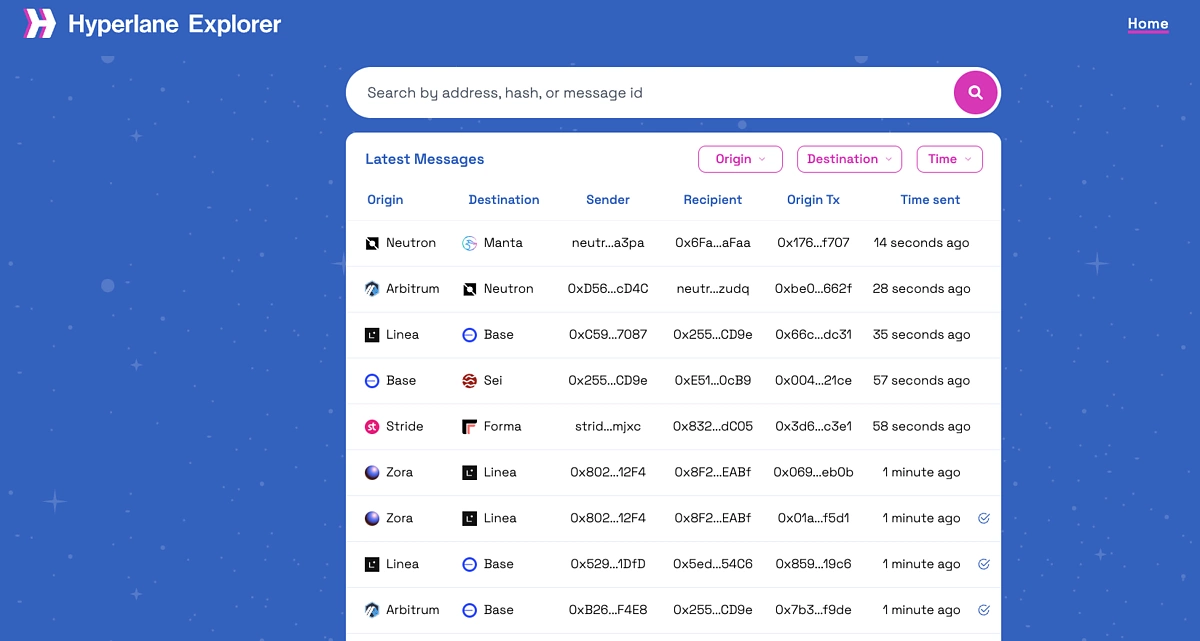
Step 3: Check out your transaction on Hyperlane’s explorer at https://explorer.hyperlane.xyz/.
Hyperlane Nexus
Nexus is similar to the Hyperlane token bridge used in Merkly, where it differs is that Hyperlane Nexus is a native application of Hyperlane’s technologies instead of being another dApp such as Merkly, integrating Hyperlane. Nexus is also one of the earliest public applications of Hyperlane making interactions with Nexus likely to be important as an airdrop criteria.
Another consideration is that Nexus is the first integration of Hyperlane that connects EVM chains (Ethereum) to Cosmos SDK chains (Celestia, Neutron). Hyperlane is built using the cosmos SDK, using Hyperlane to bridge to Cosmos chains may be a bonus/multiplier airdrop criteria as Hyperlane may wish to further reward Cosmos aligned users. Below is a guide on how to use Nexus to bridge from Arbitrum (Ethereum layer 2) to Neutron.
Step 0.5: Ensure that you have a Cosmos wallet set up and as you will need this to perform bridges to and from Neutron.
You may refer to our guide here to learn how to set up your Cosmos wallet with Keplr wallet.
Ensure that you have enough NTRN to pay for gas in your Cosmos wallet before you bridge over to Neutron as your funds may be stuck if you do not do this!
Step 1: Obtain Neutron bridged Celestia (TIA.n)
TIA is needed as it is the most convenient way to bridge cheaply from an EVM chain to a Cosmos chain using Hyperlane. One way to obtain TIA.n on Arbitrum, is to go to https://lfj.gg/arbitrum/trade, where you can swap ETH to TIA.n directly.
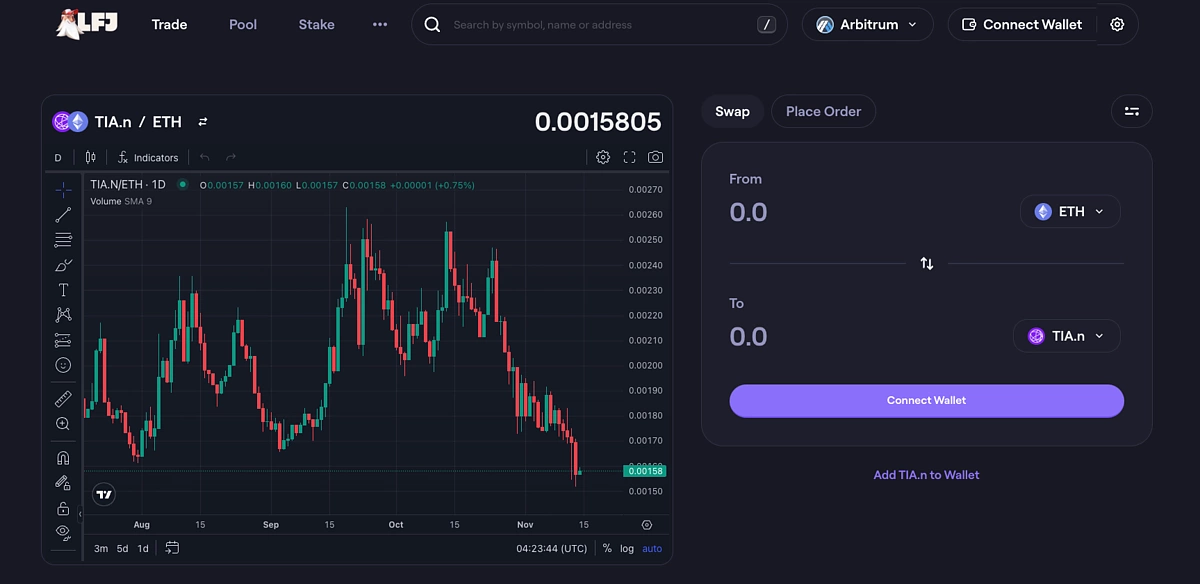
Step 2: Go to https://www.usenexus.org/ and connect your wallets.
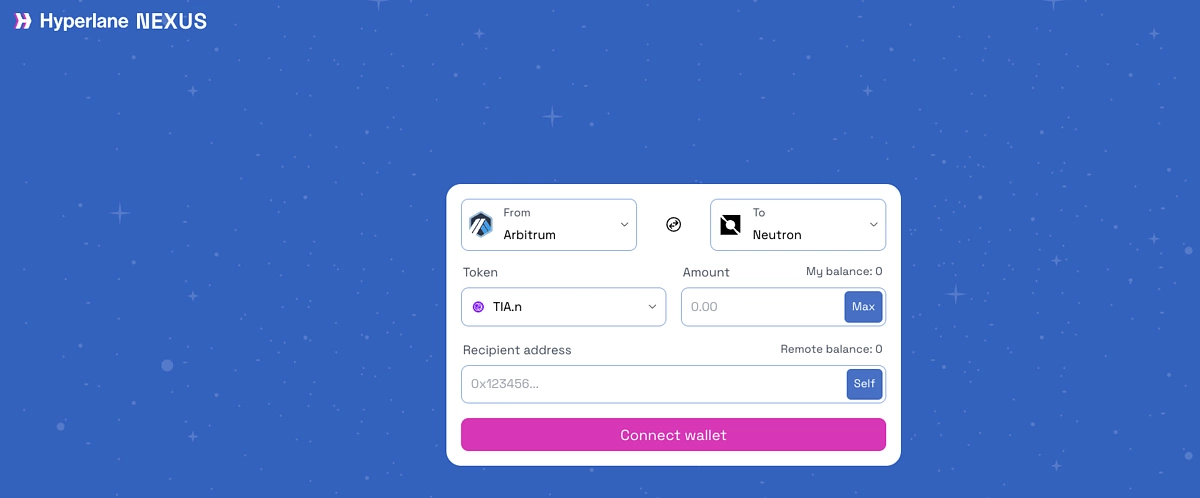
You will need to connect both your EVM wallet (Metamask/Rabby) and your Cosmos wallet (Keplr). Finally, select ‘Arbitrum’ as your source chain and ‘Neutron’ as your destination chain. You can now bridge your TIA.n tokens over to Neutron.
Step 3: Selling Your TIA.n
Do the above steps in reverse if you wish to liquidate and transfer your funds back to its original form. However, if you wish to avoid repeating the same transaction route (more on this down below), here is an alternative route to return your funds without using Hyperlane.
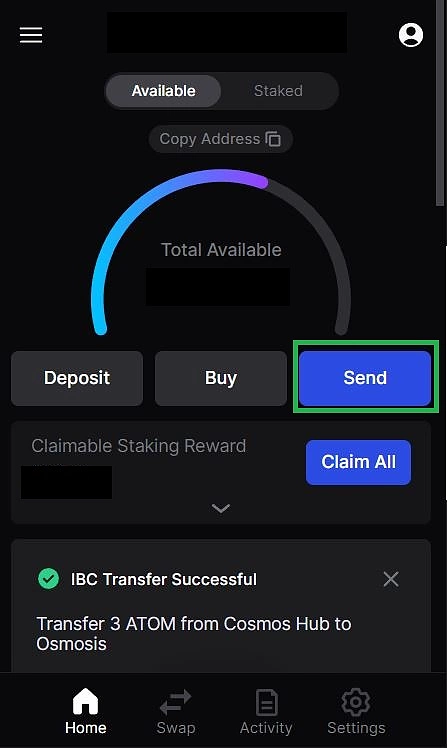
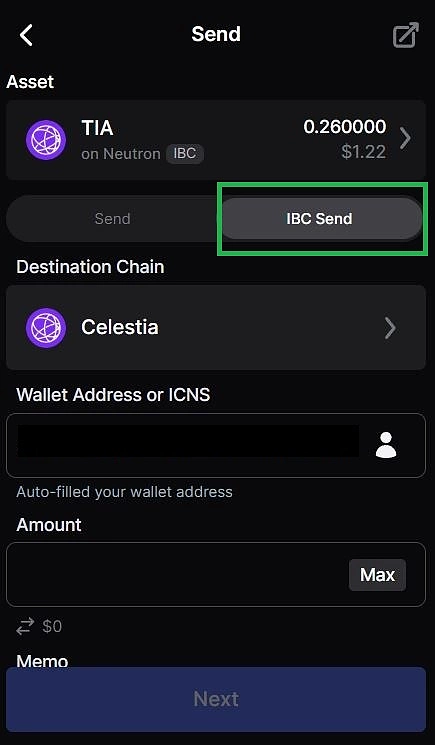
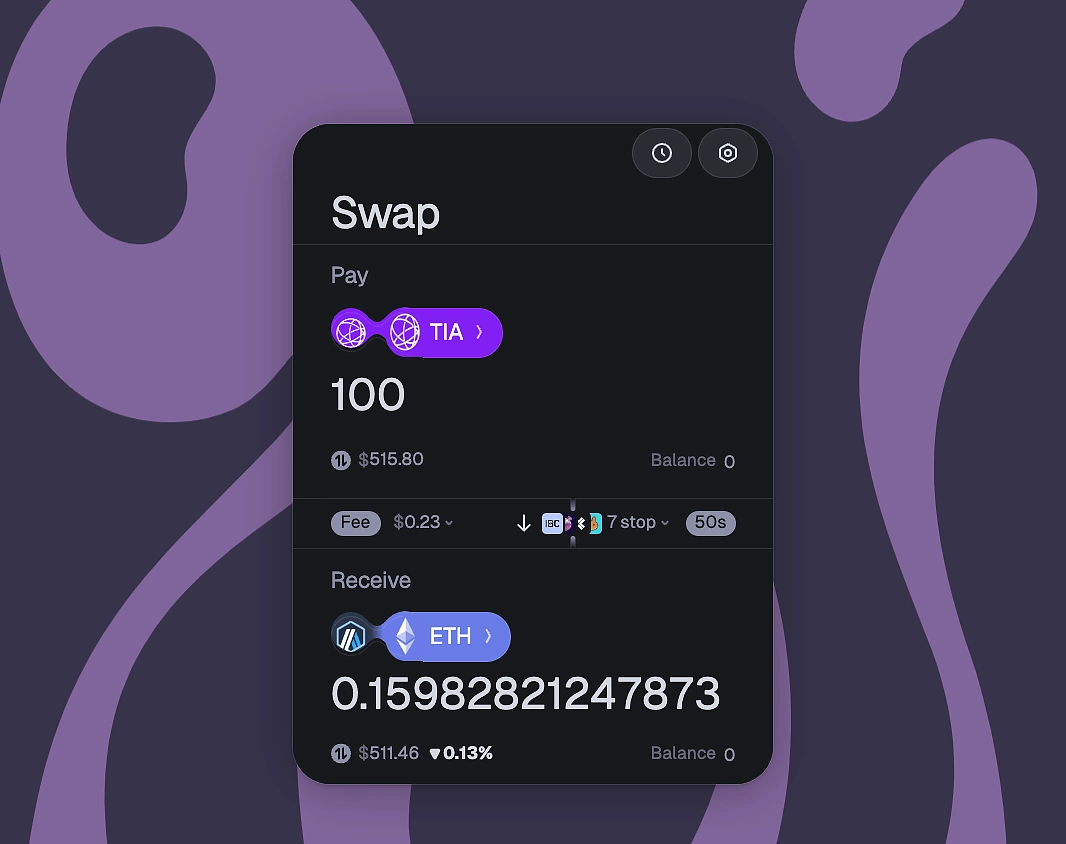
First, bridge the TIA.n on Neutron back to its home chain of Celestia, you may do this with the Keplr 'IBC Send' function. You will need to do this because there is no liquidity route for Squid Router to directly send TIA.n back to Arbitrum.
Second, go to https://app.squidrouter.com/, selecting Celestia as your source chain and Arbitrum as your destination chain. Finally, select TIA as your payment token and ETH as your receiving token.
Token Bridge Airdrop Farming Tips
When farming token bridge airdrops, you should avoid bridging back and forth repeatedly in a short span of time to avoid being detected as a sybil, which could exclude you from the airdrop. Sybils are wallets flagged out by crypto projects as being a bot/ungenuine user or being part of a wallet cluster that is conducting industrial airdrop farming.
To be safe, bridge from one network to another instead of bridging back and forth, for instance, you could bridge from Ethereum to Scroll, then to Linea, then to Arbitrum and finally back to Ethereum, to return your funds back to the original network. You can even go one step further, using another bridge that is unrelated to Hyperlane to bridge back to your original network to avoid being flagged as a sybil, which is what was a method highlighted above through using Squid Router.
Conclusion
This Hyperlane airdrop guide is non-exhaustive as the number of projects implementing Hyperlane seem to be on the uptrend, creating new ways to qualify for the Hyperlane airdrop. That being said, with so many partnerships and integrations by so many other crypto projects, Hyperlane is an airdrop that many are looking forward to. However, as with all other crypto airdrop guides, airdrops are not guaranteed and you should always do your own research before interacting with any cryptocurrency project.


