

Key Takeaways
Introduction
Blockchain applications often struggle to handle large data (like videos, images, AI datasets, or game assets) on-chain. Traditional storage services can be costly or introduce central points of failure. Walrus addresses this gap by providing a decentralized, on-chain storage layer that is scalable, programmable, and optimized for Web3 apps. In other words, Walrus lets developers publish and manage rich data on-chain with the ease of a storage API, while leveraging blockchain security. In this article, we explain Walrus’s design, features, and how to try it out. We cover its tech innovations (like erasure coding), its backing and funding, tokenomics and future roadmap.
What is Walrus?
Walrus is a decentralized storage and data availability protocol built on the Sui blockchain. It was developed by the Mysten Labs team and is now governed by the Walrus Foundation. In Walrus, any application can “publish” a blob (an arbitrary file or data) and then read or version it later via on-chain references. Unlike regular blob stores, Walrus makes storage programmable: each stored file is represented by a Sui object (with metadata on Sui), so Move smart contracts and transactions can control, route, and pay for storage. This means developers can, for example, tokenize storage capacity or build storage marketplaces using familiar blockchain tools.
Walrus is designed for large and rich media, from NFT imagery and game assets to AI datasets and full websites. On the network side, it is a peer-to-peer data availability layer: many independent storage nodes hold shards of each file (encoded with the RedStuff algorithm). The system continuously challenges nodes to ensure blobs are stored as promised. All consensus and coordination (committee formation, staking, etc.) is handled via Sui or the Walrus chain, making the network fully decentralized. Notably, Walrus runs control and metadata on Sui, but its storage layer is chain-agnostic. That means even apps built on Ethereum, Solana, or elsewhere can plug into Walrus for off-chain storage.
Key differentiators for Walrus include:
The Walrus team emphasizes ease of use and open-source ethos. All code is public, and there are CLI tools, web interfaces, and SDKs to make integration straightforward. (See “How to Get Started” below.) The network is intended to evolve rapidly with community input. As of March 27, 2025, Walrus Mainnet is live and fully decentralized.
Funding and Backing
Walrus has strong institutional support. The Walrus Foundation – a nonprofit steering the protocol – raised $140 million in a private token sale in early 2025. The round was led by Standard Crypto and included a16z crypto, Electric Capital, Franklin Templeton Digital Assets, and more. These funds are earmarked for scaling up the storage network and tooling. For example, the Mainnet launch on March 27, 2025, coincided with this announcement, signaling that the project is well-capitalized for rapid development.
Originally, Walrus technology was developed at Mysten Labs (the core Sui team). Now, the Walrus Foundation guides its growth. (Notably, a number of Sui-related projects – e.g., Creditcoin – have cited partnerships with Walrus.) developer-friendly platforms. As such, Walrus naturally integrates with the Sui infrastructure
Key Features and Benefits
Walrus offers several standout features for developers and users:
In short, Walrus turns storage into a fully on-chain primitive: programmable, composable, and incentivized. It extends the Sui ecosystem’s capabilities to any data-rich application, from NFT galleries to decentralized AI.
Incentive Programs & Point Systems
Walrus has begun rolling out incentive programs to attract early users and operators. On the Testnet, participants could obtain testnet WAL tokens (with no real value) via a faucet. This allowed developers to experiment freely: for example, the walrus CLI can convert free testnet SUI into testnet WAL 1:1, so anyone can try storing data without real cost.
For network contributors, Walrus introduced a staking incentive: token holders can stake WAL with storage nodes to earn a share of storage fees. A web dApp and explorer (Walruscan) help users select nodes to stake. During Testnet and Mainnet epochs, stakers collectively validate storage proofs and update network parameters, sharing rewards each epoch.
The community has also organized learning and airdrop “campaigns” around Walrus. For instance, Walrus Academy and other starter-pack promotions have been announced (via Walrus’s social channels) to educate users and reward engagement. Similarly, participating in Testnet operations (storing blobs, staking, etc.) is expected to increase eligibility for the planned WAL token airdrop. While details are still emerging, official sources confirm a large community airdrop is part of the token plan.
In summary, users can earn points or rewards primarily by using the Walrus Testnet: generating and managing blobs, staking WAL, and participating in the community. These activities should position them for the upcoming token drop and future incentive events.
Token Generation Event (TGE) & Airdrop Timeline
Walrus Mainnet launched on March 27, 2025. At launch, the network began using the real $WAL token (before this, only testnet WAL existed, which was unlimited and valueless). The Walrus team stated that $WAL powers all storage fees and staking on Mainnet.
As for airdrop timing, the distribution proceeded as follows: A portion of the 5 billion WAL supply was reserved for a community "user drop." Specifically, 10% of all $WAL went to the community via an airdrop – split 4% pre-Mainnet and 6% post-Mainnet. The pre-Mainnet allocations (4%) were distributed following mainnet launch, with eligible wallets able to claim via the official portal. The remaining 6% post-Mainnet allocation has been distributed in phases as the ecosystem matured following launch.
In addition, strategic allocations (e.g., Core Contributors, Subsidies, etc.) have followed their defined unlock schedules since TGE. Details about any "bonus" for SUI holders were not officially confirmed by Walrus prior to launch, though some community members who participated in both ecosystems received rewards. Participants who engaged with Walrus Testnet and Mainnet activities (storing data, staking, contributing) before and after launch were eligible for the $WAL token distribution that occurred following TGE.
Additionally, the $WAL token is now available for trading on Backpack Exchange
Tokens & Tokenomics
The WAL token (Token vs Coin) serves multiple roles in the Walrus ecosystem:
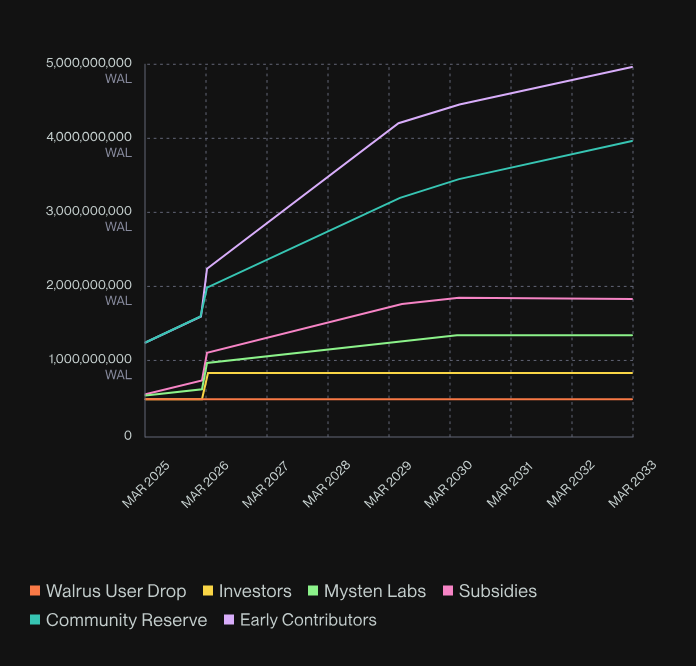
The official tokenomics blueprint (walrus.xyz) specifies a max supply of 5 billion WAL, with the majority allocated to the community. Over 60% of all tokens are reserved for community uses: a 10% user airdrop (described above), a 43% Community Reserve (for grants, incentives, hackathons, etc.), and 10% in storage subsidies. Core contributors (including Mysten Labs) get 30%, and private investors receive 7%. There are also burn mechanisms planned (penalties on stake shifts, etc.) to add deflationary pressure over time.
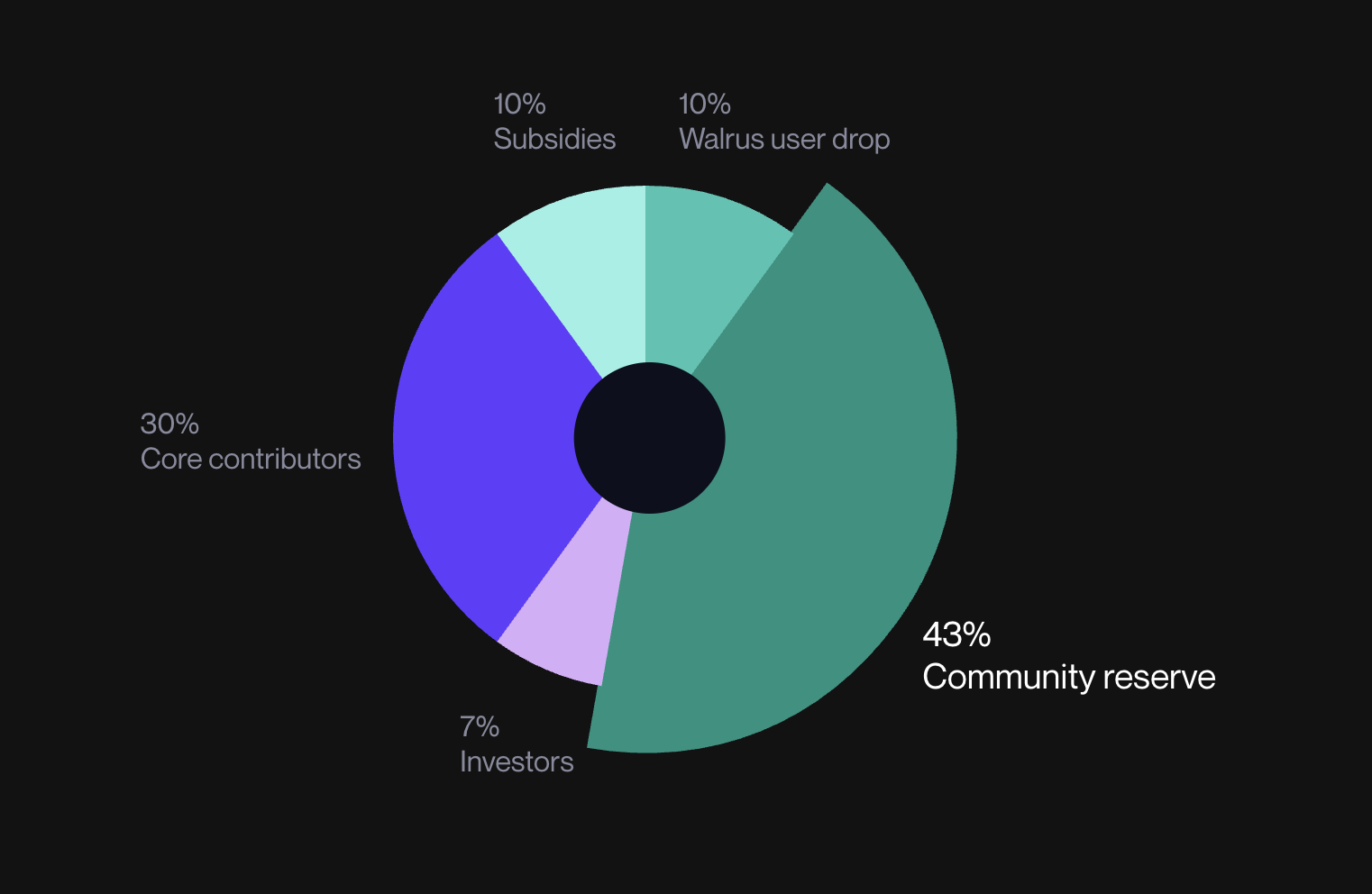
In summary, WAL is both a utility and governance token. While the exact tokenomics are finalized, the foundation’s plan emphasizes broad community distribution and long-term incentives. New details will be published as the protocol matures, so developers and investors should watch the Walrus website and social channels for updates.
How to Get Started with Walrus
Developers and users can start experimenting with Walrus today by following these steps:
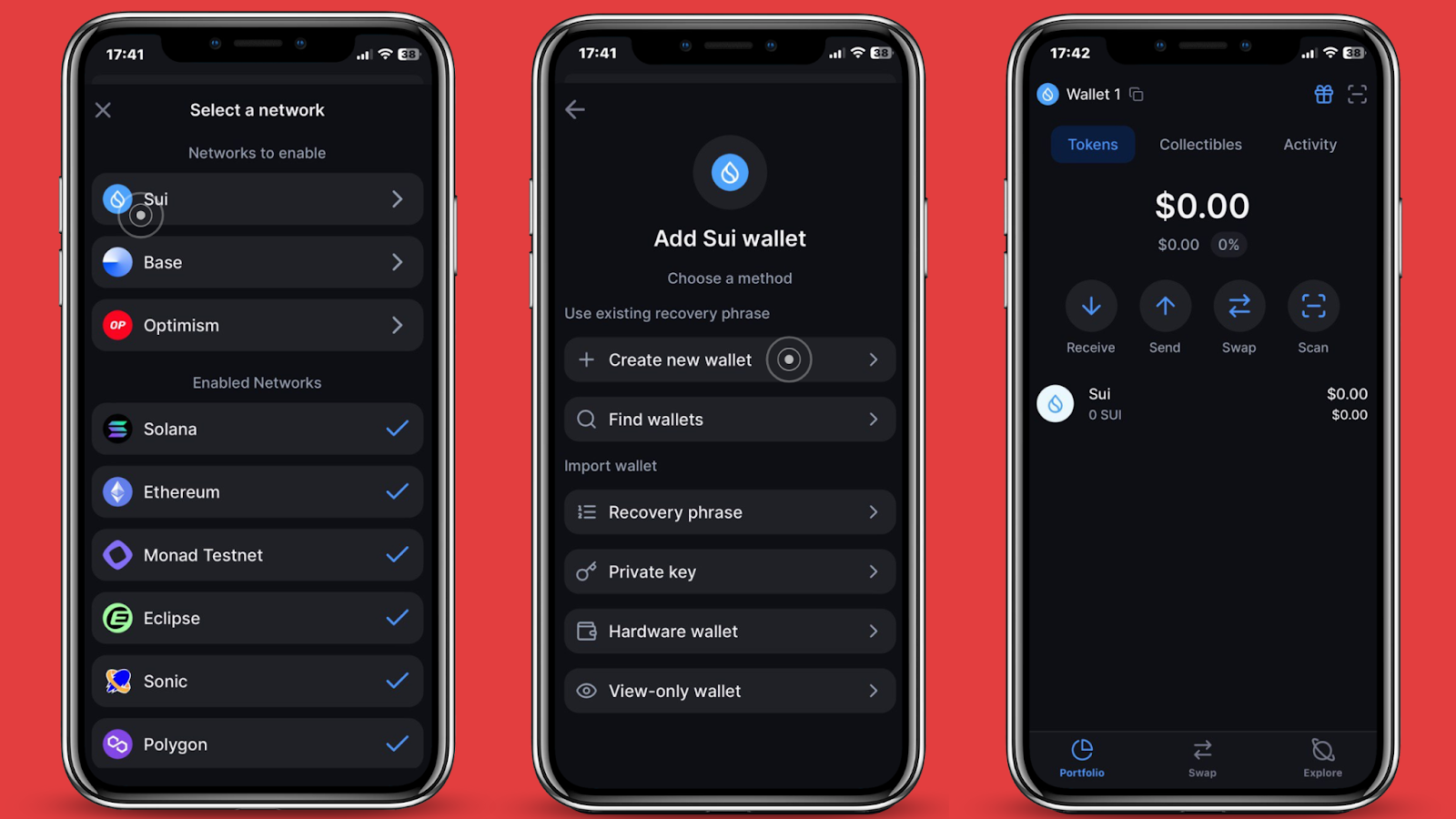
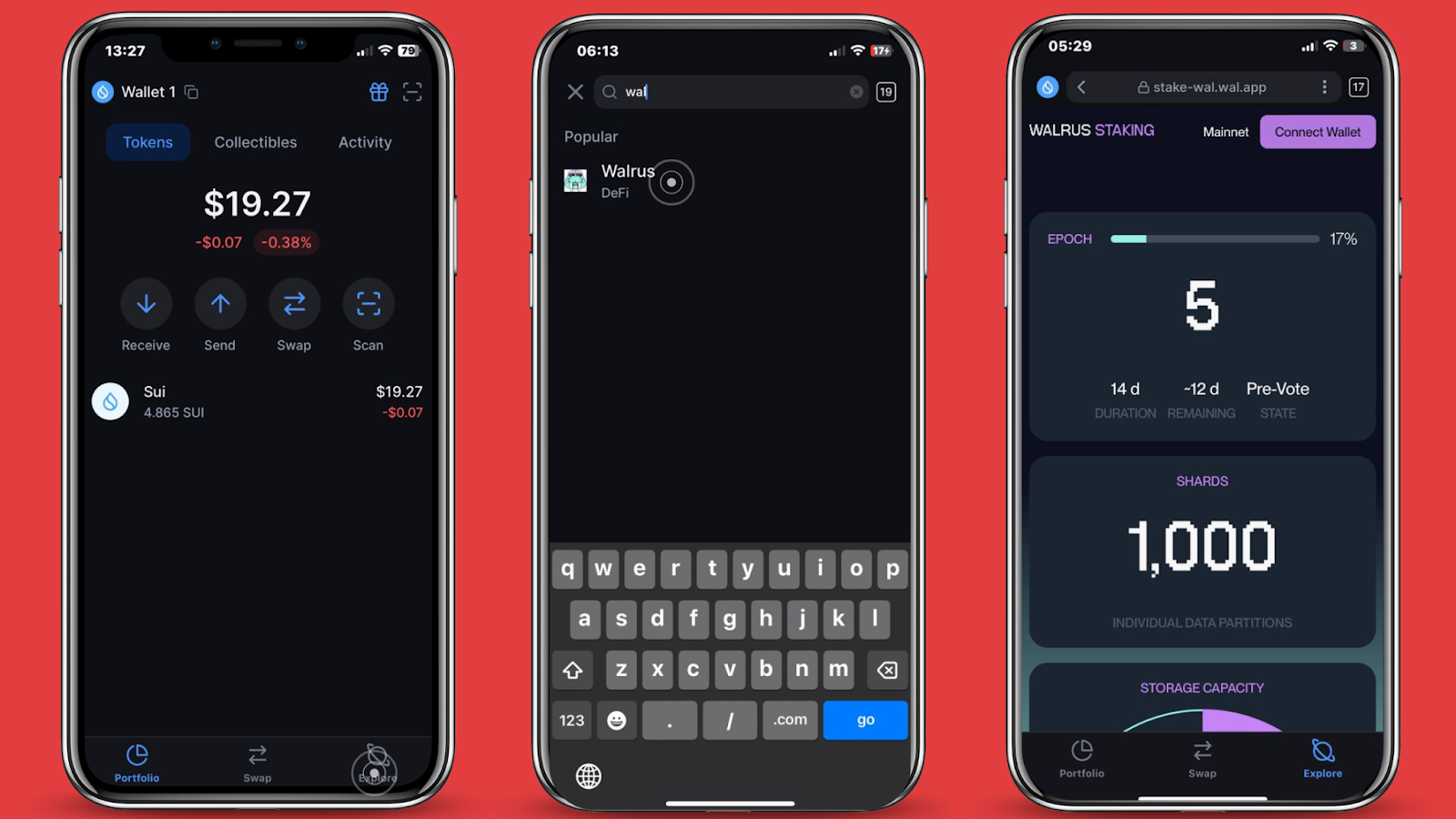
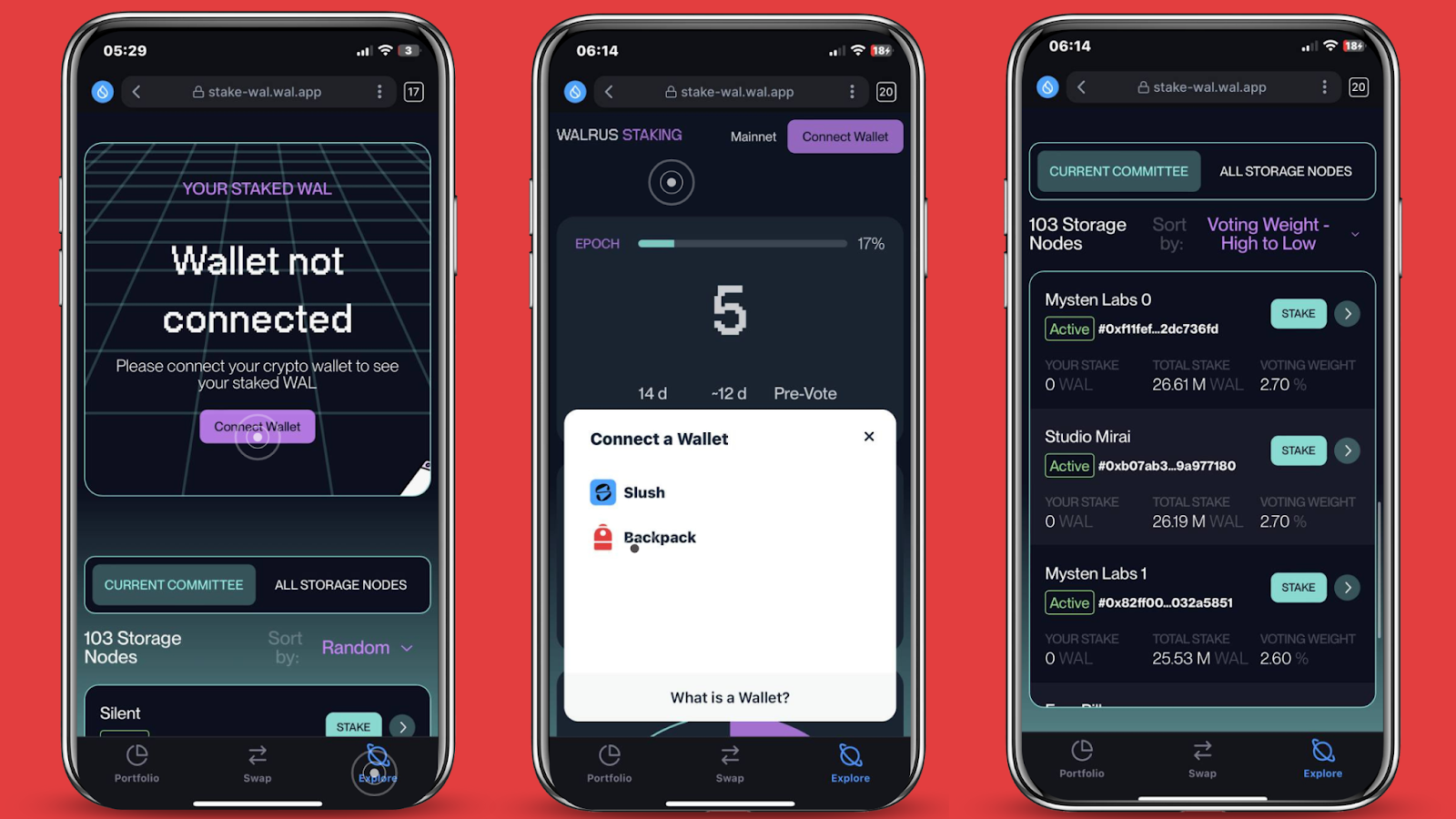
Throughout this process, refer to the official Walrus documentation for detailed instructions. The docs cover everything from setup to advanced Move contract interactions. As a crypto-intermediate user, you should find the developer experience familiar: the Sui object model and Move language power Walrus storage, and your wallet keys control data ownership.
Future Prospects
Walrus aims to redefine how decentralized apps handle data. By making storage a first-class, programmable blockchain resource, it enables new use cases: imagine NFTs with terabytes of mutable data, AI applications with on-chain dataset management, or DeFi systems that incorporate real-world data streams seamlessly. The Walrus team highlights that Mainnet unlocks “new possibilities for how data can be stored and utilized” – from AI datasets and rich media files to full websites and blockchain archives. In short, Walrus hopes to turn storage into a dynamic, interactive layer for Web3.
Looking ahead, the vision is for Walrus to be as foundational as Arweave or IPFS but with on-chain programmability. Integration with Sui’s ecosystem (and Sui’s innovations like zkLogin for easier onboarding) means everyday users could interact with Walrus through simple apps. As the protocol evolves, we expect growing community involvement: more applications, continuous protocol upgrades, and community events/hackathons fueled by the Community Reserve.


