

The traditional idea of a U.S. trading day is increasingly out of step with how global investors actually behave.
News moves around the clock, capital moves instantly, and yet access to U.S. equities still shuts down for hours at a time. That mismatch is now forcing structural change.
Key Takeaways
Nasdaq is pushing toward near-continuous stock trading to better match global investor demand
The move reflects pressure from international markets, especially Asia, where U.S. trading hours are misaligned
Extended hours could reshape U.S. market structure but raise concerns around liquidity and volatility
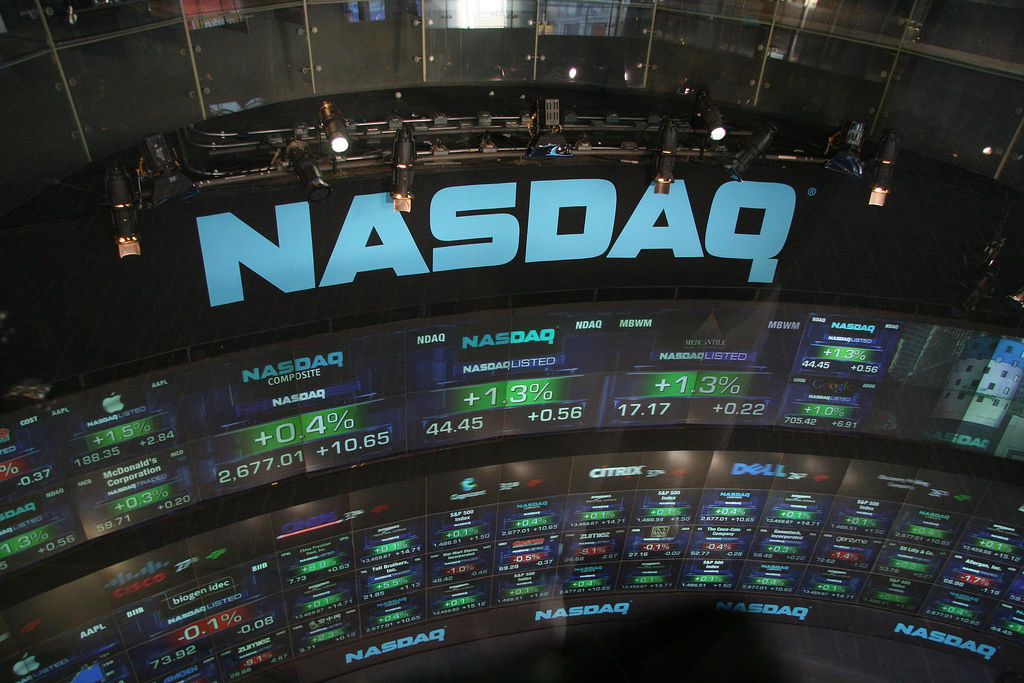
Nasdaq has formally signaled that the long-standing boundaries around U.S. market hours may no longer be sustainable, outlining a framework that would allow stocks to trade nearly nonstop during the workweek. The proposal reflects a recognition that U.S. equity markets are no longer domestic venues with international participation – they are global markets with artificial time constraints.
Global Capital No Longer Waits for Wall Street
U.S. stocks dominate global portfolios to an extent unseen in previous decades. International investors now hold trillions of dollars in American equities, and for many of them, major market-moving events occur while U.S. exchanges are closed.
In practice, that has pushed trading activity into workarounds such as derivatives, off-exchange venues, or delayed execution. Nasdaq’s plan is an attempt to pull that activity back into the primary market rather than letting it happen elsewhere.
Asia has been a major driver of this pressure. For investors operating across vastly different time zones, the current structure forces a choice between inactivity and indirect exposure. Continuous trading removes that trade-off.
A Shift Already Underway Across Market Infrastructure
Nasdaq’s move fits into a wider rethinking of how U.S. markets operate. Competing exchanges have already indicated they are preparing for longer trading schedules, and product issuers are experimenting with vehicles designed explicitly for overnight demand.
This is not about chasing volume at any cost. It is about maintaining relevance as global capital becomes less tolerant of fixed windows and regional constraints.
Even in adjacent areas such as tokenized securities and digital settlement systems, exchanges are signaling that legacy schedules may need to adapt to a world that never fully closes.
What “Almost 24/7” Actually Looks Like
Rather than a single uninterrupted session, Nasdaq’s proposal envisions a market that runs for most of the day, pauses briefly for system resets and clearing, and then resumes trading overnight. The structure preserves existing settlement mechanics while expanding access.
Late-night trades would still roll into the next official trading day, maintaining continuity for reporting and compliance while offering investors real-time execution.
The design reflects a compromise between operational reality and investor demand.
The Risks of Trading Through the Night
Not everyone is convinced the benefits outweigh the costs. Liquidity naturally thins outside core hours, and some banks have warned that price swings could become more pronounced when fewer participants are active.
There are also questions about profitability, market making incentives, and whether extended hours fragment liquidity rather than deepen it.
Still, proponents argue that these risks already exist – they are simply being pushed into less transparent venues under the current system.
Why This Matters Beyond Nasdaq
If implemented, near-continuous trading would represent one of the most meaningful changes to U.S. equity market structure in decades. It would signal that Wall Street is adapting to global behavior rather than expecting global investors to adapt to Wall Street.
Regulatory approval is still required, and the timeline points to 2026 at the earliest. But the direction is clear.
The trading day, as investors have known it for generations, is starting to lose its relevance. Nasdaq’s proposal is not just an operational update – it is an acknowledgment that markets no longer sleep on a schedule set by geography.


