

Bitcoin has been under intense selling pressure in recent sessions, leaving market participants increasingly cautious about near-term direction. On Wednesday, BTC briefly surged from the $86,000 area toward $90,000, offering short-term investors a moment of relief after weeks of downside volatility.
That rebound, however, proved short-lived. Price quickly retraced back to the $86,000 level, once again stalling bullish momentum and reinforcing the perception that sellers remain firmly in control.
This failed recovery attempt has weighed heavily on sentiment, particularly among short-term holders who entered positions at higher levels during the previous consolidation range. According to a report by Axel Adler, on-chain data reveals that this cohort has entered a clear stress regime. Bitcoin’s price has fallen below the average purchase price of short-term holders, a condition that historically increases the probability of reactive selling behavior.
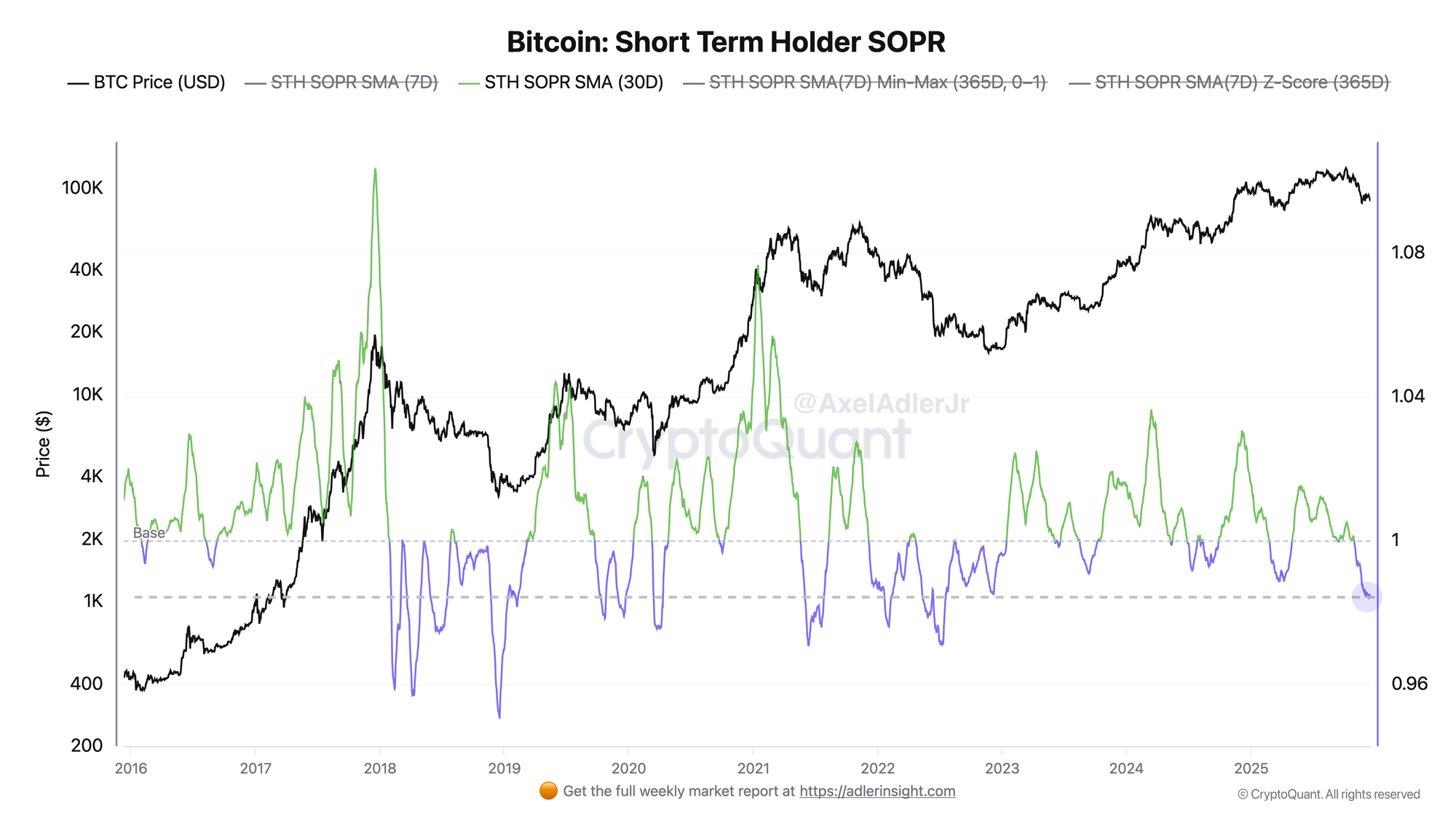
The stress is further reflected in the Short-Term Holder Spent Output Profit Ratio (STH-SOPR, 30-day), which has declined to 0.98. This reading indicates that short-term holders are, on average, realizing losses when they sell. Such environments often coincide with deteriorating confidence and heightened sensitivity to further downside moves.
With BTC unable to hold recent relief rallies and short-term participants increasingly underwater, the market enters a fragile phase. The coming days will be critical in determining whether this pressure evolves into deeper capitulation or stabilizes into a base-building process.
Short-Term Holders Under Stress as Loss-Taking Accelerates
Adler explains that the Short-Term Holder Spent Output Profit Ratio (STH-SOPR 30D) is a critical gauge of short-term market stress, as it measures whether recent coin sales are occurring at a profit or a loss. Values above one indicate that short-term holders are selling profitably, while readings below one signal loss realization.
Historically, sustained periods below one reflect deteriorating confidence and raise the risk of further downside, as loss-taking behavior can cascade into additional sell pressure. A continued decline in SOPR would likely intensify this dynamic and open the door to new local lows.
By contrast, a meaningful recovery would require the metric to reclaim and hold above the one level, signaling that selling pressure is being absorbed and losses are no longer dominant.
This stress is reinforced by the Short-Term Holders Positive vs Negative Sentiment chart. The indicator classifies holders based on whether they are in profit or at a loss. Over the past five weeks, sentiment has shifted decisively toward the orange and purple zones, representing negative positioning.
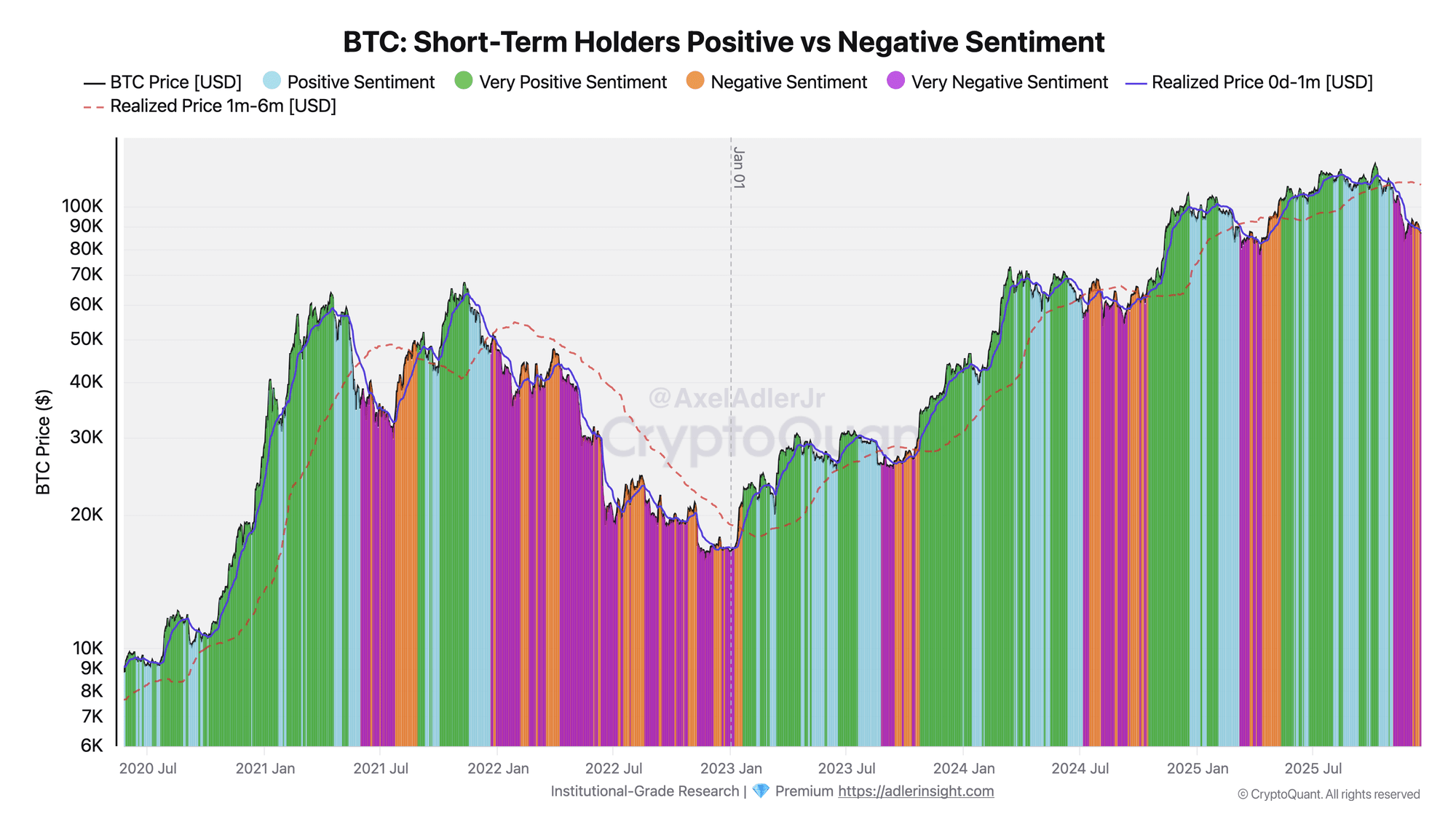
The growing dominance of underwater holders increases the probability of panic-driven selling. Together, both charts deliver a consistent message: short-term participants are under pressure, and the current environment remains fragile until clear signs of relief emerge.
Bitcoin Tests Critical Support as Bears Persist
Bitcoin continues to trade under pressure, with the chart showing price consolidating around the $87,000 area after a sharp corrective move from the October highs near $125,000. The rejection from the upper range marked a clear shift in market structure, as BTC lost the 50-day and 100-day moving averages and failed to reclaim them on subsequent rebounds. The blue moving average has now turned downward, reinforcing the short- to medium-term bearish bias.
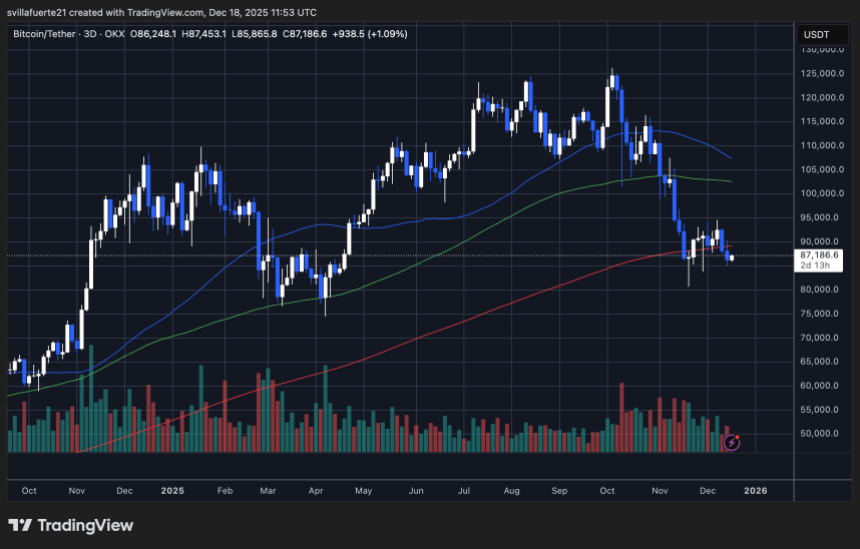
Price is currently hovering just above the 200-day moving average, plotted in red, which sits near the $86,000–$88,000 zone. This level represents a critical area of long-term demand and structural support. Historically, sustained closes below the 200-day average tend to coincide with deeper corrective phases or prolonged consolidation.
Volume dynamics add to the cautious outlook. Selling pressure expanded significantly during the breakdown in October and November, while recent rebound attempts have occurred on relatively muted volume. This suggests that short-covering and tactical buying, rather than strong spot demand, are driving price stabilization.
Structurally, Bitcoin is forming lower highs since the peak, keeping the broader trend vulnerable. A recovery scenario would require BTC to reclaim the $95,000–$100,000 region and hold above the declining moving averages. Until then, the chart favors continued consolidation or further downside risk around the long-term support zone.
Featured image from ChatGPT, chart from TradingView.com


