

Nervos Network is a decentralized blockchain platform that uses a two-layer architecture for scalability, security, and decentralization, with the goal of providing a foundation for a decentralized financial system.
What is Nervos Network?
Nervos Network is a decentralized, open-source blockchain platform that aims to provide a sustainable and secure infrastructure for decentralized applications (DApps) and blockchain-based services. Nervos Network uses a unique two-layer architecture to separate the storage and computation functions of the blockchain, which improves scalability while maintaining security and decentralization.
History of Nervos Network (CKB)
The Nervos Network was founded in 2018 by a team of developers including Jan Xie, a former core developer at Ethereum, and Daniel Lv, a co-founder of imToken, a leading Ethereum wallet. The team was motivated by the idea that blockchain technology had not yet fulfilled its potential and saw an opportunity to create a new platform that would solve some of the key problems that other blockchain networks faced. The team was able to raise $28 million in a public token sale, which gave them the resources they needed to develop and launch the Nervos Network.
The Nervos Network was designed to solve two major problems that plagued other blockchain networks: scalability and interoperability. The team created a unique architecture that uses two layers: the first layer, called the Common Knowledge Base (CKB), is a secure and decentralized layer that stores all the transaction data and smart contracts, while the second layer is designed for faster and cheaper transactions. This architecture allows the Nervos Network to scale up while maintaining security and decentralization.
Since its launch, the Nervos Network has gained a lot of attention in the blockchain community and has attracted partnerships with a number of major players in the industry, such as imToken, Binance, and Huobi. The network has also seen significant growth in terms of its user base and adoption, with developers and businesses using it to build decentralized applications (dApps) and other solutions. The Nervos Network continues to evolve and innovate, with the team working on new features such as a decentralized exchange (DEX) and a layer 2 scaling solution called the Nervos AppChain.
How does Nervos Network work?
The Nervos Network is a two-layer blockchain platform that is designed to address the scalability and interoperability challenges faced by other blockchain networks. The first layer, called the Common Knowledge Base (CKB), is a secure and decentralized layer that stores all transaction data and smart contracts. This layer uses a unique proof-of-work consensus mechanism that allows for high security while also enabling users to stake their tokens and earn rewards.
The second layer of the Nervos Network is designed for faster and cheaper transactions. This layer uses off-chain scaling solutions, such as state channels and sidechains, to process transactions more quickly and efficiently. By using a two-layer approach, the Nervos Network is able to achieve scalability without sacrificing security and decentralization. The Nervos Network is interoperable with other blockchain networks, allowing for easy integration with existing systems and networks.
The Common Knowledge Base (CKB)
The Common Knowledge Base (CKB) is the first layer of the Nervos Network and is responsible for storing all transaction data and smart contracts. This layer uses a secure and decentralized approach to ensure that data is stored safely and can be accessed by anyone who needs it. The CKB uses a unique approach to data storage called the “cell model,” which allows for flexible and efficient storage of data. Each cell in the CKB represents a piece of data, such as a transaction or a smart contract, and can be accessed and modified by anyone with the necessary permissions.
The CKB layer also uses a proof-of-work consensus mechanism to ensure that data is stored securely and that transactions are processed in a timely and efficient manner. Users can stake their tokens and participate in the consensus mechanism, earning rewards for contributing to the network’s security and integrity.
Nervos’ Multi-Layer Structure
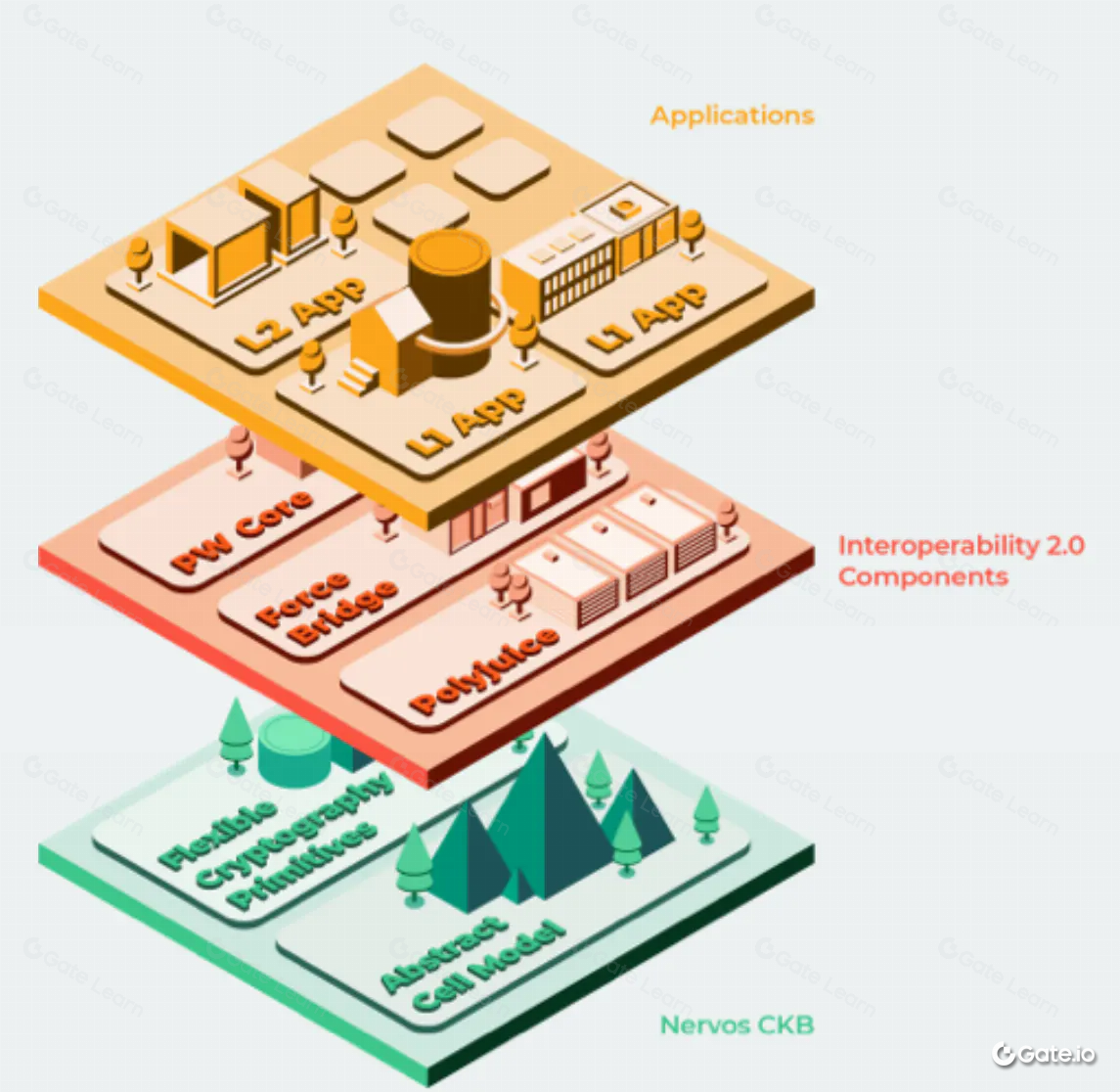
Source: Nervos Network
Scalability has always been a fundamental concern in the blockchain space, and Nervos Network has taken a proactive approach to address this challenge. Nervos has been designed with scalability in mind, utilizing a multi-layer structure that allows for efficient and effective scaling of blockchain transactions. This innovative approach involves dividing the blockchain’s functionality into two distinct layers: Layer 1 and Layer 2.
At Nervos, the philosophy is rooted in the belief that blockchains are best suited for a multi-layer design, where each layer serves a specific purpose. Layer 1, the base layer, is responsible for performing the highest-value functionality, such as storing assets securely and immutably. This layer is designed to handle computationally intensive tasks and is dedicated to ensuring the fundamental capability of a blockchain: the ability to store value in a decentralized manner.
However, the mistake often made when attempting to solve the blockchain trilemma (scalability, security, and decentralization) is assuming that all transactions must occur solely on the base layer. Nervos recognizes that the true power and transformative potential of blockchains lie in their ability to revolutionize the way value is stored and transferred. To achieve scalability, Nervos intelligently shifts high-volume transactions, which individually require less computational power, to Layer 2.
By moving these transactions to Layer 2, Nervos can strike a balance between maintaining the network’s ability to securely store assets and accommodating mainstream demand. Layer 2 is designed to handle the bulk of transactional activity, as it is optimized for high-volume, low-computational transactions between users. This approach ensures that Nervos can efficiently scale while continuing to meet the demands of a growing user base. Nervos’ multi-layer structure offers a scalable solution by leveraging the strengths of each layer.
Nervos Network’s Main Features: Force Bridge, dApps and CKB-VM
The Nervos Network is built on RISC-V, an open-source instruction set architecture (ISA) that is designed to be highly scalable and customizable. This allows the network to be adapted to a wide range of use cases and applications, while also ensuring that it remains flexible and future-proof. Additionally, RISC-V is known for its energy efficiency, which makes the Nervos Network a more environmentally friendly choice compared to other blockchain networks.
The Nervos Network uses a Proof-of-Work (PoW) consensus mechanism to secure the network. PoW is a highly secure and proven method for ensuring the integrity of a blockchain network and is widely used by other major networks such as Bitcoin and Ethereum. By using PoW, the Nervos Network is able to maintain a high level of security, while also ensuring that the network remains decentralized and resistant to censorship and attacks.
Force Bridge: Interoperability with other blockchain networks
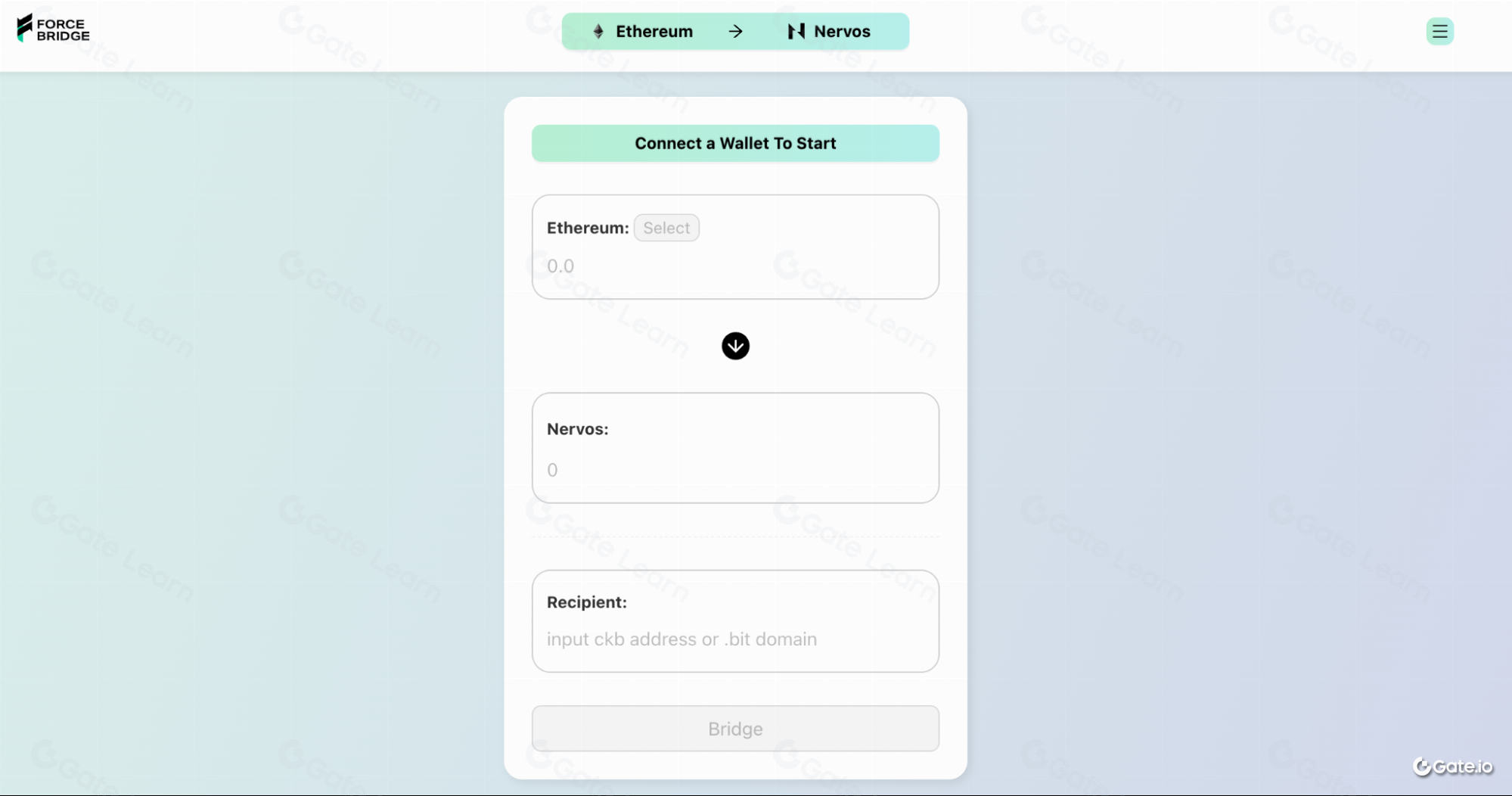
Source: Force Bridge Network
Interoperability is a key feature of the Nervos Network, as it allows for easy integration with other blockchain networks and data exchange between different systems. The Nervos Network uses a unique approach to interoperability called the “Force Bridge”, which is a bi-directional bridge that connects the Nervos Network to other blockchain networks, such as Ethereum and Binance Smart Chain. This bridge allows for the seamless transfer of assets and data between different networks, enabling users to take advantage of the benefits of multiple systems without having to worry about compatibility or technical limitations.
The Force Bridge is designed to be highly flexible and scalable, allowing for the easy addition of new networks and data types as needed. It uses a trustless approach to data transfer, meaning that users can be confident that their data and assets are secure and that there is no risk of fraud or manipulation.
dApps on the Nervos Network: Innovation and Possibilities
The Nervos Network offers a robust platform for developing decentralized applications, or dApps. These applications are built on top of the Nervos Network’s infrastructure, utilizing the network’s smart contract capabilities and secure data storage to create a wide range of use cases. Some popular dApps on the Nervos Network include decentralized finance (DeFi) applications, gaming applications, and social media platforms.
One key advantage of building dApps on the Nervos Network is the flexibility and scalability of the underlying infrastructure. The network’s layered architecture and unique cell model allow for the easy storage and processing of a wide range of data types and applications, making it an ideal platform for developers looking to build complex and innovative applications. Additionally, the Nervos Network’s interoperability with other blockchain networks, such as Ethereum and Binance Smart Chain, allows for easy integration with existing ecosystems and data exchange between different systems.
Nervos AppChain
Nervos AppChain is a unique sub-network of the Nervos Network that is specifically designed for the development of decentralized applications (dApps). It offers a range of features and benefits that make it an ideal platform for developers looking to build innovative and secure applications. One key advantage of AppChain is its ability to support a wide range of programming languages, including C, C++, Rust, and Python. This makes it easy for developers to build and deploy applications using their preferred language and tools, while also ensuring compatibility with existing systems and infrastructure.
The network uses a layered architecture and cell model, which allows for the easy storage and processing of a wide range of data types and applications. Additionally, AppChain is designed to be highly scalable, allowing for the easy addition of new nodes and resources as needed. This ensures that applications built on the network are secure, reliable, and able to handle high volumes of traffic and data.
CKB-VM
CKB-VM (Common Knowledge Base Virtual Machine) is the virtual machine at the heart of the Nervos Network, responsible for executing smart contracts and processing transactions. It is designed to be highly efficient and flexible, allowing for the development of complex and feature-rich decentralized applications (dApps) on the network.
CKB-VM supports multiple programming languages, including C, C++, Rust, and AssemblyScript, among others. This gives developers greater flexibility and choice in their development approach and makes it easier to create and deploy applications on the network. Additionally, CKB-VM uses a bytecode format that is optimized for efficiency, which allows for faster and more reliable execution of smart contracts.
CKB-VM also supports both stateful and stateless smart contracts. This allows for a wide range of applications and use cases, including decentralized finance (DeFi), gaming, identity verification, and more. The flexibility and scalability of CKB-VM make it a powerful tool for developers looking to create innovative dApps on the Nervos Network.
Nervos Ecosystem
The Nervos Network has a growing ecosystem of decentralized finance (DeFi) applications, which leverage the network’s secure data storage and smart contract capabilities to create a range of financial products and services. These applications are built on top of the network’s infrastructure, allowing for seamless integration with other dApps and blockchain networks. Some popular DeFi applications on the Nervos Network include stablecoin issuance platforms, decentralized exchanges, and lending and borrowing protocols.
The Nervos Network for DeFi applications has a focus on security and scalability. The network’s layered architecture and unique cell model ensure that data and assets are stored securely, while also allowing for easy processing and transfer of value. Additionally, the Nervos Network’s interoperability with other blockchain networks, such as Ethereum and Binance Smart Chain, allows for easy integration with existing DeFi ecosystems, expanding the reach and utility of Nervos-based applications.


