

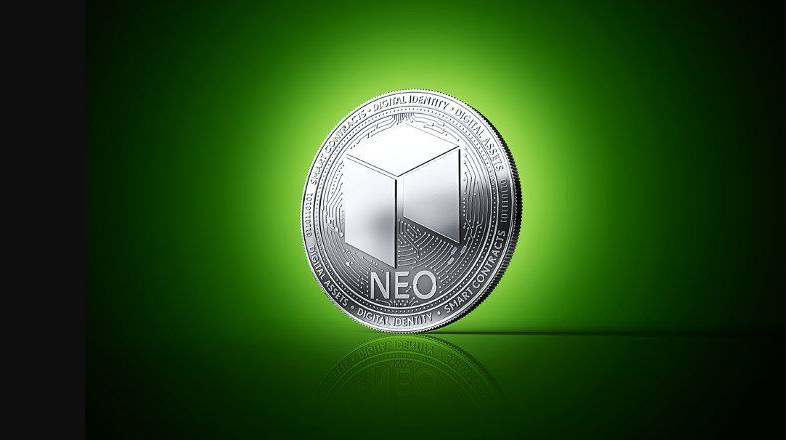
What Is NEO?
NEO is a blockchain developed to fully digitize assets and identities through smart contracts, which will facilitate the emerging smart economy. In the theory behind a smart economy, digital assets and digital identities are seen as being essential to improving the quality of life for everyone.
NEO aims to automate digital asset management through smart contracts, with the eventual goal of building a distributed, network-based, smart economy system using decentralized applications.
KEY TAKEAWAYS
NEO is a blockchain ecosystem designed to be used to build a smart economy.
NEO has two native tokens. NEO is used to establish ownership and management roles in the blockchain, and NEO Gas is used to pay for transactions on the blockchain.
NEO defines a smart economy as one that uses smart contracts to manage and secure digital identities and assets.
Understanding NEO
NEO was founded as AntShares by Da Hongfei and Erik Zhang in 2014. It was rebranded to NEO in June 2017. It is a blockchain-based platform that supports two native tokens, NEO and NEO Gas. The NEO project's blockchain is designed to digitize identities and assets and use smart contracts to track and transfer ownership—a smart economy.
Digital Assets
Digital assets are not only digital property but are also physical assets tokenized by transferring their value to the blockchain and having it issue a token for each asset. Tokenization creates a decentralized, trustworthy, traceable, and transparent manner for asset management, free of intermediaries and their associated costs.
Users can record, buy, sell, exchange, or circulate various assets. NEO developers believe this digitization supports asset protection because they are registered on its platform, giving them a validated digital identity.
Digital Identity
Digital identity enables verifiable key information about participating individuals, organizations, and other entities that exist in the digital context. The developers believe that securing individual information through blockchain, consensus mechanisms, and encryption methods is essential as life becomes more and more digital.
NEO uses the Public Key Infrastructure standard (X.509) as a guide for managing identities by creating encrypted private and public keys used to verify identities. Digital identities can be verified using facial recognition, fingerprints, voice, SMS, and multi-factor identification methods.1
Smart Contracts
Smart contracts are code that automatically execute transactions and agreements between different parties. Smart contracts remove the requirement for third-party involvement because transfers are automatically completed. They also allow traceability, transparency, and transaction irreversibility.
How Is Neo Different From Bitcoin and Ethereum?
NEO maintains a clear distinction from other standard blockchain platforms in its focus on being regulatory-compliant and a development platform for decentralized applications. It also uses a different consensus mechanism than Bitcoin and Ethereum, called delegated Byzantine Fault Tolerance (dBFT).
Delegated Byzantine Fault Tolerance
Rather than use a system like proof-of-work where random numbers are generated in a competitive bid to open a new block on the blockchain, Delegated Byzantine Fault Tolerance (dBZT) designates nodes in consensus rounds using a "staking" method similar to proof-of-stake to achieve a majority agreement of more than two-thirds.
To address the issue of non-reliable validators (the Byzantine General Problem), consensus nodes with NEO Gas staked are randomly chosen for consensus rounds to validate transactions and open new blocks.
Ethereum
While digitized assets and smart contracts are popular on the Ethereum blockchain, the third key feature of what it calls “digital identity” separates NEO from the rest. Every participant operating on the NEO platform must have a unique digital identity that can be verified—which means that you must enter information unique to you to receive a public key, somewhat reducing the anonymity provided by other blockchains.1
Ethereum is designed to be scaled for any application a person can think of, be it new currencies, non-fungible tokens, decentralized apps, or something as of yet uninvented. NEO claims to be focused on facilitating a smart economy.
Bitcoin
Bitcoin was created to be a decentralized digital currency and uses proof-of-work in its consensus mechanism. It has one cryptocurrency that is used as a reward for mining—the process of validating transactions and opening new blocks on the chain. The NEO network is less dependent on processing power for validation, so transaction costs and times are much lower.
Is NEO a Good Crypto?
Whether NEO is a good crypto depends on your risk tolerance, cryptocurrency outlook, and what you intend to use it for. It might increase in value, or it might not. NEO is designed to track and transfer asset ownership but also has a market value.
How Many NEO Coins Are Left?
There were 50 million coins issued to project backers, and 15 million are held for contingencies. In addition, there are 20 million being used to incentivize developers and 15 million for cross-investing in other projects. No other coins will be issued, but NEO is available on some exchanges.1
What Is NEO in Crypto?
NEO is a cryptocurrency used to incentivize the development of the NEO smart economy blockchain.
The Bottom Line
NEO is a blockchain designed to create a smart economy by digitizing assets and identities and introducing interoperability—the ability for different blockchains to communicate with each other.
The comments, opinions, and analyses expressed on Investopedia are for informational purposes only. Read our warranty and liability disclaimer for more info. As of the date this article was written, the author does not own cryptocurrency.
Trade around the clock
Did you know that 82% of Nvidia’s gains between March 2024 and February 2025 happened outside of regular Nasdaq hours?* Pepperstone offers CFDs on 100+ US shares 24 hours a day, meaning you never need to miss out when the markets move. Join now for super-fast execution backed by dedicated support. 74-89% of retail CFD accounts lose money *Data from the Pepperstone platform.


