

The biggest threat to Russian alternatives to Visa and Mastercard comes not from sanctions or Western competitors, but from the country’s own central bank digital currency, an expert warns.
Natalia Milchakova, senior analyst at the brokerage Freedom Finance Global, told the Russian media outlet Deita that the digital ruble will become a “serious competitor” to Russian traditional financial payment systems like the MIR card.
“The launch of the digital ruble will slow the growth of the Russian bank card market by 7% to 9% per year,” she said.
Last year, Russian firms issued around 475 million cards, representing a year-on-year growth rate of 17%. But with the central bank poised to roll out the digital ruble nationwide in September, experts say blockchain-powered alternatives may eventually eclipse traditional financial solutions like credit cards.
Mandated usage
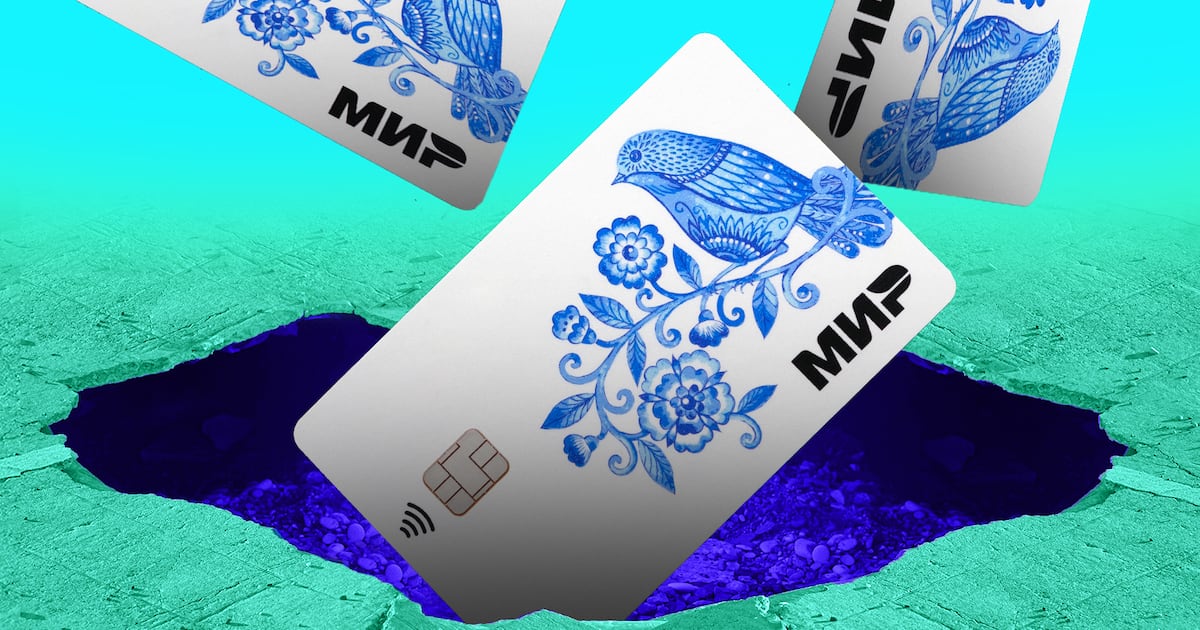
The MIR card was launched in 2014 by the central bank-run National Payment Card System to safeguard against Western sanctions. Adoption was initially slow. That changed in 2017 after a mandate required public sector firms to pay employees’ wages using MIR cards.
Banks must provide all pensioners, civil servants, public sector employees, and welfare recipients with MIR cards.
The National Payment Card System said last year that in the decade since its inception, MIR card transaction volumes have exceeded $1.2 trillion, with more than 86 billion total transactions.
MIR now holds an 80% share of the payments market, bolstered by the departure of Visa and Mastercard, Milchakova said. The firms exited Russia after the outbreak of the war in Ukraine in 2022.
“Even if foreign players return, they will no longer be able to retake a leading position in the Russian market,” Milchakova said.
Blockchain competition
Milchakova added that other fintech solutions, which use QR codes and biometric technology, will also intensify competition in the space.
These solutions may already account for up to 25% of daily transactions at Russian point-of-sale terminals, she said.
“Government and fintech solutions will have the greatest impact on the cashless payments market in the medium term,” Milchakova said.
Her comments appear to align somewhat with the central bank’s own forecasts for the digital ruble.
In late December, Alla Bakina, the head of the central bank’s national payment program, told the Russian news agency TASS that the digital ruble is set to corner 5% of the Russian payments market by 2032.


