

Explore how the Particle Network (PARTI) is building a modular Layer 1 blockchain designed to deliver true chain abstraction. This article describes how the project is empowering users to maintain a single unified address and consolidated balance that seamlessly operates across all blockchain networks.
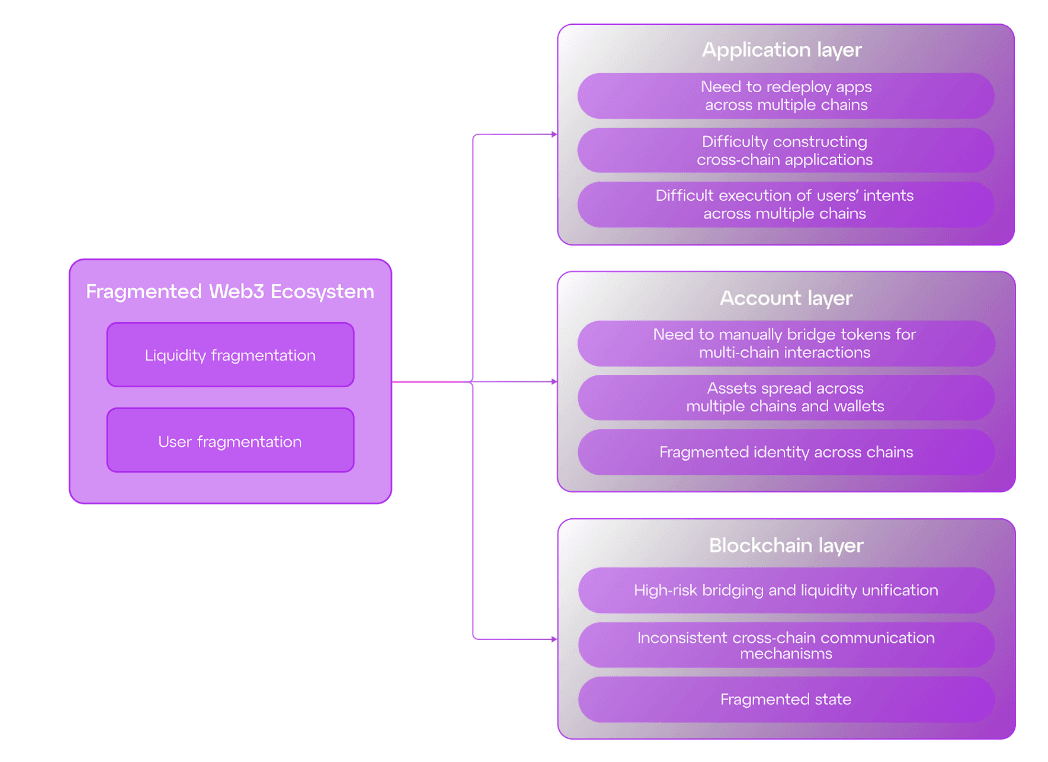
The cryptocurrency landscape continues to evolve with an ever-growing proliferation of blockchain networks. From Ethereum layer-2 solutions to alternative layer-1 platforms and specialized application chains, new use cases for blockchain emerge monthly. While this diversity offers customized solutions, it also creates problems because users encounter increasing complexity and fragmented liquidity. For Web3 to compete with Web2 in mainstream adoption, it must achieve complete chain abstraction - where users interact and transact without blockchain awareness. Particle Network is addressing this through development of a modular Layer-1 solution that establishes universal interoperability. It aims to provide each user with a single, consistent address and unified asset balance across all blockchain ecosystems.
What is Particle Network (PARTI)?
Particle Network is a modular Layer 1 blockchain developed using the Cosmos SDK framework and CometBFT consensus engine. The Cosmos SDK serves as an open-source foundation for creating independent, proof-of-stake (PoS) based blockchain networks with full sovereignty.
Particle Network was co-founded in April 2022 by industry veterans Pengyu Wang and Tao Pan, who drew on their extensive background in mobile game development to create powerful backend infrastructure solutions for Web3 builders. The project has successfully secured $25 million across four funding rounds, backed by prominent investors such as Spartan Group, Gumi Crypto, Animoca Ventures, LongHash Ventures, and Alibaba Group. The network reached a significant milestone on May 2, 2024 with the launch of its incentivized L1 testnet, Particle Pioneer, which rewards early participants with points.
How Does Particle Network Work?
Particle Network's Layer 1 blockchain delivers three fundamental capabilities designed to realize seamless chain abstraction:
Universal Accounts - A single identity across all chains
Universal Liquidity - Unified access to cross-chain assets
Universal Gas - Simplified transaction fuel management
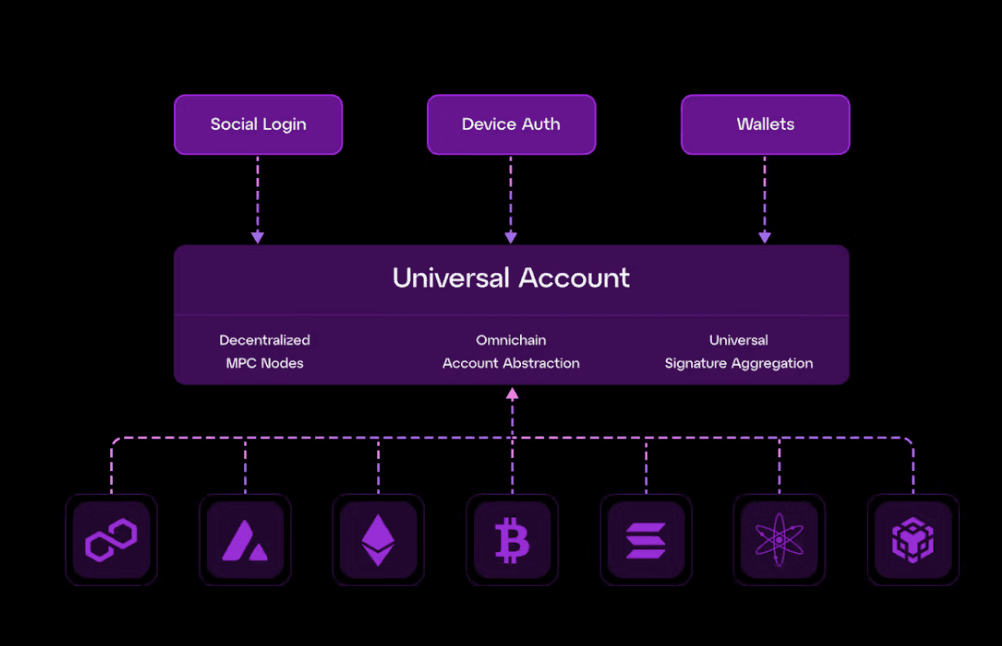
Together, these innovations eliminate the need for manual multichain operations, creating a Web2-like experience where blockchain complexities become invisible to end-users. Each component serves a distinct purpose in abstracting away the fragmented nature of today's multichain environment.
Key Features and Use Cases for Particle Network
Universal Accounts
Particle Network's Universal Accounts provide users with a single, consistent address and aggregated balance that functions seamlessly across all connected blockchains. Built on ERC-4337 smart account technology, these accounts offer enhanced flexibility, security, and crucially, native cross-chain functionality. This architecture abstracts away chain-specific complexities, presenting users with a unified asset view.
Consider a user wanting to mint an L2 NFT while their ETH remains on Ethereum Mainnet. With traditional segmented accounts, this would require the user to approve bridging contract, transfer ETH between chains, approve minting contract, and complete the minting transaction. Particle Network’s Universal Accounts reduce this multi-step process to a single transaction signature, dramatically simplifying cross-chain interactions.
Universal Liquidity
Universal Liquidity serves as the foundation enabling Universal Accounts to maintain a unified asset balance across all supported blockchains. Essentially functioning as Particle Network's native cross-chain bridge, this system empowers users to execute transactions on any connected blockchain, irrespective of where their funds are originally stored.
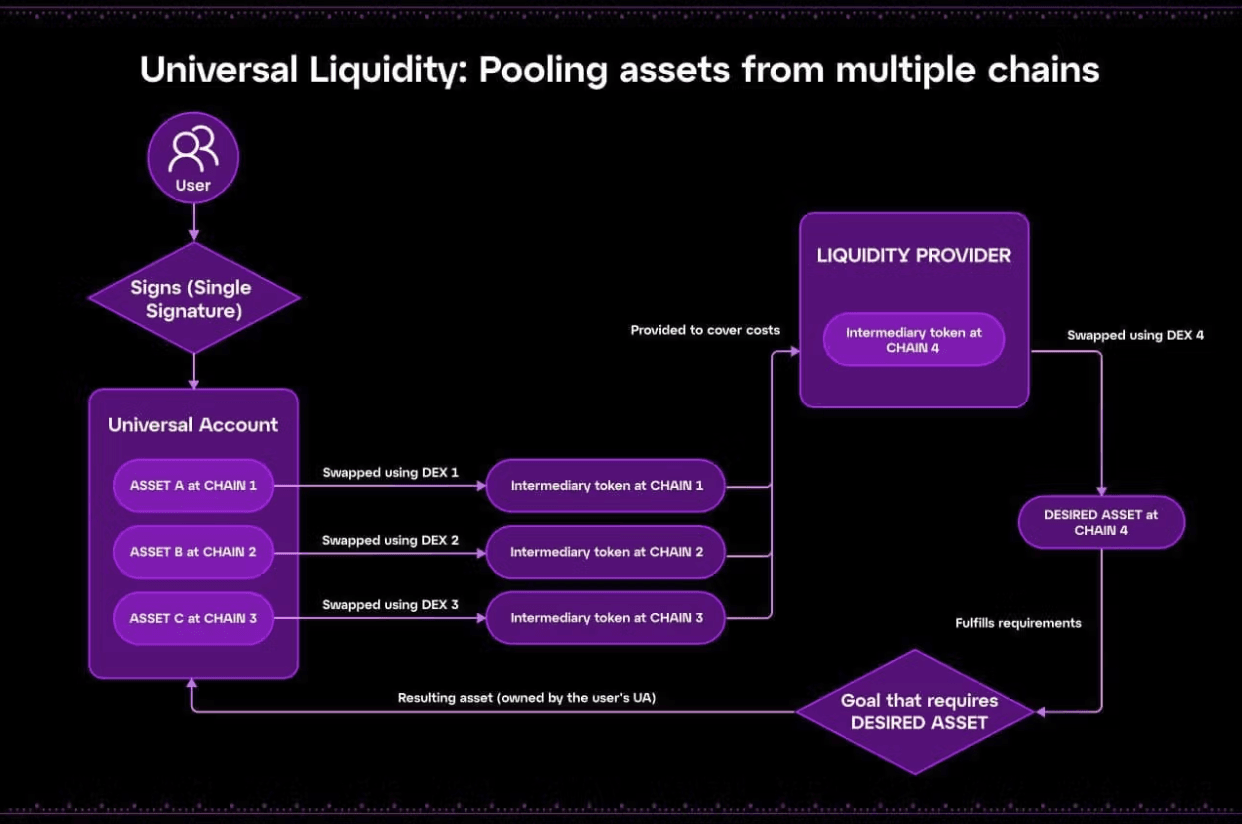
When a user holding ETH on Ethereum wishes to purchase a token on Solana, the Universal Liquidity system automatically handles fund transfer between chains, token conversion, and final settlement. This automation is made possible through Particle Network's decentralized Bundler Node network, which processes operations on users' behalf. By eliminating manual cross-chain interactions, Universal Liquidity transforms what normally requires multiple transactions across different blockchains into a simple, single-transaction experience.
Universal Gas
Every multi-chain system must address the fundamental challenge of gas fee management. Particle Network tackles it with the Universal Gas solution, which eliminates the need for users to hold specific gas tokens. By leveraging the network's Paymaster infrastructure, users can pay transaction fees using any supported token across any connected blockchain - such as using Ethereum-based USDC to cover gas costs for a Solana transaction.
What is the PARTI Token Used for?
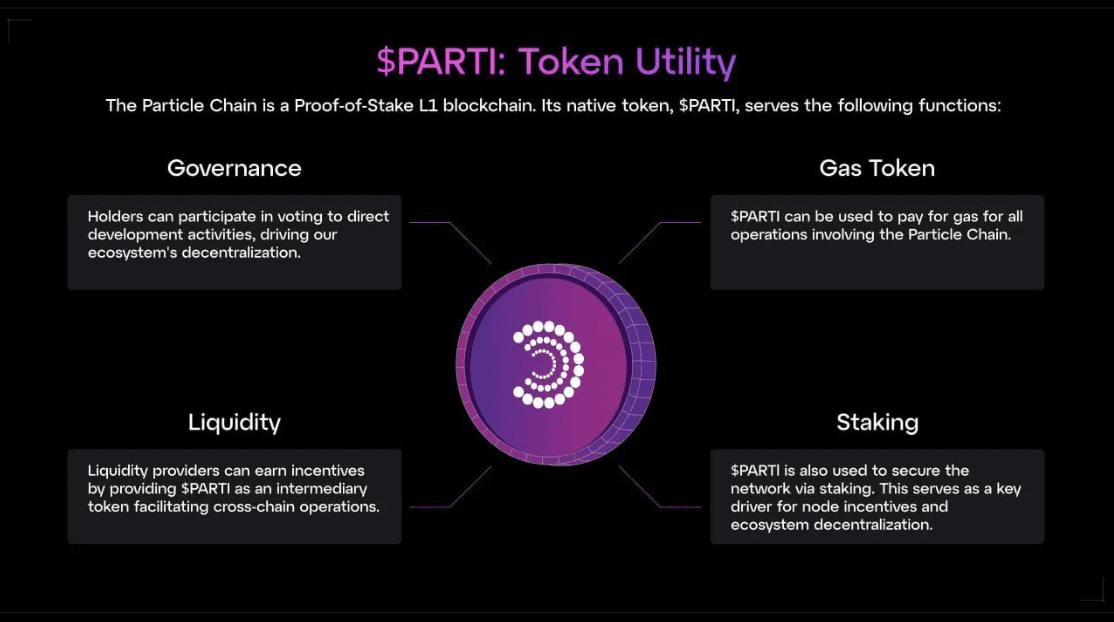
The PARTI token serves as the native utility token of Particle Network's Layer 1 blockchain, with its primary function being the facilitation of the Universal Gas system. This innovative mechanism enables users to pay transaction fees using any supported cryptocurrency across any connected blockchain, while PARTI automatically handles the backend settlement. The PARTI token streamlines user experience and represents a key solution to the industry-wide challenge of gas token fragmentation.
Core Functions:
Processes and settles all cross-chain transactions within the Particle ecosystem
Powers the Universal Gas feature (automatic gas token conversion)
Eliminates the need to manage multiple native gas tokens across chains
User Benefits:
No Direct PARTI Requirement: Users aren't forced to hold PARTI - their preferred crypto tokens are seamlessly converted on the backend
Simplified Experience: Removes the hassle of maintaining separate gas balances
Interoperability: Enables truly chain-agnostic transactions
What’s the Outlook for Particle Network?
Chain abstraction can finally solve two of the most critical challenges facing blockchain adoption. The first stems from how multichain architectures inherently divide liquidity and user bases into disconnected ecosystems. The second is how regular crypto wallet applications often lack the fluidity of Web2 applications that internet users are used to. Historically, these two issues have been tackled in isolation - with cross-chain bridges addressing interoperability between networks and smart contract wallets improving interface design.
By unifying these solutions, chain abstraction creates an integrated framework that delivers both seamless cross-chain functionality and superior user experience. While most projects previously specialized in one aspect, emerging platforms like Particle Network now combine both capabilities to offer a more streamlined solution. With its dual staking mechanism and comprehensive approach to chain abstraction, Particle Network competes effectively with other industry players such as NEAR, Avocado, and XION in advancing this next-generation blockchain infrastructure.


