

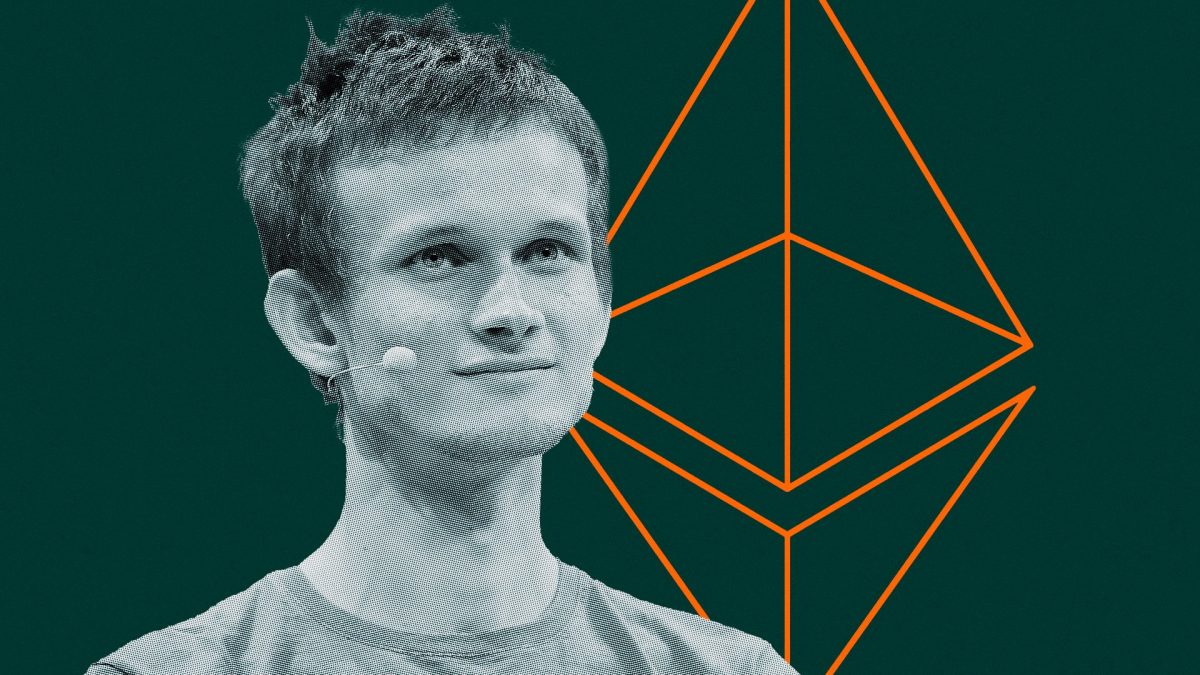
Ethereum co-founder Vitalik Buterin believes the network has finally arrived at the destination envisioned more than a decade ago.
In a recent post, he reflected on how Ethereum’s evolution within today’s Web3 stack now closely aligns with the ambitions laid out during the project’s earliest days.
Key takeaways:
Ethereum has fulfilled its original vision after transitioning to proof-of-stake and embracing ecosystem-led scaling.
Core functionality shifted away from the base layer toward layer-two networks and side projects.
Messaging, storage, and scalability goals were achieved largely outside the main protocol.
Buterin argues the full Web3 tech stack is now in place and continuing to strengthen.
According to Buterin, the move to proof-of-stake was a defining milestone, resolving long-standing concerns around energy use and transaction costs. At the same time, Ethereum moved away from the idea that all activity should occur on the base layer, allowing a wider ecosystem of scaling solutions to absorb demand.
In 2014, there was a vision: you can have permissionless, decentralized applications that could support finance, social media, ride sharing, governing organizations, crowdfunding, potentially create an entire alternative web, all on the backs of a suite of technologies.… pic.twitter.com/ihU9qOrXfG
— vitalik.eth (@VitalikButerin) January 14, 2026
When Ethereum was first outlined in 2014, the ambition extended far beyond payments. Buterin described a decentralized alternative to today’s internet—one capable of supporting finance, social networks, governance systems, crowdfunding platforms, and other digital services without centralized gatekeepers.
Reality unfolded differently in the early years. Most applications ran directly on Ethereum’s main chain, leading to congestion, rising fees, and increasing data storage pressure. This diverged from the initial architecture, which envisioned Ethereum as a settlement layer supported by separate systems for messaging and data storage, then known as Whisper and Swarm.
How the broader ecosystem filled in the gaps
Buterin now argues that Ethereum’s founding blueprint was ultimately realized not through constant base-layer changes, but through parallel development across the ecosystem. While Ethereum itself focused on the proof-of-stake transition, external builders delivered the missing pieces.
Layer-two networks and zero-knowledge Ethereum Virtual Machine projects took on the scaling role once associated with sharding, enabling faster and cheaper transactions without overwhelming the main chain. For messaging and off-chain computation, the Waku network emerged as a practical successor to Whisper. On the storage side, InterPlanetary File System has become a core component of decentralized infrastructure, even though permanent archiving remains an unresolved challenge.
Buterin has also cautioned that hype-driven narratives often obscured this steady progress. Despite that, he maintains that all foundational components for Web3 now exist and are improving year by year.
Ethereum has retained its pseudonymous design, remaining largely detached from traditional Web2 identity systems. Privacy tools such as the Railgun mixer have added another layer of anonymity, even as selective wallet blacklisting attempts to balance privacy with regulatory expectations.
Looking forward, Buterin has raised the idea of an “ossified” Ethereum—one capable of operating reliably over the long term without frequent disruptive upgrades. Recent protocol changes have increasingly targeted improvements for layer-two networks, reinforcing the idea that Ethereum’s future growth will be driven more by its ecosystem than by radical base-layer evolution.
In terms of usage, Ethereum remains highly active. Daily wallet activity sits near recent highs, supported by deep liquidity, a growing validator base, and long-term holders. The network continues to underpin decentralized finance, stablecoin issuance, lending, and on-chain trading, while layer-two networks work through the ongoing challenge of fragmented liquidity.
From Buterin’s perspective, Ethereum’s early promises are no longer theoretical. The infrastructure for a decentralized web is now operational—less shaped by speculation, and more by systems quietly delivering on what they were designed to do.


