

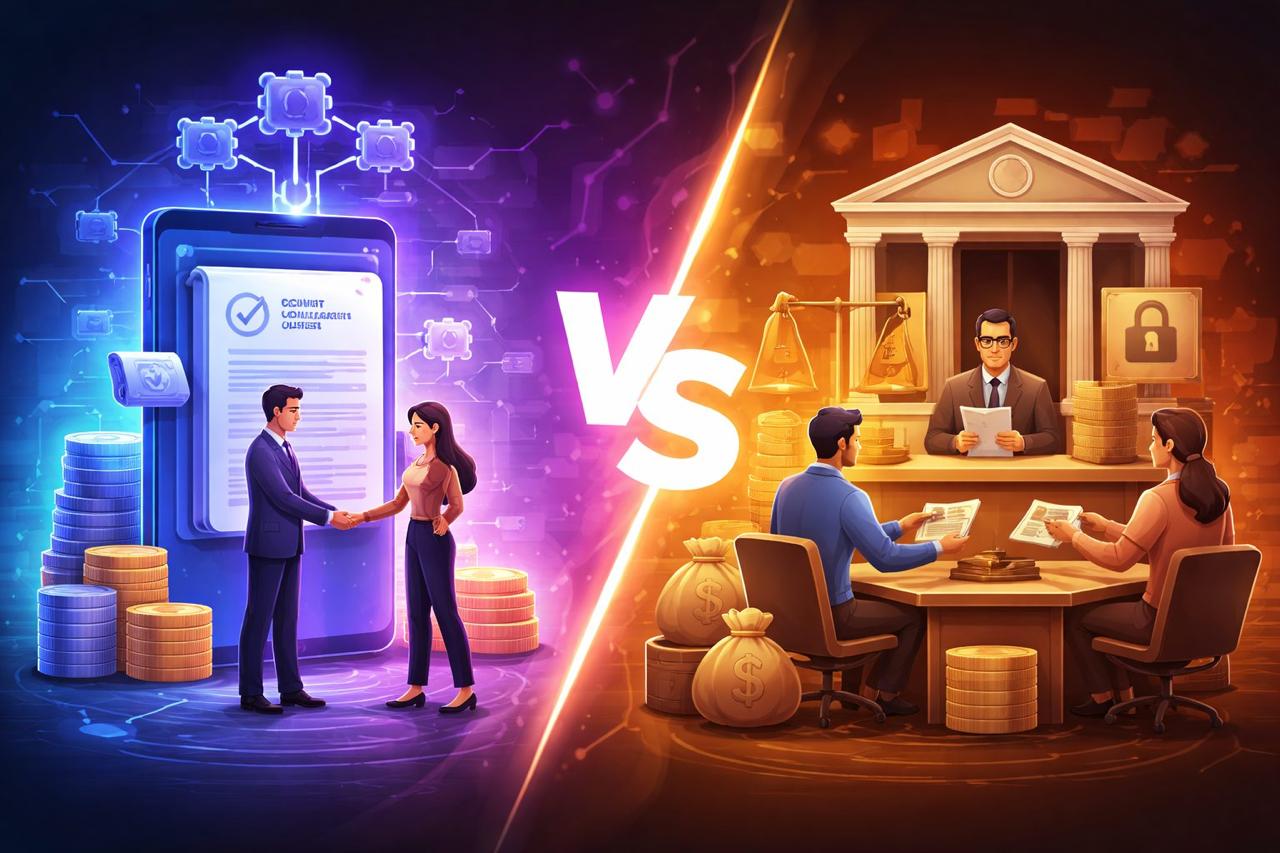
High-stakes peer-to-peer (P2P) markets are digital platforms that support and provide direct money and asset transfers between individuals.
But unlike regular markets, they involve drastically higher risk and significant value, while not relying on a traditional centralized intermediary.
More and more individuals who want to conduct high-stakes P2P transactions decide to use smart contracts. They make such decisions due to the unique benefits provided by these self-executing programs. But are they really better than traditional escrow deals for high-stakes market transactions? To give an answer, we’ll explain and compare both of them.
Smart Contracts – Making Financial, Crypto, and Betting Exchange Sites More Automated
As we briefly mentioned, smart contracts are self-executing digital agreements written in computer code and stored and automatically executed on a blockchain. But the execution only occurs whenever the agreement meets the predefined conditions.
They fully rely on algorithms and decentralised networks, which excludes a trusted middleman. Any person can check the code used by the smart contracts, making it fair and transparent.
It’s also a highly secure mechanism as it relies on the advanced encryption software used by the blockchain. Plus, users don’t have to pay any fees to intermediaries as there aren’t any involved.
Smart contracts use the simple if/when-then logic. For instance, if a side meets a set of conditions, then the contract will activate the predetermined action. No one can change the conditions once a developer encodes them. Once on the blockchain, neither side can manipulate or alter the contract.
Numerous Individuals regularly use smart contracts for data transfers and various payments. This also includes transferring specific cryptocurrencies on a blockchain in a much quicker fashion.
Some individuals use them for online betting on crypto-based gambling platforms. Among them are horse racing betting exchange sites, where punters can conduct instant deposits and withdrawals.
Traditional Escrow – Legally Enforceable, Human-Backed, and Flexible Mechanism
Before the appearance of smart contracts, individuals conducted high-stakes transactions with the help of traditional escrow agreements. People have been using escrow deals for centuries. They are highly secure third-party deals where a neutral agent temporarily holds money, assets, or documents.
This agent will only release the featured funds or assets when the sides meet the preagreedconditions. Many individuals use traditional escrow deals when dealing with real estate for collecting money, taxes and insurance, and paper trails and oversight.
Despite being a slower method than modern mechanisms, it does ensure trust among buyers and sellers as it guards them from fraud. The escrow agent won’t release the asset until both sides meet the obligations. The most common agents are banks, notaries, lawyers, title companies, or licensed escrow entities.
Every escrow agreement is legally enforceable as it involves one of the mentioned authorities, as well as the regulated institutions. It also relies on human judgement, which allows escrow agents to handle subjective, complex, or disputed situations.
It’s worth noting that the escrow agent returns the assets if either one or both sides don’t meet the conditions. This, of course, happens in a dispute resolution that finishes or doesn’t begin at all.
Which Mechanism Is Fairer for High-Stakes P2P Markets?
When it comes to execution, smart contracts are simpler than traditional escrows as they automatically execute agreements. There is no need for manual execution and involvement of human actions or courts.
In terms of trust, escrow deals rely on the legal system and the honesty and competence of the agents. Smart contracts rely on code and blockchain technology, without the interference of third parties.
When it comes to transparency, smart contracts are above escrow deals as they are unchangeable and visible to all. Escrow agreements can be subject to legal loopholes, or they can be misinterpreted or confidential, which doesn’t look transparent.
But we can say that escrow deals are flexible, as both sides can renegotiate, modify, and amend them. With smart contracts, no one can change the conditions once a developer writes and deploys the code to the blockchain.
However, the lack of third parties makes them much cheaper than traditional escrow agreements. Plus, they support near-instant transactions once both sides meet the conditions. Overall, we believe smart contracts are superior and fairer for high-stakes market agreements than traditional escrow.


