

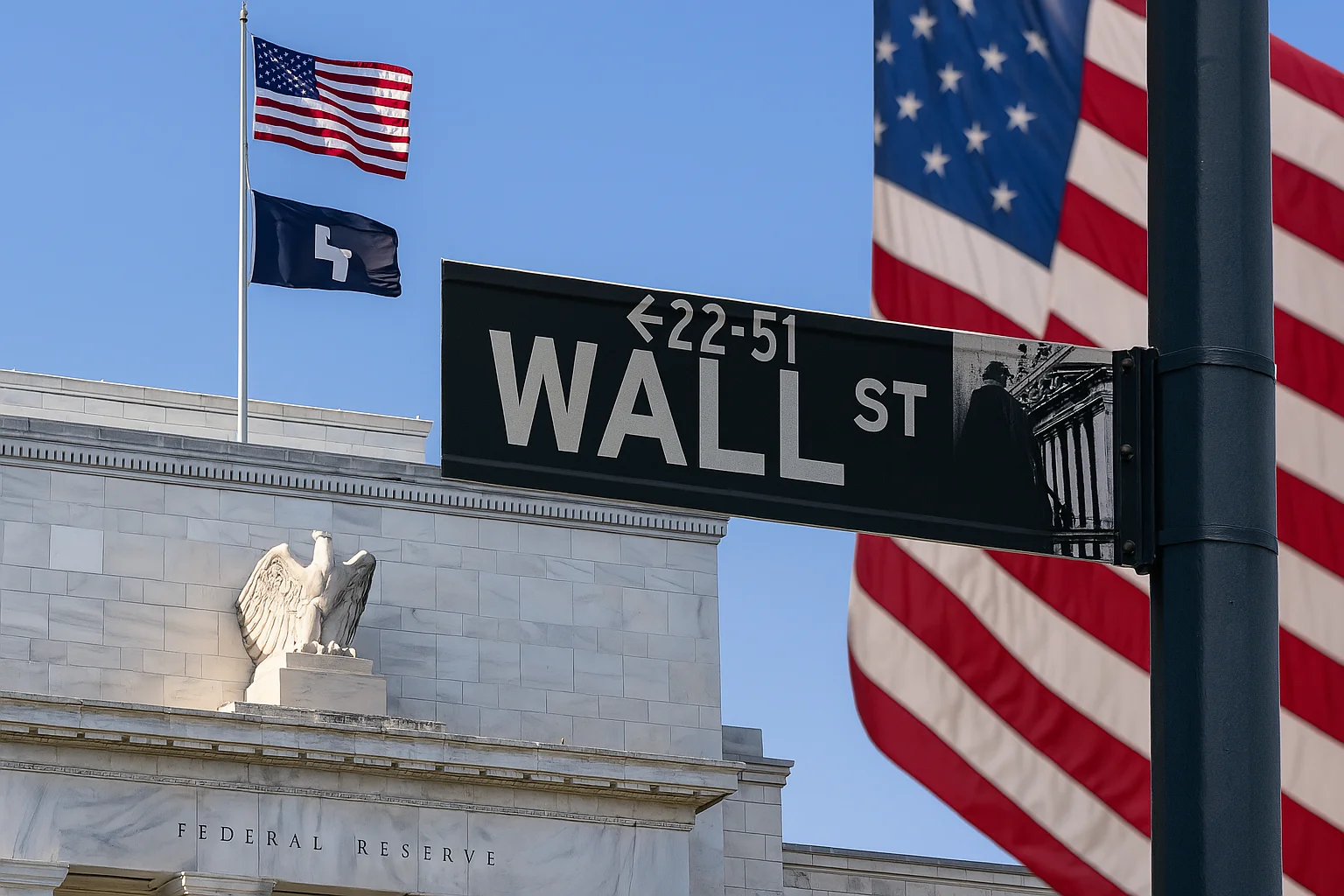
Growing unease is emerging among Europe’s largest investors as Washington’s rhetoric on trade, globalization, and economic power becomes increasingly confrontational.
While US equity markets remain near record highs, fueled in part by years of strong foreign inflows, cracks are beginning to show beneath the surface.
Key Takeaways
European investors are reassessing heavy exposure to US equities amid rising political and trade tensions
Diversification away from US assets is becoming more acceptable as global markets outperform
Any shift is likely to be gradual, but even slow changes could matter at today’s valuations
At the World Economic Forum in Davos, US Commerce Secretary Howard Lutnick openly dismissed globalization as a failed experiment, arguing it hollowed out the American economy. Shortly after, Donald Trump doubled down on his familiar message, predicting US stocks would surge even further while taking personal credit for the market’s strength.
The contrast is striking. Global capital – particularly from Europe – has been a critical driver of US market dominance over the past decade. Without sustained foreign demand, today’s valuations would be far harder to justify.
European capital has been a pillar of US markets
Investors from Europe collectively hold more than $10 trillion in US equities, accounting for nearly half of all foreign ownership. That concentration matters. Any meaningful reduction in exposure, even gradual, would represent a structural change for Wall Street rather than a short-term market wobble.
Executives at major asset managers say client conversations are shifting. At Amundi, Europe’s largest fund group, demand for diversification away from US assets has picked up pace in recent months. What began as a slow reassessment earlier in 2025 has accelerated as political tensions and tariff threats resurfaced.
The process, however, is far from simple. Moving away from US benchmarks requires rethinking currency exposure, hedging strategies, and long-standing allocation models that have favored American equities for years.
Trade pressure meets valuation risk
Market nerves intensified after renewed tariff warnings from Washington, which coincided with a sharp selloff that pushed the S&P 500 lower in a single session. Many of the countries targeted are also among the largest European holders of US stocks, reinforcing investor sensitivity to political risk.
While no coordinated European pullback is expected, portfolio managers across the region report growing interest in trimming positions rather than expanding them further. The concern is less about an immediate exodus and more about a slow erosion of demand at a time when US assets are priced for near-perfection.
Global markets are starting to outperform
For the first time in years, reallocating away from the US no longer looks like a guaranteed mistake. Since Trump’s return to the White House, a weaker dollar and increased fiscal spending abroad have shifted performance dynamics.
European equities, Japanese stocks, and even Canadian markets have outpaced US benchmarks in dollar terms, challenging the assumption that American assets must dominate global portfolios. That performance gap has made diversification discussions far easier for European investors to justify internally.
Political risk adds a new dimension
Beyond returns, investors are increasingly focused on policy unpredictability. Trump has warned that large-scale divestment from US assets could provoke retaliation, reinforcing fears that financial markets are becoming tools of geopolitical pressure.
This concern is not theoretical. Similar dynamics emerged last year when Canadian pension funds faced domestic pressure to reduce US exposure following inflammatory political remarks from Washington. The episode left a lasting impression on global asset allocators.
Currency trust under scrutiny
Another layer of anxiety surrounds the US dollar itself. Some European investors now question whether reliance on dollar-denominated assets remains prudent in an environment where sanctions, tariffs, and trade policy are more openly weaponized.
Strategists warn that if diversification accelerates, the impact would extend beyond equities to bonds and currencies, gradually reshaping global capital flows rather than triggering an abrupt market shock.
For now, data shows foreign investors are still holding their ground. But as valuations stretch and political risks mount, Europe’s once-unquestioned appetite for US assets is no longer guaranteed.


