

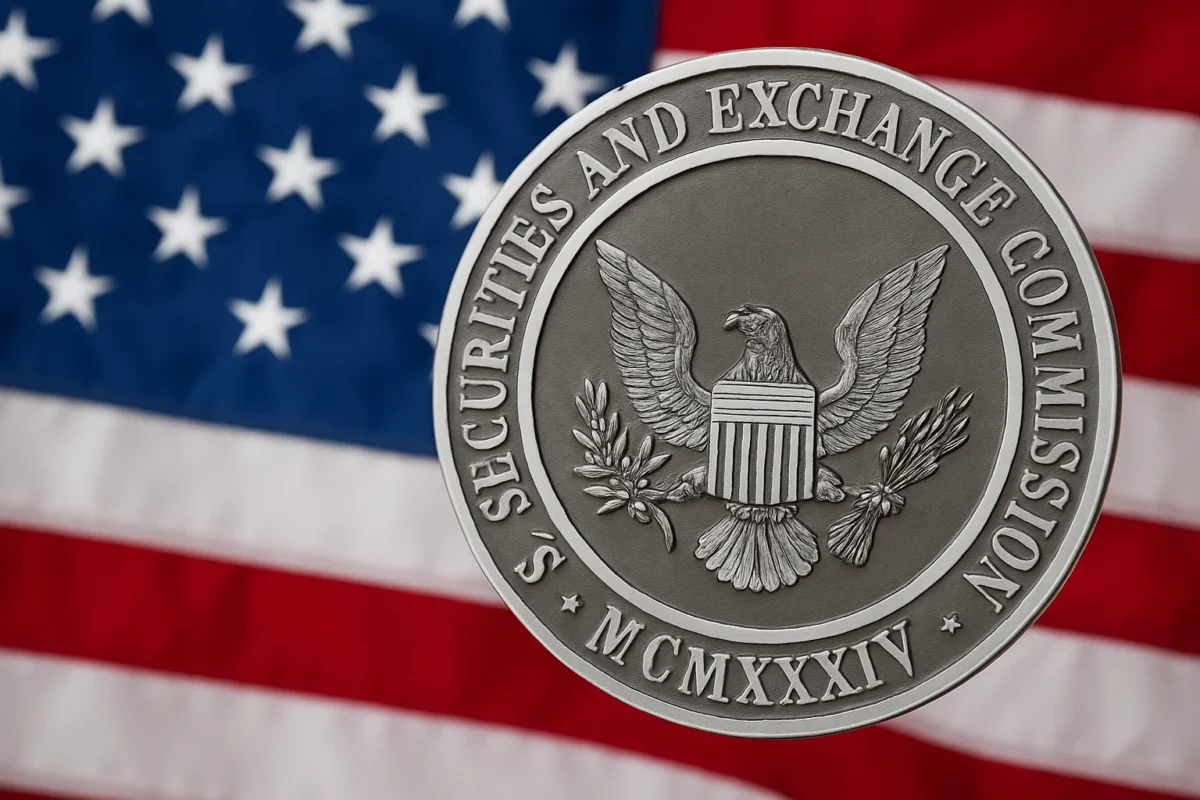
The U.S. Securities and Exchange Commission has made its position on tokenized securities unmistakably clear: assets do not change their legal nature simply because they move on-chain.
In its latest statement, the regulator stressed that tokenized securities are securities first and technology second, meaning they remain fully subject to existing U.S. securities laws.
Key takeaways:
Tokenization does not change an asset’s legal classification
Existing securities laws apply fully to on-chain assets
Blockchain is treated as infrastructure, not a regulatory workaround
According to the U.S. Securities and Exchange Commission, placing traditional financial instruments on a blockchain does not alter requirements related to registration, disclosure, or compliance.
?BREAKING: SEC SAYS TOKENIZED ASSETS ARE SECURITIES FIRST, TECHNOLOGY SECOND
The SEC emphasized that tokenized securities remain fully subject to U.S. securities laws, making clear that moving assets onchain does not change registration, disclosure, or compliance requirements.… pic.twitter.com/WulbWjAKvu
— Coin Bureau (@coinbureau) January 29, 2026
The SEC also drew a clear distinction within the tokenized assets landscape. Issuer-backed tokenized securities are those where on-chain transfers reflect true ownership and grant full shareholder rights. In contrast, third-party issued tokens only provide synthetic economic exposure, without direct ownership of the underlying asset.
This distinction reinforces the agency’s view that investor protections must remain intact, regardless of how assets are represented technologically.
What This Means for the Industry
For the broader industry, the message is both restrictive and clarifying. Projects aiming to tokenize stocks, bonds, or funds can no longer rely on regulatory ambiguity. Compliance must be embedded from day one, particularly for platforms targeting institutional participation. While tokenization can improve settlement speed, transparency, and market access, it does not reduce legal responsibility for issuers or intermediaries.
This clarity comes as real-world asset adoption on-chain continues to accelerate. Tokenized commodities have now surpassed a $5 billion total market capitalization, signaling that demand for blockchain-based exposure to traditional assets is scaling rapidly.
The infrastructure supporting this growth is highly concentrated, with Ethereum hosting nearly 85 percent of the total supply. Polygon follows with around $600 million, while XRP Ledger accounts for roughly $110 million.
?TOKENIZED COMMODITIES SURGE PAST $5B, ETHEREUM DOMINATES WITH 85% SHARE
Tokenized commodities have surpassed a $5BILLION market cap, with Ethereum hosting nearly 85% of all supply.
Polygon follows at $600Million with XRP Ledger at $110Million pic.twitter.com/XMPjvZ3a10
— Coin Bureau (@coinbureau) January 29, 2026
The dominance of mature networks suggests that as regulatory scrutiny increases, tokenization activity is gravitating toward established blockchains capable of supporting compliant, institution-grade financial products.


