

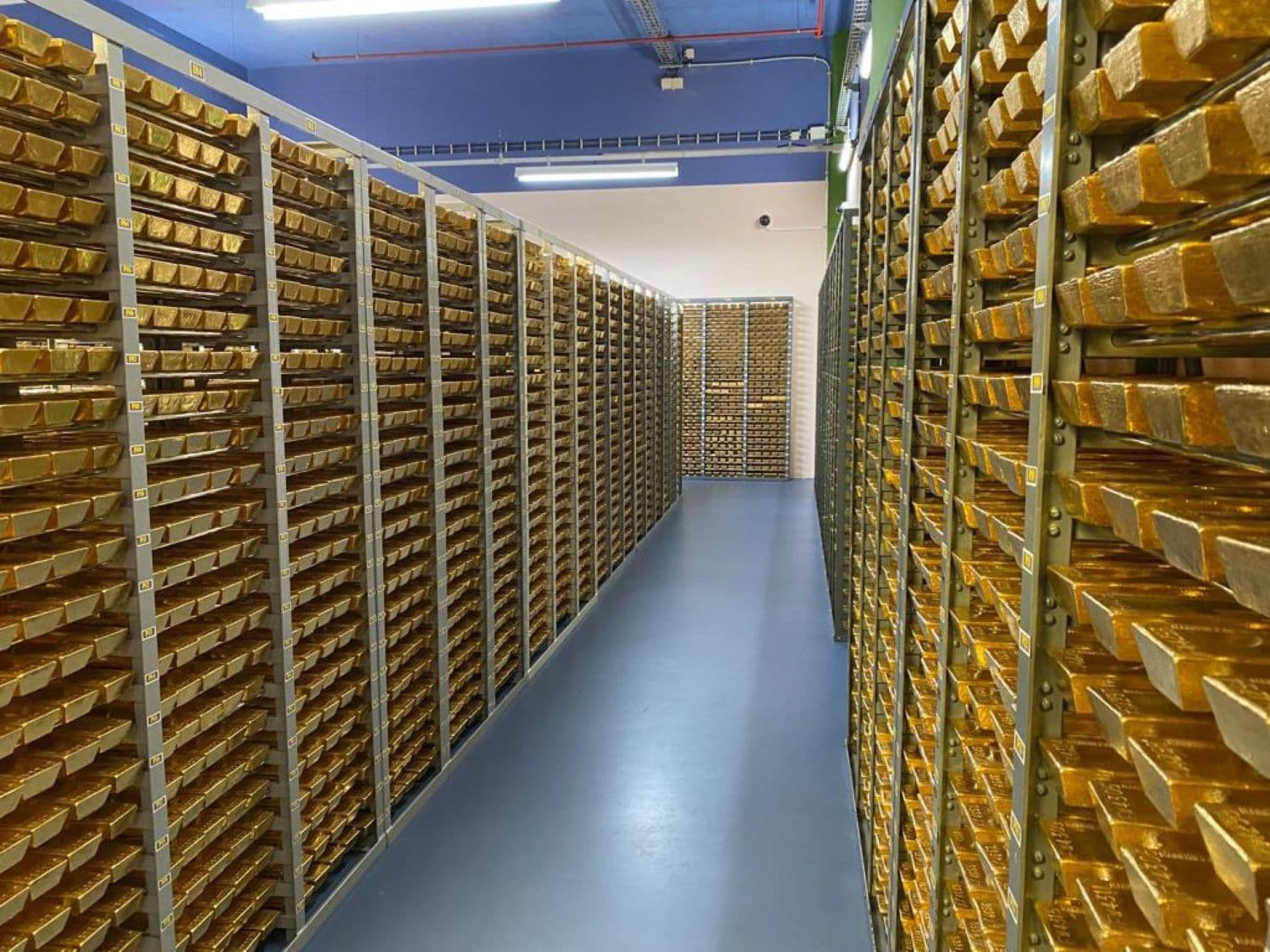
For the first time in approximately three decades, central banks around the world now hold more gold in official reserves than U.S. Treasury securities, reflecting a notable shift in how monetary authorities allocate foreign-exchange reserves.
This development comes amid sustained gold price gains and continued bullion purchases by reserve managers globally.
Data compiled from central-bank reporting and market value calculations show the market value of official gold holdings now surpasses that of foreign official U.S. Treasury holdings.
While precise global totals fluctuate with price changes, gold’s value in reserves has climbed sharply in recent years, elevated by strong central-bank demand and rising bullion prices.
A Milestone Not Seen Since The 1990s
VisualCapitalist and other statistical analyses highlight that this is the first time since at least 1996 that gold has overtaken U.S. government debt in central bank portfolios.
The last period when gold reserves exceeded Treasuries in value coincided with a very different global financial order before the deep integration of U.S. dollar assets that followed the end of the Bretton Woods system.
This shift reflects two related trends, including central banks accumulating bullion and U.S. Treasury holdings remaining relatively flat in value terms.
Central banks, especially in emerging economies, have been bulk buyers of gold in recent years, often adding more than 1,000 metric tonnes annually to official reserves.
Official sector purchases have quadrupled relative to historical averages, according to surveys of reserve managers.
Why Gold’s Role Has Resurged
Analysts point to several factors behind the renewed prominence of gold.
Safe-haven demand and geopolitical uncertainty: Many reserve managers view gold as free from counterparty risk and independent of any single government’s fiscal or monetary policies, qualities that have been especially attractive amid geopolitical tensions and concerns about global financial stability.
Also Read: SEC, CFTC Launch Joint Crypto Initiative To Align U.S. Oversight And Bring Digital Asset Markets Onshore
Diversification beyond U.S. dollar assets: While the U.S. dollar retains its dominant share of global foreign exchange reserves, some countries have been reducing the relative share of dollar-denominated assets, including U.S. Treasuries, within their portfolios. Data shows this trend has been underway for years, with major holders like China lowering dollar exposure.
Bullion price appreciation: Gold prices have surged dramatically, crossing historic price levels in 2025 and into 2026. This rise in market value has increased the dollar-value weight of gold holdings even when physical tonnage has changed only moderately.
What This Means For Global Finance
The shift does not mean the dollar or U.S. Treasuries will be displaced as central reserve assets, the U.S. dollar still accounts for a majority of foreign exchange reserves globally, but it highlights a diversification of reserve strategy at the margin. IMF data and central bank gold surveys show that a growing portion of reserves is being held in bullion precisely because of its long history as a store of value and crisis hedge.
Importantly, the rise of gold does not necessarily reflect a sudden loss of confidence in U.S. fiscal instruments.
As economists have noted, central banks continue to hold Treasuries for liquidity and depth, but gold now complements those holdings as part of modern reserve diversification.
These data and trends suggest central banks are recalibrating reserve composition in response to evolving global economic and geopolitical risks.
While gold may not replace dollar assets, its new position at the top of reserve values highlights how even long-standing financial hierarchies can shift when safe-haven demand, pricing dynamics, and strategic reserve management converge.
Read Next: Experts Say Fed's Neutral Stance Could Trigger Capital Rotation Into Crypto But Markets Need Fresh Catalysts First


