


Global investors kicked off the year with a decisive move away from domestic concentration, pouring record capital into international equity exchange-traded funds in January.
Key Takeaways
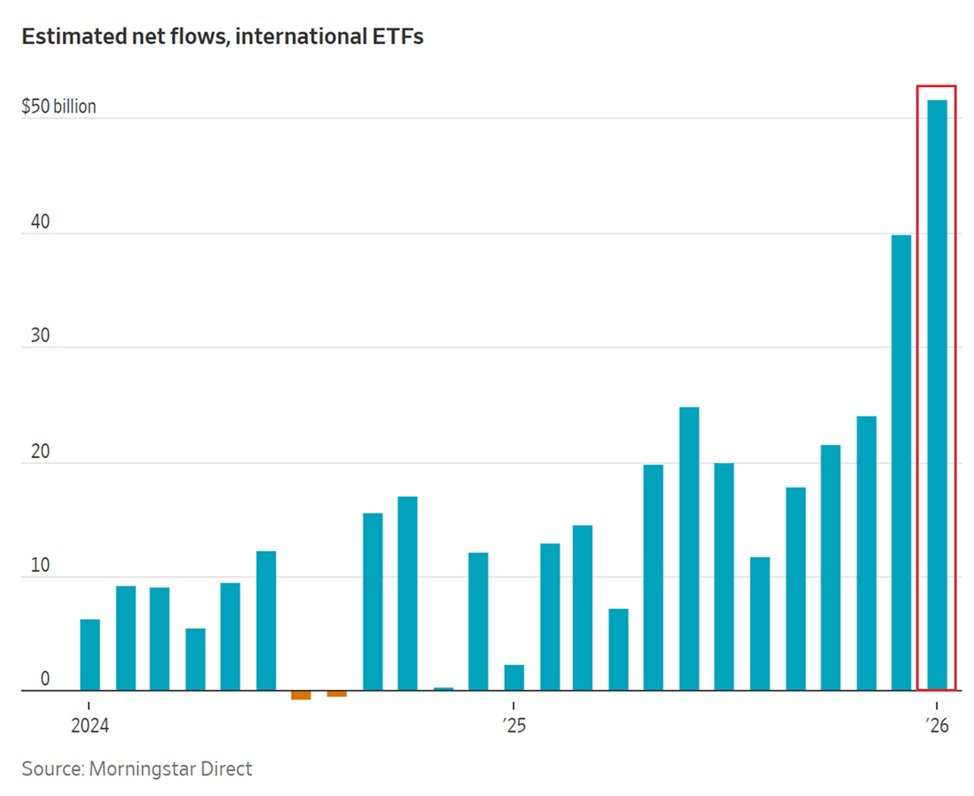
International equity ETFs attracted a record $51.6 billion in January.
This was the fifth straight monthly increase and the 17th consecutive month of inflows.
Only the second time monthly inflows have exceeded $30 billion.
The latest data shows that overseas-focused ETFs attracted $51.6 billion during the month – the strongest monthly inflow ever recorded for the segment.
The surge marks the fifth consecutive month of rising allocations and extends the current streak of positive flows to 17 straight months. Momentum has clearly accelerated. January became only the second month on record in which inflows into international ETFs surpassed the $30 billion threshold, signaling a sharp escalation in global risk appetite.
What makes the shift even more striking is the relative size of the category. International equity funds account for roughly 15 percent of total ETF assets, yet they captured approximately one-third of all ETF inflows worldwide in January.
In other words, global investors are disproportionately directing new capital beyond their home markets.
Market strategists note that this pattern suggests more than routine portfolio rebalancing. After years of heavy concentration in U.S. mega-cap names, investors appear increasingly willing to diversify geographically. Stronger growth expectations in select foreign markets, valuation differentials, currency dynamics, and evolving monetary policy outlooks may all be contributing factors.
Data trends also indicate that the pace of inflows has been building steadily since mid-2025, with monthly allocations climbing from moderate double-digit billions to January’s record-breaking figure. The acceleration points to growing conviction rather than short-term positioning.
If the current trajectory continues, international equities could play a much larger role in global portfolio construction throughout 2026. For now, one message is clear: the bid for global exposure is not slowing – it is intensifying.


