

Deutsche Bank is expanding its payment infrastructure through a strategic partnership with Ripple (XRP), marking a significant step for institutional blockchain adoption. The banking giant, valued at approximately $69 billion, aims to modernize its global settlement systems using Ripple’s technology to potentially reduce transaction times from days to seconds.
This move positions XRP’s underlying technology at the center of institutional finance, even as the asset faces short-term market headwinds.
XRP: Deutsche Bank setzt auf Ripple‑Power ? pic.twitter.com/cVJnbTlmoH
— DER AKTIONÄR (@aktionaer) February 18, 2026
Why Deutsche Bank’s XRP Partnership Matters
Deutsche Bank sits at the heart of global finance, and its pivot toward distributed ledger technology verifies the utility thesis Ripple has championed for a decade. Unlike experimental pilots, this initiative targets core foreign exchange operations and multi-currency accounts.
While XRP price action has stalled in recent months amid broader market weakness, the backing of a major European financial institution signals long-term durability for the network.
This isn’t just about faster payments; it’s about a legacy bank acknowledging that blockchain infrastructure offers efficiency that traditional correspondent banking cannot match.
Deutsche Bank + Ripple Payments
"The bank wants to take the lead in the new blockchain initiative of the industry giant SWIFT with the help of Ripple Infrastructures."
//XRP? https://t.co/04FMYcDu4o pic.twitter.com/2bcVKwMxno
— Chad Steingraber (@ChadSteingraber) February 18, 2026
The move also aligns with industry trends where banks are seeking interoperability between old rails and new crypto-native systems.
Partnership Structure and Payment Implications
The collaboration focuses on leveraging RipplePayments to bypass the opaque intermediary chains that currently slow down international transfers. Deutsche Bank expects to shrink settlement windows from 2-5 business days to real-time execution, aiming for a transparency level that corporate clients demand in digital markets.
Estimates suggest these distributed ledger tools could cut operational expenses in global payments by up to 30%. While Deutsche Bank is also a lead architect in SWIFT’s blockchain ledger project, the concurrent integration of Ripple’s rails diversifies their modernization strategy. Notably, this infrastructure allows institutions to send value directly.
While the bank hasn’t confirmed direct XRP holding, the system’s efficiency relies on the network’s specialized liquidity capabilities. As Ripple expands institutional services like custody and staking, partnerships of this scale serve as the foundational plumbing for future asset flows.
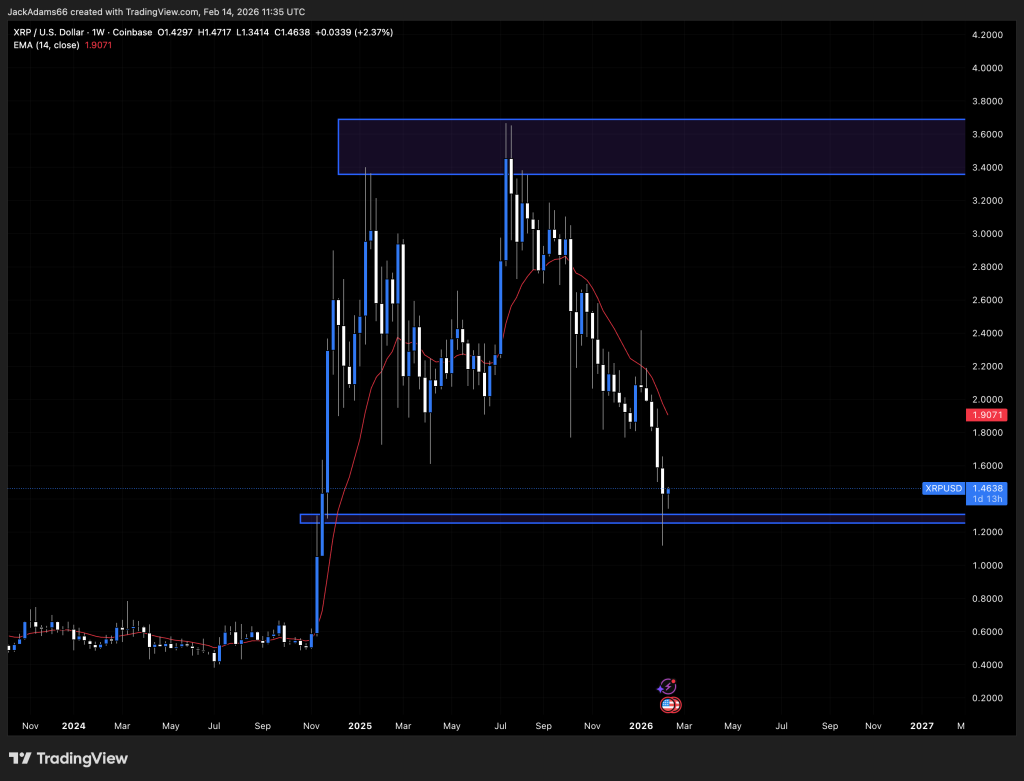
(Source: XRPUSD / TradingView)
For investors, the disconnect between fundamental adoption and price action remains a key frustration. XRP is trading around $1.42, well below its 2025 highs, and XRP faces a make-or-break moment as technical support levels are tested. Market models from some analysts suggest a potential deeper bottom near $0.85 before a reversal.


