

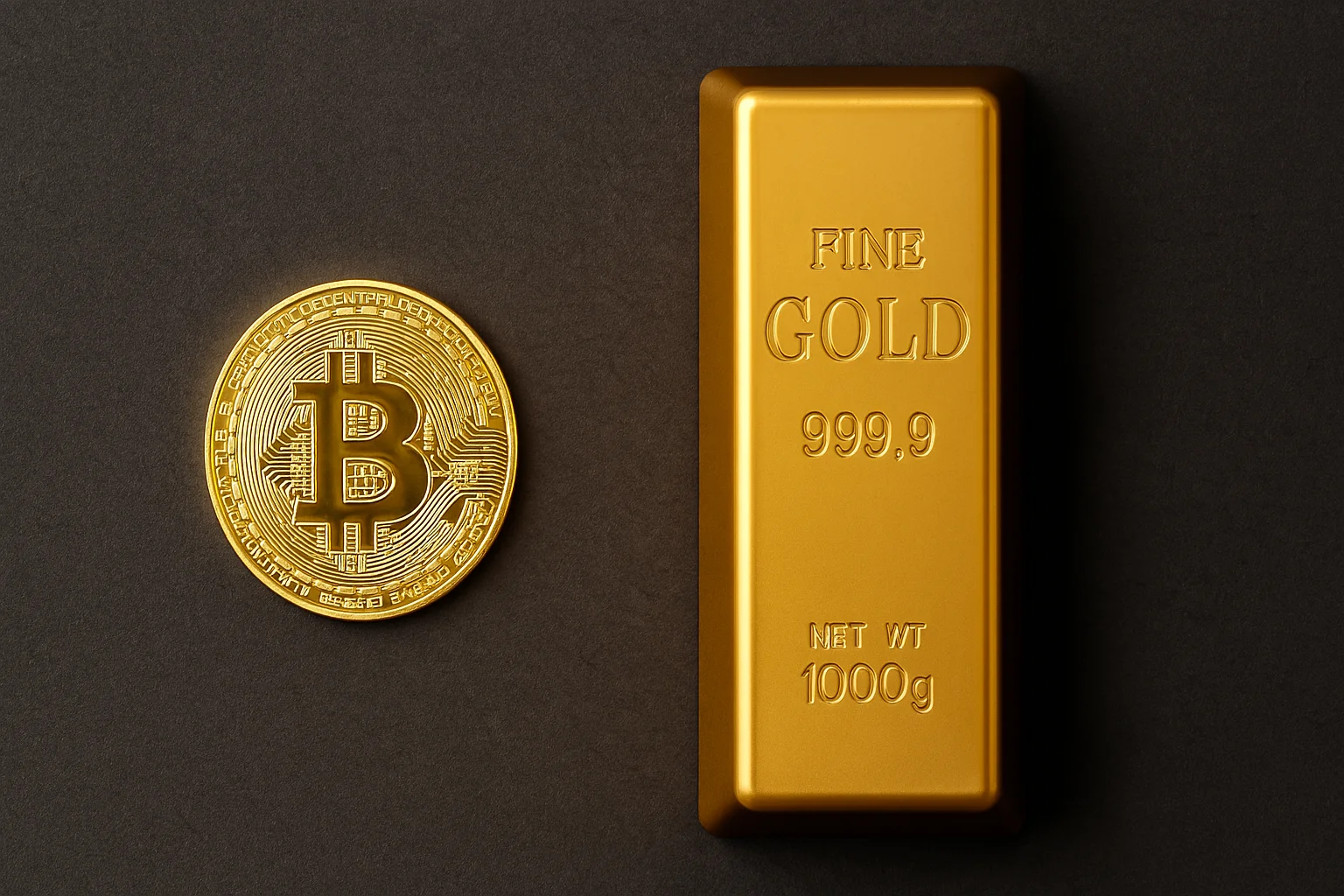
The Bridgewater founder holds a sliver of BTC in his portfolio, yet refuses to grant it the credibility that comes with centuries of monetary history.
Key Takeaways
Ray Dalio declared “there is only one gold” on the All-In Podcast (March 3, 2026), flatly rejecting Bitcoin’s digital gold narrative
He holds ~1% of his portfolio in Bitcoin — for diversification, not conviction
Central banks hold ~36,000 tonnes of gold globally; Bitcoin represents less than 1% of central bank reserves
Ray Dalio does not mince words. Appearing on the All-In Podcast on March 3, 2026, the Bridgewater Associates founder drew a hard line on one of crypto’s most contested claims: that Bitcoin is digital gold. His verdict was simple — “there is only one gold.”
The timing is notable. Gold is trading around $5,300 per ounce after surging roughly 70% through 2025. Bitcoin, by contrast, is down ~6% year-to-date near $87,700, well off its $126,000 peak. The divergence has reignited a debate that never fully went away.
The Case Against “Digital Gold”
Dalio’s objections are structural. His first concern is privacy. A public blockchain makes every transaction visible and traceable — gold coins change hands without leaving a data trail. That distinction matters enormously at the sovereign level.
His second concern is technological. Dalio flags quantum computing as a credible long-term threat to Bitcoin’s cryptographic foundations. As quantum hardware matures, the assumptions underpinning Bitcoin’s security model may face pressure no software patch can fully resolve.
Then there is institutional adoption. Central banks hold approximately 36,000 tonnes of gold globally — purchasing over 1,000 tonnes in 2025 alone, with 2026 projections sitting between 755 and 800 tonnes. Bitcoin’s share of central bank reserves? Less than 1%. Governments have every incentive to avoid a transparent public ledger when managing sovereign wealth.
Finally, Dalio argues Bitcoin behaves less like gold and more like a high-beta tech stock — selling off when liquidity tightens, recovering when risk appetite returns. That correlation alone, in his view, disqualifies it from the reserve asset conversation.
The numbers tell a split story. Gold commands institutional legitimacy Bitcoin doesn’t yet have. But Bitcoin ETFs have crossed a symbolic threshold — surpassing gold ETFs in total AUM at $127–129 billion. The top 100 public companies now hold roughly 1.1 million BTC. Institutional momentum is real, even if central bank adoption is not.
The Bull Case Dalio Isn’t Buying
Analysts at Forbes and Yahoo Finance project Bitcoin could reach $150,000–$225,000 by late 2026, driven by ETF inflows and potential Fed rate cuts. Ark Invest has a long-term target of $500,000, arguing Bitcoin will steadily erode gold’s market share. Bitwise research suggests a 15% combined allocation across both assets produces a higher Sharpe ratio than a traditional 60/40 portfolio — a point Dalio himself has partially conceded, updating his recommendation to a 15% combined allocation while still insisting the two assets are not equivalent.
The Bottom Line
Dalio’s skepticism fits a broader thesis: the world is drifting into a debt-driven monetary crisis where non-fiat assets become essential. He just thinks gold is better positioned to play that role. He acknowledges Bitcoin’s fixed supply cap as a genuine advantage — but acknowledgment is not endorsement. Gold requires no cryptographic assumptions, no software consensus, and no network maintenance. Central banks already hold it by the tonne.
Bitcoin may well reach six figures again. But Dalio’s argument was never about price. It was about function. And on that question, he believes centuries of monetary history have already delivered a verdict.


