

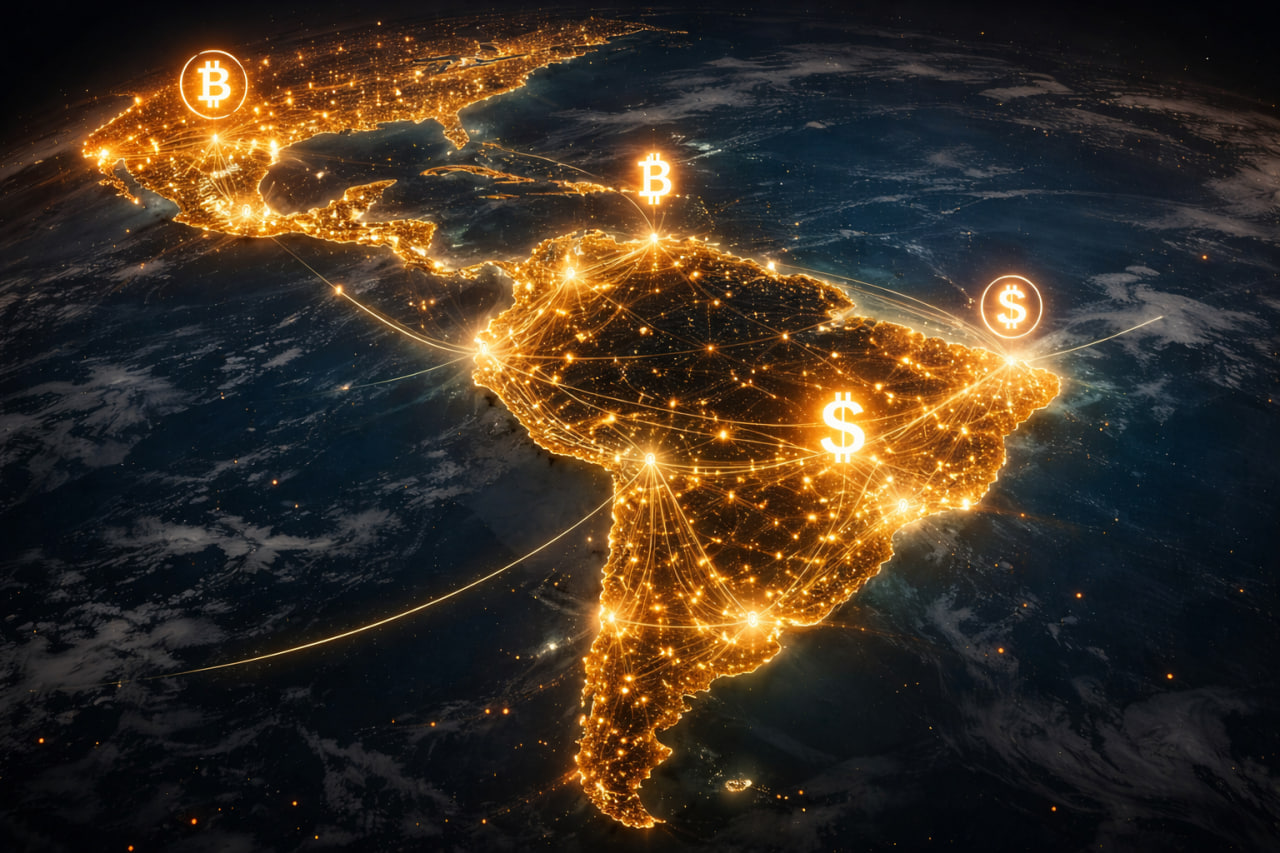
Latin America processed $730 billion in cryptocurrency volume in 2025, according to data from Lemon, marking a 60% year-on-year increase and cementing the region's position as one of the most consequential crypto markets on the planet.
Key Takeaways
Latin America handled $730B in crypto volume in 2025 – 10% of global activity
Stablecoins drove the surge, up 89% YoY to $324B
Brazil led by volume; Argentina by per capita adoption; Peru by growth rate
2026 will test whether momentum holds as formal VASP regulations roll out
The region now accounts for roughly 10% of total global crypto activity – and it’s expanding at three times the pace of the United States.
That figure isn’t driven by speculation. Monthly active users grew 18%, and the dominant use case across the region is transactional: payments, remittances, and inflation hedging. Stablecoins alone accounted for $324 billion of the total volume, an 89% jump from the prior year – a clear signal that people are using crypto as a dollar substitute, not a lottery ticket.
Brazil Leads in Raw Volume – and Institutional Muscle
Brazil received $318.8 billion in crypto value in 2025, nearly a third of the region’s total, with annual growth clocking in at 250%. More than 90% of crypto flows in the country are now stablecoin-related, and much of the surge is tied to institutional trading activity and a clearer regulatory environment. Brazil’s PIX payment system has become a conduit for cross-border crypto transactions, giving the infrastructure a level of legitimacy other markets lack.
Argentina remains the regional leader in adoption relative to population. Some 12.4% of Argentines now use crypto apps – a figure that held firm even as annual inflation dropped to around 32%. That may seem counterintuitive, but analysts point to sustained use for cross-border payments rather than pure inflation hedging as the explanation. The country recorded 5.4 million app downloads in 2025.
Less discussed but worth noting: Peru doubled its user base in a single year, recording approximately 2.9 million app downloads. It now holds the title of fastest-growing market in active users per capita – a position it consolidated through 2025.
From Survival Tool to Financial Infrastructure
The framing among analysts has shifted. What began as a retail survival mechanism – people hedging against currency collapse – is evolving into something more structural. Observers describe a transition toward “institutional-grade services,” with crypto functioning less as an emergency exit and more as embedded financial infrastructure. The Latin American crypto market is projected to reach $442.6 billion by 2033, growing at a compound annual rate of 10.93% from 2025.
2026 is shaping up as a decisive year. Brazil is introducing mandatory VASP licensing and asset segregation requirements. Argentina is formalizing a registry for crypto platforms. Mexico is tightening AML reporting. El Salvador – the region’s most high-profile Bitcoin adopter – is turning its focus toward institutional Bitcoin banking. These aren’t soft guidelines; they’re operational frameworks with compliance teeth.
The risk isn’t absence of regulation. It’s concentration. Binance reportedly handles over 50% of the region’s crypto activity. Any significant regulatory action against the exchange – domestically or internationally – would send shockwaves across the entire Latin American market. That’s a single point of failure that traders and institutions operating in the region cannot afford to ignore.


