

No Clarity? No problem — for now.
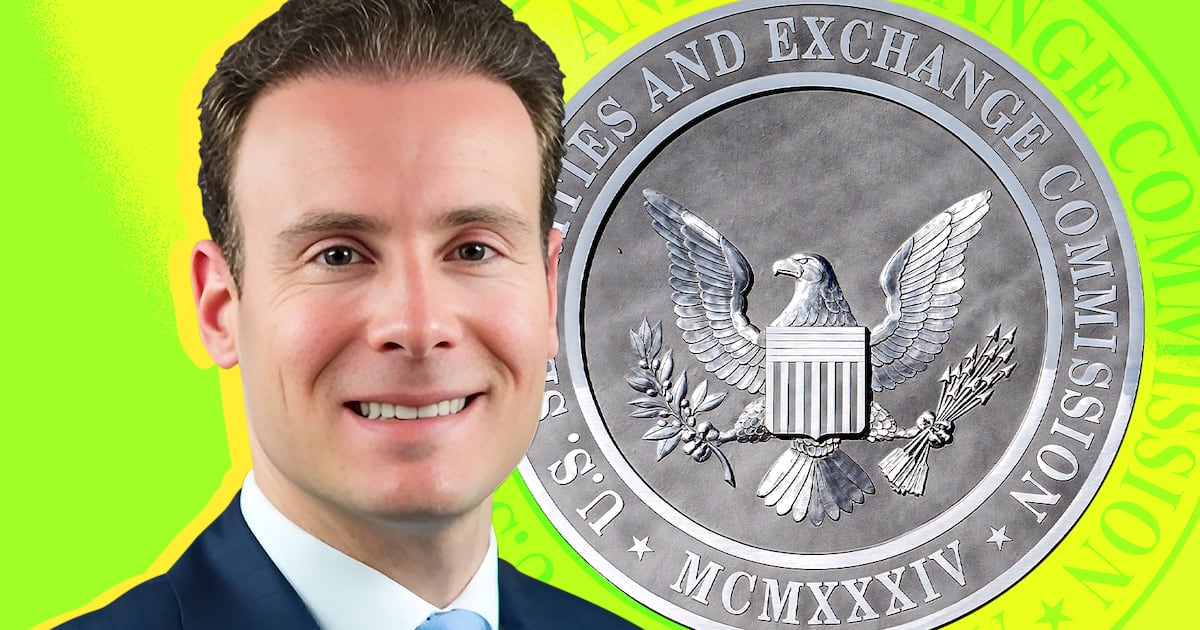
While lawmakers stall to advance the Clarity Act, Michael Selig is adamant that crypto entrepreneurs can keep building in the US without fear of prosecution.
In a speech at the FIA Global Cleared Markets Conference on March 9, the Commodity Futures Trading Commission chair further outlined how his agency, and the Securities and Exchange Commission will provide simple cross-agency oversight of crypto.
Several comments cut to the core of the Clarity Act, a key piece of legislation that delegates oversight to agencies.
“We will advance a clear crypto asset taxonomy so that market participants can understand whether their products fall within CFTC jurisdiction, SEC jurisdiction, both, or neither,” he told audience members.
For crypto businesses anxious about whether their products constitute a commodities or securities offering, Selig’s comments are welcome news.
“The fact that both agencies are actively collaborating on jurisdictional lines, and that the CFTC is signalling safe harbours for non-custodial software and DeFi protocols, are all great steps forward,” Fabrizio Giabardo, a co-founder of the token launching platform Legion, told DL News.
But legislation is still crucial.
“Legislation still matters because executive-branch guidance can be reversed with a change in administration,” he said. “Statutory clarity is what gives businesses like ours the confidence to make multi-year infrastructure bets.”
The question is crucial. Selig’s comments come ahead of the midterm elections in November.
If the Democrats retake the House of Representatives, that could grind the work on the Clarity Act to halt.
And it’s uncertain that whoever replaces Trump after the 2028 presidential elections will follow his and the agencies’ lead.
What’s clouding Clarity?
The Clarity Act, a crucial piece of legislation that would lock-in rules of the road for the crypto industry, has stalled.
Lawmakers in the US, crypto firms, and, increasingly, banking groups are caught up in a major debate over whether to pass on stablecoin yield to crypto users.
“Any legal grey area adds cost, risk and friction for issuers, us and investors.”
— Fabrizio Giabardo, co-founder of Legion
Coinbase, the largest crypto exchange in the US, for instance, pays interest to stablecoin holders as “rewards.”
The company has also put this rewards programme behind a subscription product called Coinbase One, framing any financial incentives as a loyalty benefit for users.
Banking lobby groups are eager to close this loophole by adding new language to the Clarity Act.
The crypto lobby has opposed those changes, hence the clash. Until those differences are settled, the act is on hold.
that US investors demand additional information about their profile and different lock-up rules, and that filing a Form D with the SEC notifies
In the meantime, businesses such as Legion are bearing the cost of operating under an uncertain regime.
Costly grey areas
Legion is attempting to recreate regulated initial coin offerings to offer investors a safer way to invest early on a cryptocurrency project.
Given that ICOs were top targets under former SEC chairs across Trump’s first term and under President Joe Biden, Giabardo is acutely aware of these additional costs.
“The question of when a token sale constitutes a securities offering vs. a digital commodity distribution is a major one,” he said. “Any legal grey area adds cost, risk and friction for issuers, us and investors.”
Giabardo explained that US investors demand additional information about their profile and different lock-up rules, and that filing a Form D with the SEC notifies the agency that a company has sold securities.
“All of this is manageable, and we’re building for it,” he said. “But it’s a meaningful increase in cost and complexity versus our non-US flow, and most of that overhead exists because the regulatory lines haven’t been clearly drawn yet.”
“That’s exactly what this CFTC-SEC collaboration could fix.”


