

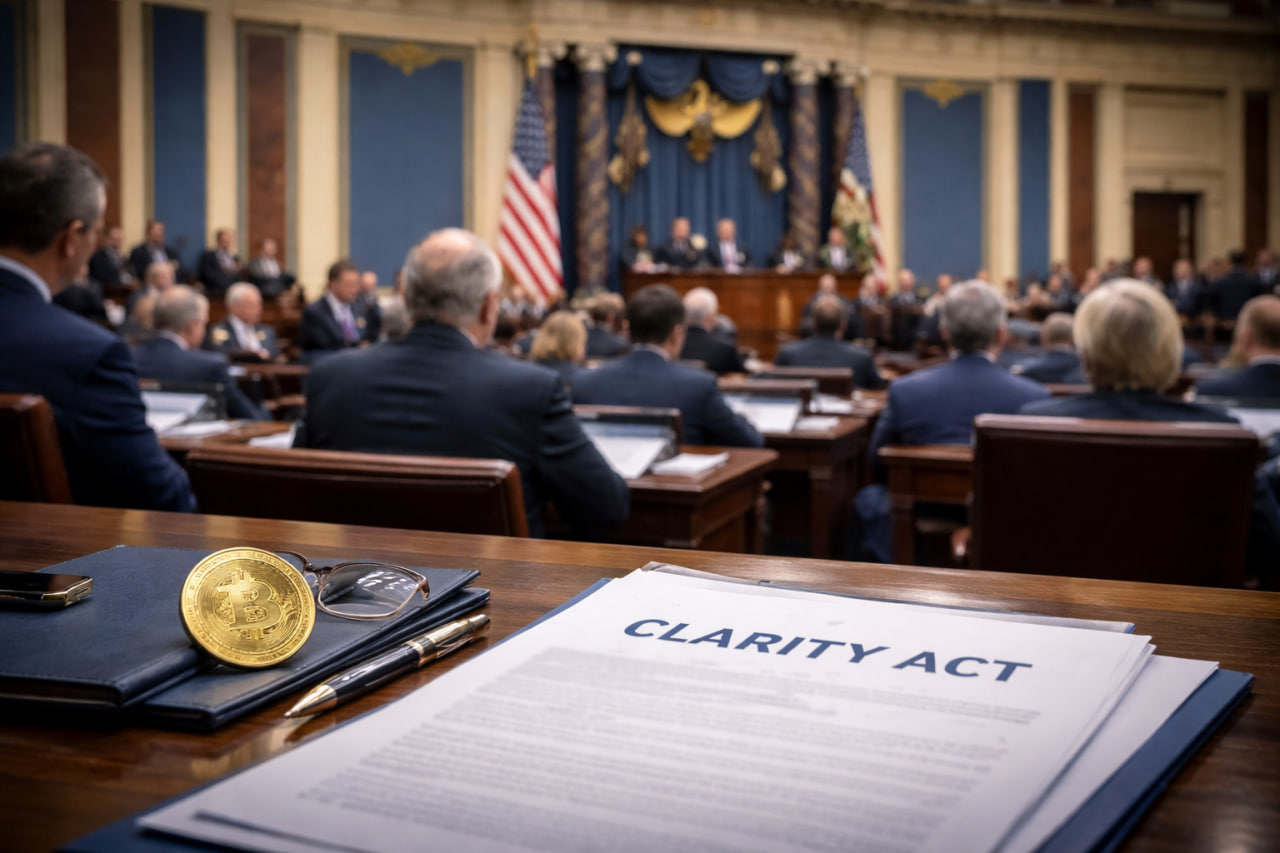
After months of stalled negotiations, Washington's long-awaited stablecoin legislation has a working compromise.
Key Takeaways
A bipartisan deal on stablecoin yield rules is ~99% resolved, clearing the biggest obstacle to the CLARITY Act
Banks win a ban on passive interest; crypto platforms can still offer activity-based rewards
The SEC and CFTC jointly reclassified Bitcoin, Ethereum, and XRP as “Digital Commodities” in March 2026
The bill still faces political landmines – Trump’s crypto ties and DeFi liability rules remain unresolved
According to a report from Politico, the CLARITY Act has cleared its most significant internal obstacle: a bitter fight over whether crypto platforms should be allowed to pay yield on stablecoin balances. Senators Tim Scott (R-SC), Thom Tillis (R-NC), and Angela Alsobrooks (D-MD), working alongside the White House, have landed on a distinction that neither side fully loves but both can accept.
The proposed rule prohibits platforms from paying interest on stablecoin holdings the way a savings account would. But it carves out room for “activity-based rewards” – meaning users can earn returns for making payments, transferring funds, or supplying liquidity to DeFi protocols. Sit on $1,000 in USDC and collect nothing. Put it to work and you might still see returns.
The Stakes Were Never Really About Yield
The American Bankers Association and the Independent Community Bankers of America weren’t fighting over a technical definition – they were fighting to protect deposit bases worth hundreds of billions of dollars. Their argument: stablecoins offering 4–5% returns would accelerate deposit flight on a scale the system hasn’t seen in decades. One Standard Chartered model estimated that if stablecoins hit $2 trillion in market cap by 2028, yield-bearing products could pull $500 billion out of the banking system.
Coinbase pushed back hard. Stablecoin rewards represent close to 20% of the company’s quarterly revenue in some periods. The company briefly pulled its support for the bill over this dispute. The compromise on activity-based rewards is largely what brought them back to the table.
Patrick Witt, the White House’s de facto crypto point man, has been the central broker throughout. He’s described the yield issue as the “first domino” – the assumption being that resolving it would unlock movement on the broader market structure legislation. Whether that logic holds depends on what comes next. Senate Democrats are pushing for an ethics provision barring elected officials and their families from holding crypto interests – language widely seen as targeting President Trump’s ties to World Liberty Financial. Republicans have shown little appetite for it. DeFi liability – whether software developers can be held responsible for money laundering on protocols they built but no longer control – also remains unresolved.
The Broader Regulatory Picture Has Already Shifted
Even before the CLARITY Act reaches a floor vote, the U.S. regulatory environment has moved significantly. In March 2026, the SEC and CFTC issued joint guidance officially categorizing Bitcoin, Ethereum, and XRP as “Digital Commodities,” using a decentralization test to largely remove these assets from the SEC’s securities jurisdiction. For an industry that spent years fighting SEC enforcement actions, this is a structural change, not a symbolic one.
The repeal of SAB 121 in early 2025 removed an accounting requirement that made crypto custody economically unattractive for major institutions. With it gone, BNY, State Street, and JPMorgan have moved into institutional custody seriously, adding liquidity the sector previously lacked. The Ripple case ended with the SEC dropping nearly all claims – XRP is now recognized as a non-security in the secondary market, and the agency faces a March 27 deadline on Spot XRP ETF applications, with approval odds currently above 90%. Separately, President Trump signed an executive order redirecting DOJ and FBI resources away from domestic crypto companies and toward transnational criminal organizations using digital assets for fraud.
The Window Is Narrow
The stablecoin market sits above $316 billion, as per data from DefiLama. The crypto industry has committed over $190 million to political action committees to push this legislation through. The White House wants a signing ceremony before the 2026 midterm cycle makes major legislation politically untouchable.
Experts estimate there are between six and eighteen working weeks to move the CLARITY Act through committee and to the floor before campaign season freezes things. If the bill clears committee by early April, its chances of reaching the floor before summer are reasonable. If the ethics provision or DeFi liability questions aren’t resolved by May, this version likely dies in committee – and the industry starts over in 2027.


