


Ethereum climbed back above $2,000 on March 28 after its worst single-session drop this week, driven by a futures leverage reading that had never been higher.
Key Takeaways
ETH recovers to $2,024 after hitting $1,971 low
Futures Estimated Leverage Ratio hits all-time high of 0.995
Leverage spike preceded and amplified March 27 selloff
MetaMask leads Ethereum ecosystem development activity
Top 10 dev activity projects all Ethereum-based
On March 27, at 13:36:11 UTC, Ethereum’s futures Estimated Leverage Ratio hit 0.99495738, the highest reading ever recorded for the metric. Futures Open Interest had reached 99.5% of the ETH reserves held on exchanges. Six hours earlier, price had broken below $2,000 for the first time in the chart window. By March 28, ETH had recovered to $2,024.
The leverage spike did not cause the drop. It made the drop significantly worse than it would otherwise have been — and understanding why explains both the severity of the March 27 selloff and what the recovery from it actually means.
What the Chart Shows
On the one-hour Binance chart, Ethereum opened the March 24 session around $2,180 and pushed to a high near $2,200 on March 25 before a sustained selloff began. Price dropped through $2,100, $2,060, and $2,040 across March 26 without a recovery candle gaining traction. The sharp acceleration came on the morning of March 27, when a single candle hit a session low of $1,971. Below $2,000 for the first time in the window. Volume on that candle was the heaviest of the selloff.
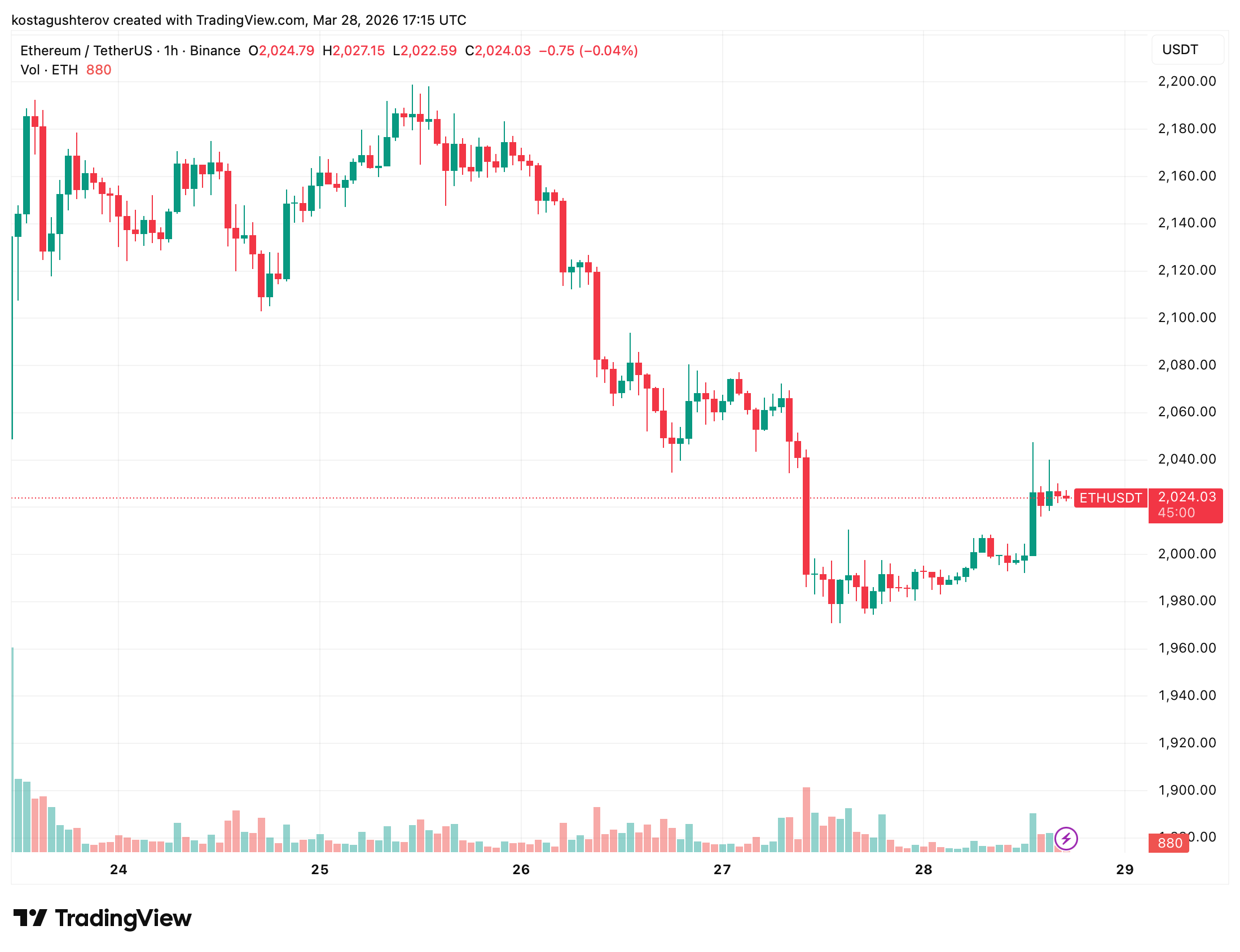
Recovery began through March 27 afternoon and continued into March 28, with price climbing back above $2,000 and closing the latest candle at $2,024.03. ETH’s March 25 high was $2,200. The current price is $176 below it.
That gap exists partly because the derivatives structure amplified what started as a macro-driven selloff into something faster and deeper.
The Leverage Ratio That Made the Market Fragile
The Ethereum Estimated Leverage Ratio measures Futures Open Interest divided by ETH Exchange Reserve. When the ratio rises, open positions in the derivatives market are growing faster than the ETH available as collateral on exchanges to support them. The higher it climbs, the less buffer exists between a price move and a liquidation cascade.
On March 27 at afternnon (UTC time), that ratio reached 0.99495738, according to report, shared by CryptoQuant. Never before had the ETH futures market shown this level of aggregate leverage relative to available exchange reserves. At that reading, the entire structure of ETH derivatives was operating on a margin of collateral below 1% of outstanding positions.
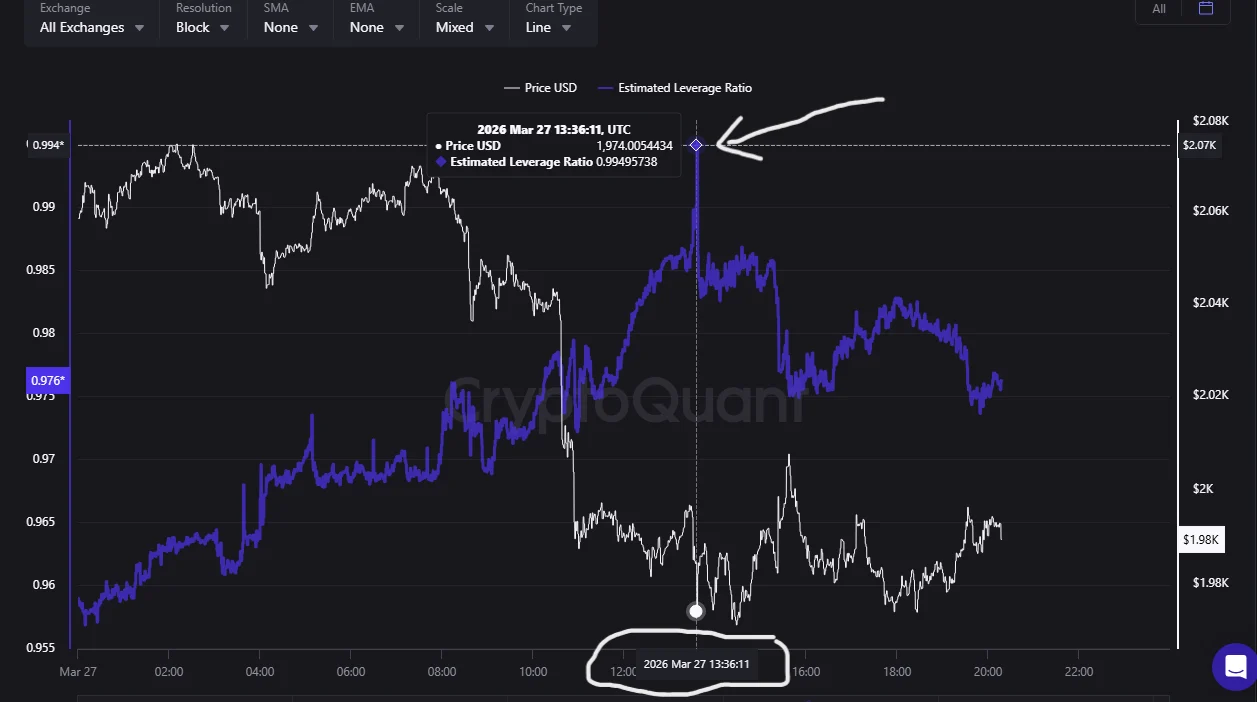
The conclusion is specific: when speculative exposure reaches levels this extreme relative to exchange reserves, the market becomes vulnerable to sharp moves, liquidity sweeps, and episodes of accelerated volatility. A relatively small price move in either direction becomes self-reinforcing – liquidations force selling, selling forces more liquidations, and the candle that results looks nothing like the initial trigger would suggest.
The March 27 drop to $1,971 was that candle. The ratio has since compressed from its 0.995 peak to approximately 0.976 as positions unwound through the selloff, reducing the structural fragility that made the move as severe as it was.
With price recovering and leverage compressing, the picture that remains is what the Ethereum ecosystem was doing through all of it.
Development Activity Has Not Responded to Price
Santiment’s ranking of Ethereum-based projects by development activity over the past 30 days, measured by notable Github commits, places the ecosystem among the most active in crypto. MetaMask mUSD leads with a development activity score of 884.07, the highest in the top ten by a substantial margin. ChainLink follows at 245.33. Aztec Network sits third at 174.27, rising in its month-on-month ranking position. Starknet is fourth at 145.2, declining from last month. Ethereum itself ranks fifth at 120.97.
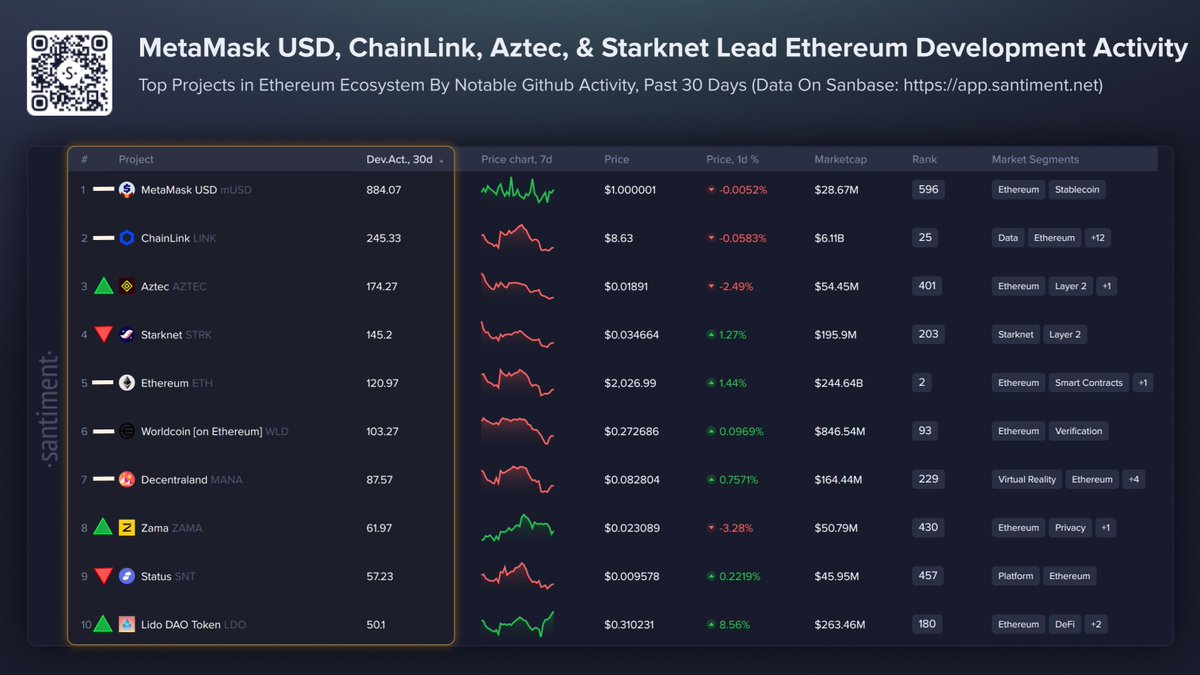
Worldcoin, Decentraland, Zama, ethstatus, and Lido Finance complete the top ten. Zama and Lido Finance are both rising in ranking position. ethstatus is declining alongside Starknet.
Development activity measured by Github commits is not a price indicator. It measures whether builders are working. Across the ten most active Ethereum ecosystem projects by this metric, work continued through a week that saw ETH drop below $2,000, hit its deepest oversold RSI reading of the session, and record an all-time high in futures leverage. The development calendar did not pause for the price chart.
That consistency is worth noting, but it has a limit as an argument for recovery.
What the Recovery Leaves Unresolved
Ethereum is back above $2,000. The all-time high leverage ratio has compressed from 0.995 to approximately 0.976 as positions unwound through the selloff. The ten most active projects in the Ethereum ecosystem by Github commit volume continued building through a week that saw ETH drop to $1,971 and record its deepest oversold RSI reading of the session.
What the recovery does not resolve is the distance still to cover. The March 25 high was $2,200. Current price is $2,024. ETH recovered $53 from the March 27 low. It still needs another $176 to return to where the week started – and the macro conditions that drove the initial drop have not changed.
MetaMask is building. Chainlink is building. Aztec is rising in development ranking. The ecosystem is active. The price is $176 below where it was three days ago.


