

Bitcoin is trading under $70,000, down from a $126,000 peak in October, and the $2 trillion wipeout across the crypto market is still fresh. Into that backdrop, President Trump stepped onto the stage at the Future Investment Initiative Summit in Miami and declared a full-blown crypto revolution, calling Bitcoin “very powerful” and predicting the entire asset class is “all becoming powerful, fueling bullish price prediction.
That’s not noise. When a sitting U.S. president frames digital assets as a national competition with China, and backs it with a formalized Bitcoin Strategic Reserve, the structural implications for supply and price reach well beyond a single headline.
The U.S. government now holds an estimated 328,372 BTC – the largest state-level Bitcoin position on earth – after Trump signed the executive order establishing the reserve in March 2025.
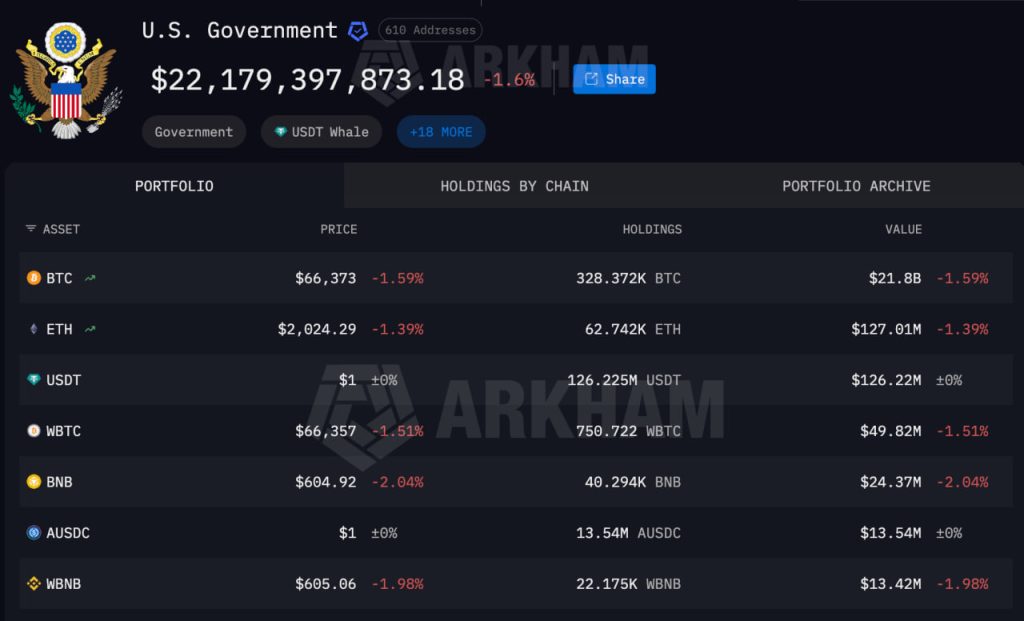
No active buying has occurred beyond seized assets, but Treasury and Commerce are actively evaluating budget-neutral acquisition strategies that could push holdings toward 1 million BTC. That trajectory is what’s reshaping how institutional desks are modeling long-term BTC price prediction scenarios.
Forward-looking capital is already repositioning. Bitcoin exchange supply has already collapsed to a seven-year low, compressing the float available to buyers at any price level. A sovereign accumulation program layered on top of that dynamic is a different kind of pressure than ETF inflows – and the market hasn’t fully priced it.
Can a U.S. Bitcoin Strategic Reserve Actually Drive a $500,000 Price Prediction?
The $500,000 figure is doing real analytical work, not just headline work. At that valuation, Bitcoin’s market cap would approach $10.5 trillion – roughly double current global gold ETF assets under management. The mechanism that gets it there isn’t speculation alone; it’s a supply function that sovereign accumulation fundamentally changes.
The reserve currently holds approximately 328,372 BTC, none of it earmarked for sale. Trump has explicitly framed it as digital gold – a long-term store of value anchored by Bitcoin’s fixed 21 million supply.
If Treasury executes even a partial open-market acquisition toward the 1 million BTC target floated by analysts, including Cathie Wood’s team at ARK Invest, the circulating float contracts sharply at a time when on-chain data already shows accelerating whale accumulation and a seven-year low in exchange-held supply.
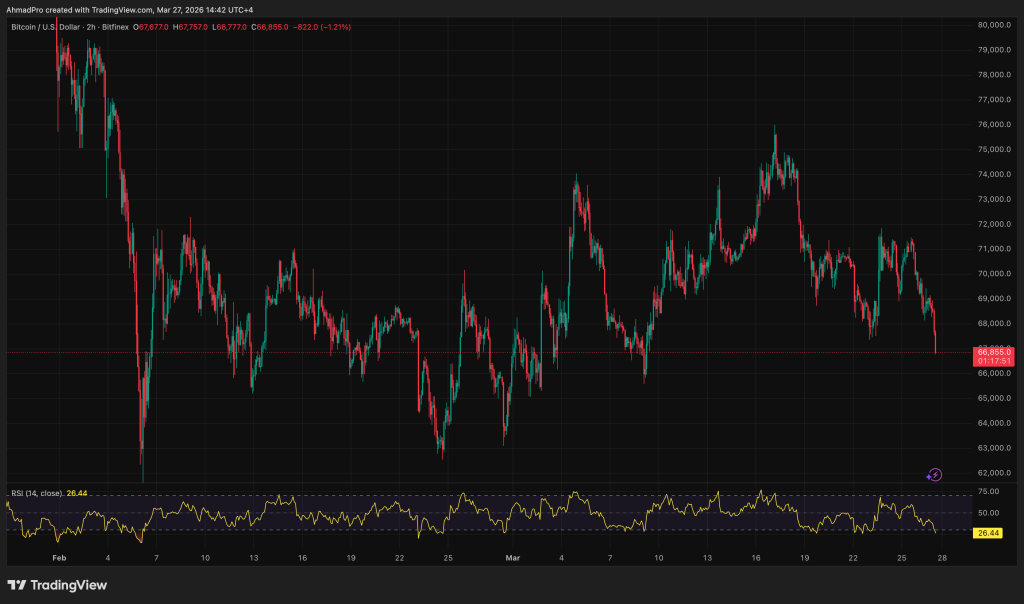
This whole setup comes down to whether governments actually step in and start buying, because if the Treasury begins accumulating Bitcoin in 2026, even in a budget neutral way, that adds a new layer of demand on top of ETFs and tightens supply fast, and with a more crypto friendly Fed in the mix, that is how you get a move back toward $126K and potentially much higher over time if other countries follow.
The more grounded path for now is slower, where nothing aggressive happens on the buying side, and the reserve just sits on seized assets, but the tone still improves as regulation becomes clearer and institutional adoption keeps building through ETFs and corporate balance sheets, which is enough to support a steady climb back into the $85K to $100K range.
The risk is that none of this turns into real action, and macro pressure takes over instead, because if recession fears rise, the dollar strengthens, and markets shift into risk-off mode, Bitcoin can stay stuck under $70K, and at that point, the big long-term predictions start to look more like narrative than reality.
Trump’s own framing adds geopolitical weight to the bull scenario. “If we’re not going to do it, then China is going to take it over,” he said at the Miami summit. That framing – crypto dominance as a national security issue – is the same logic that accelerated U.S. semiconductor policy. When Congress starts speaking that language, budgets follow.


