

The network that leads all blockchains in Q1 2026 revenue is doing it with collapsing fees and rising users. The data explains how, and what it means for TRX.
Key Takeaways
Tron led all blockchains in 30-day revenue at $81.1M in Q1 2026.
Total fees are at their lowest level since 2023.
Active addresses rising toward 5M.
Tron Inc. acquired 159,004 TRX.
The Number That Requires an Explanation
Tron generated $81.1 million in revenue over the past 30 days according to tweet from Cointelegraph, more than any other blockchain in existence, according to Phoenix Group data published April 1. Base came second at $17.2 million. Ethereum third at $8.1 million. Solana fifth at $6.9 million. Add Base, Ethereum, Polygon, and Solana together and they still fall short of what Tron generated alone.
? JUST IN: Tron leads all blockchains in revenue for Q1 2026, significantly outperforming competitors like Base, Ethereum, Polygon, and Solana. pic.twitter.com/msA4I8KTv4
— Cointelegraph Decentralization Guardians (@CTDG_DevHub) April 3, 2026
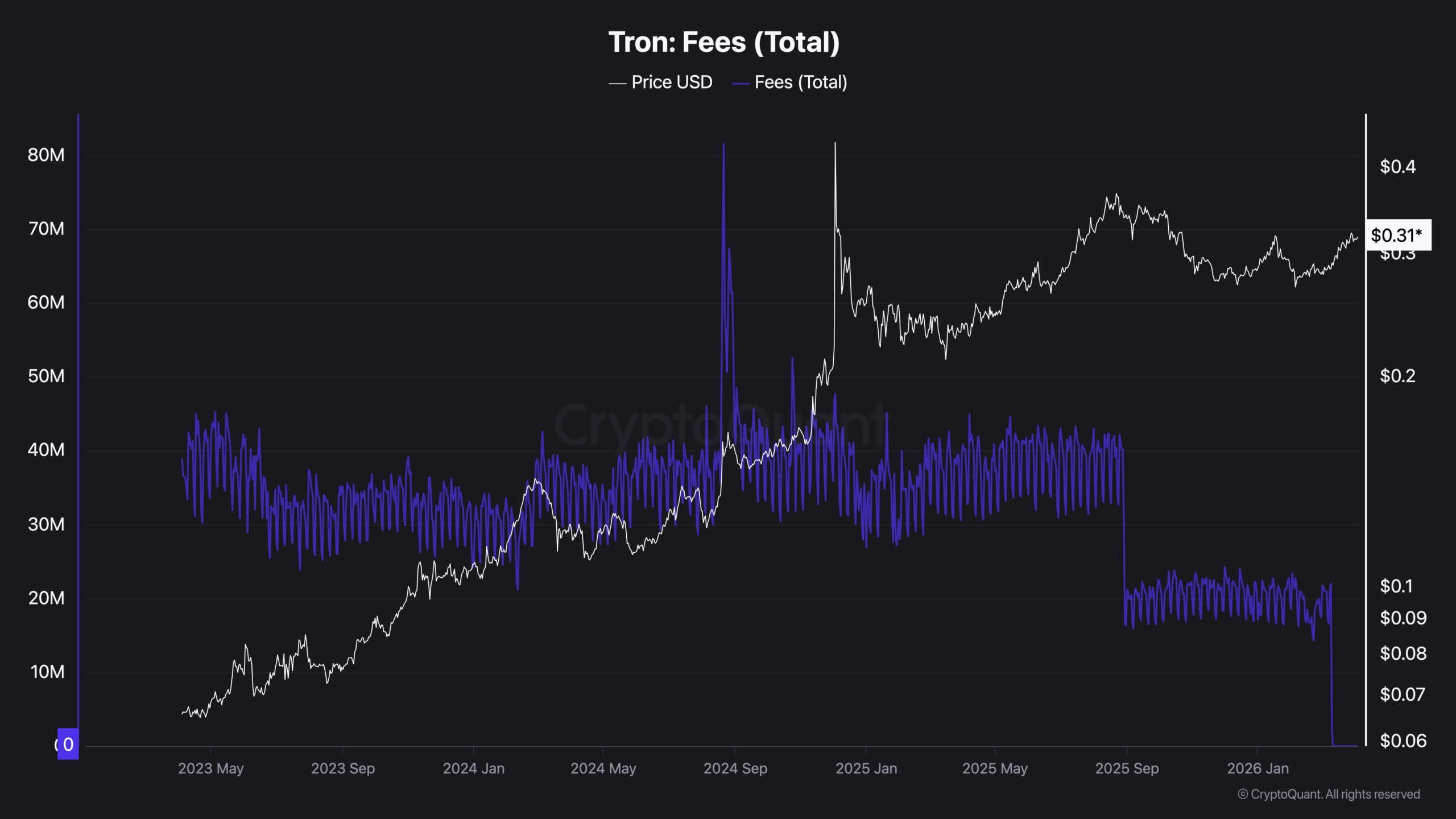
That number sits alongside a specific problem visible in Tron’s fee chart. According to CryptoQuant data, total fees on the Tron network are currently running at approximately 15–20 million, the lowest level since 2023 and a dramatic collapse from the 80M+ peak recorded in late 2024. A blockchain generating record revenue while charging near-record low fees is not a contradiction, it is a business model. Understanding that model is the key to reading every other piece of data in this article.
How Tron Generates Revenue Without High Fees
Tron’s revenue leadership is built on transaction volume rather than fee-per-transaction. The network is the primary rail for USDT stablecoin transfers globally, low cost, high frequency, massive aggregate throughput. While Ethereum charges significantly more per transaction, Tron processes significantly more transfers at a fraction of the cost. The result is lower fees per transaction but higher total revenue from sheer volume.
The Phoenix Group ranking puts Tron’s 30-day active addresses at 13.8 million, fewer than Ethereum’s 16.2 million or Solana’s 34.3 million, yet generating more revenue than either. CryptoQuant’s active address chart confirms the direction: approximately 4–5 million addresses currently active, rising toward levels last seen during the 2024 bull run peak.
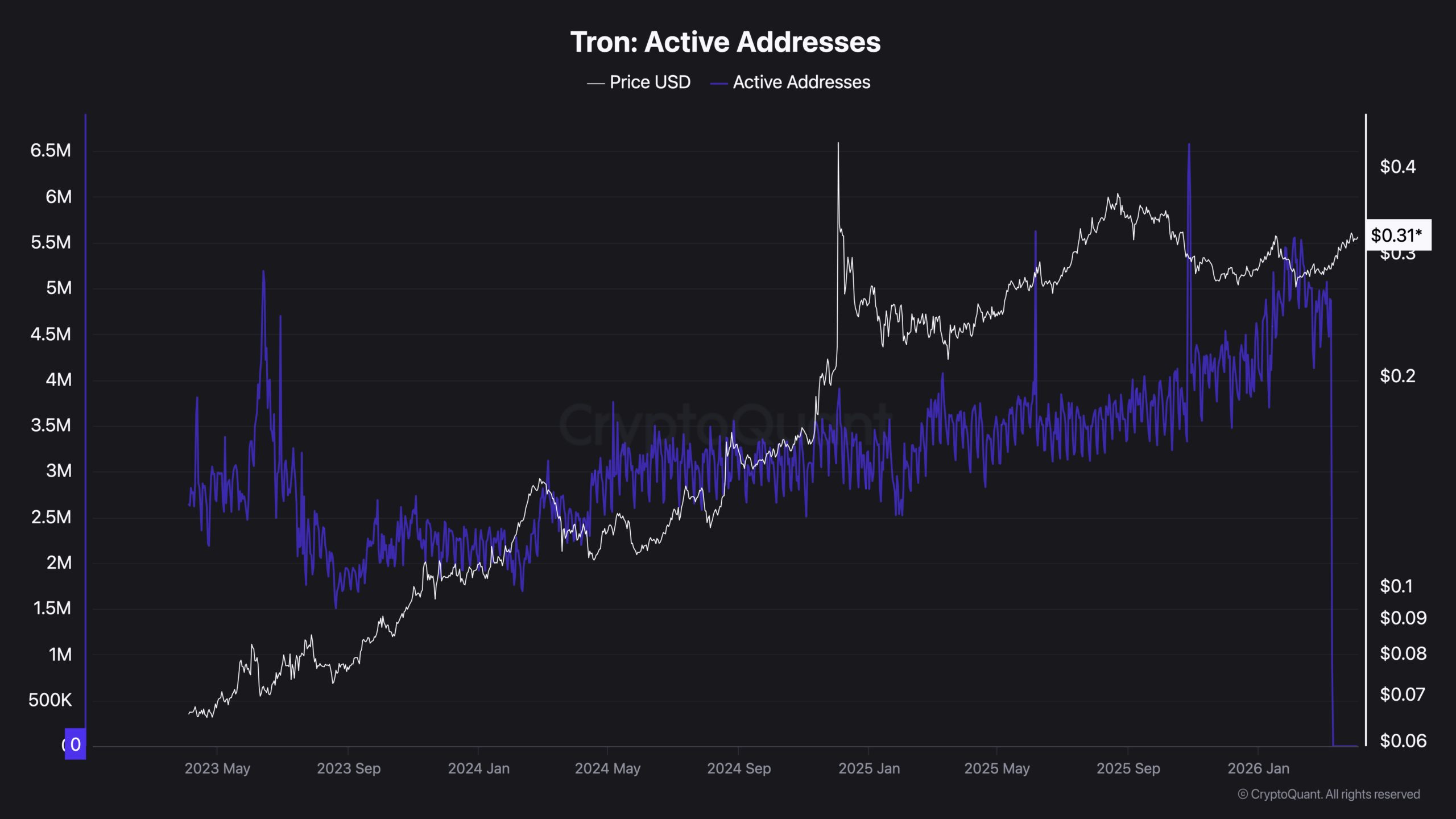
More users are using the network more frequently while paying less per transaction. The fee collapse and the active address rise are telling the same story, Tron is becoming the settlement layer of choice for low-cost stablecoin movement, and that position is generating more aggregate revenue than competitors charging higher fees to fewer users.
What the TVL Number Means
One figure in the Phoenix Group data deserves specific attention: Tron’s TVL of $4.8 billion versus Ethereum’s $88.5 billion. The gap is not a failure, it is a clarification of what Tron actually is.
High revenue, low TVL means Tron dominates transaction throughput, not asset storage. Sophisticated capital is not storing value on Tron, it is moving value through it. That distinction matters for sustainability: Tron’s revenue depends on stablecoin transfer volume remaining on its rails. If competing chains reduce costs sufficiently to attract that volume, the revenue leadership shifts with it.
The Company Behind is Buying
Against that on-chain backdrop, Tron Inc. (NASDAQ: TRON) disclosed that it acquired 159,004 TRX tokens at an average price of $0.3145, bringing its total treasury holdings to more than 689.9 million TRX. The company stated it aims to continue growing its Tron DAT holdings to enhance long-term shareholder value.
What the Chart Shows
TRX is trading around $0.31 at the time of writing, above the 50 SMA at $0.3152. The RSI has climbed to 65.66 from approximately 35 on April 3, a significant momentum shift in under 24 hours. The April 4 morning session carries the highest buying volume visible on the chart.
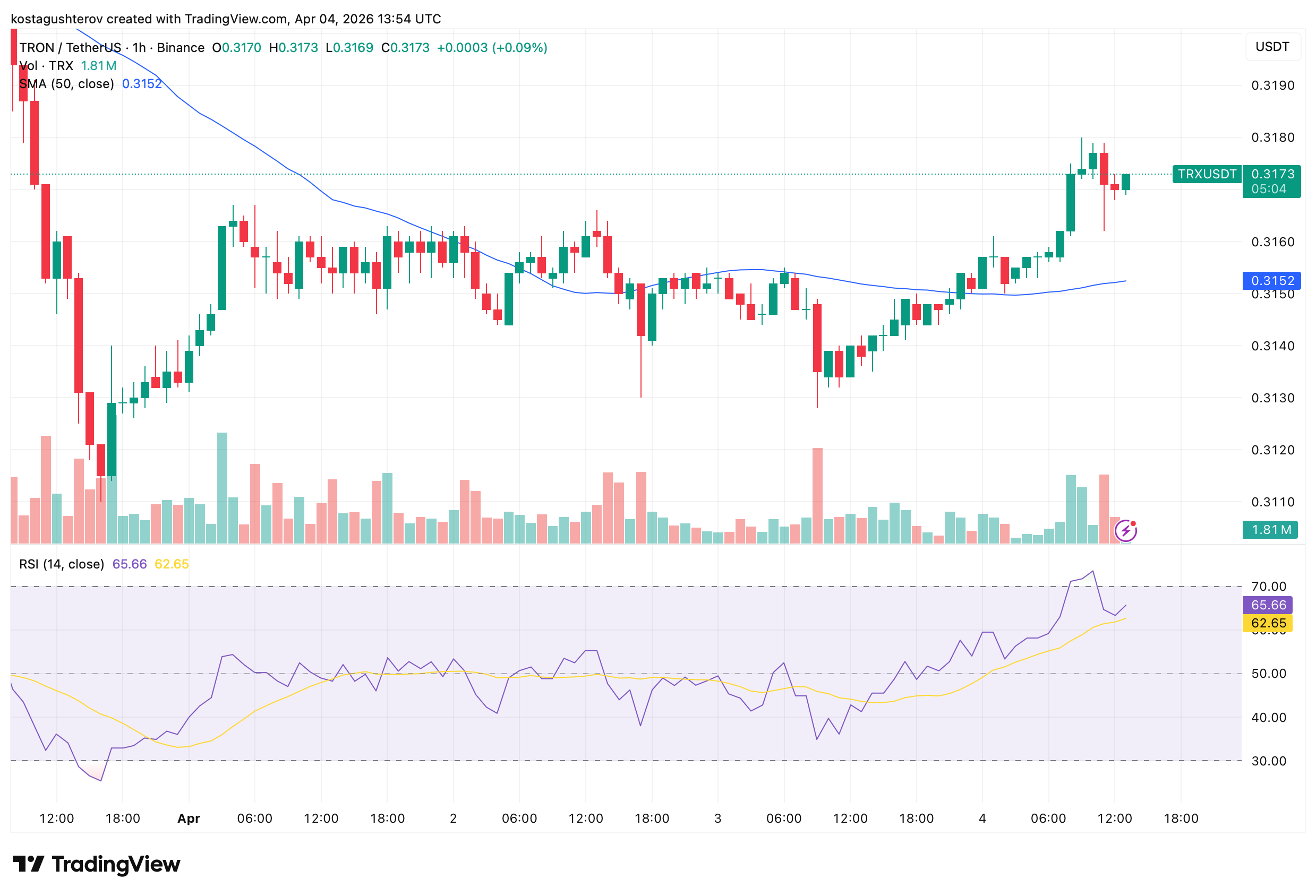
TRX dropped from $0.3190 on April 1 through a grinding decline to $0.3130 lows on April 3, the same macro selloff triggered by Trump’s Iran address that pressured the entire crypto market. The April 4 recovery has reclaimed the 50 SMA and pushed RSI to its highest reading in the visible timeframe. The dotted resistance line at approximately $0.3170 has been tested and held as support in the most recent candles.
If the revenue narrative holds, the immediate resistance sits at $0.3190, the April 1 high. A sustained close above it on continued volume would extend the recovery and give the fundamental story a technical confirmation. Tron Inc. bought at $0.3145 today with a stated intention to continue. That is not a price target, it is a disclosed cost basis from an institutional buyer.
If macro pressure returns, the 50 SMA at $0.3152 is the first level to watch. A close below it would suggest the revenue data and the treasury purchase have been fully priced into the April 4 rally without attracting sustained follow-through. The $0.3130 April 3 low is the next meaningful support below that.
Revenue leadership is real. The fee model that produces it is specific and defensible. The question the chart is asking is whether the market has priced one day of that reality or the beginning of a sustained reassessment.


