

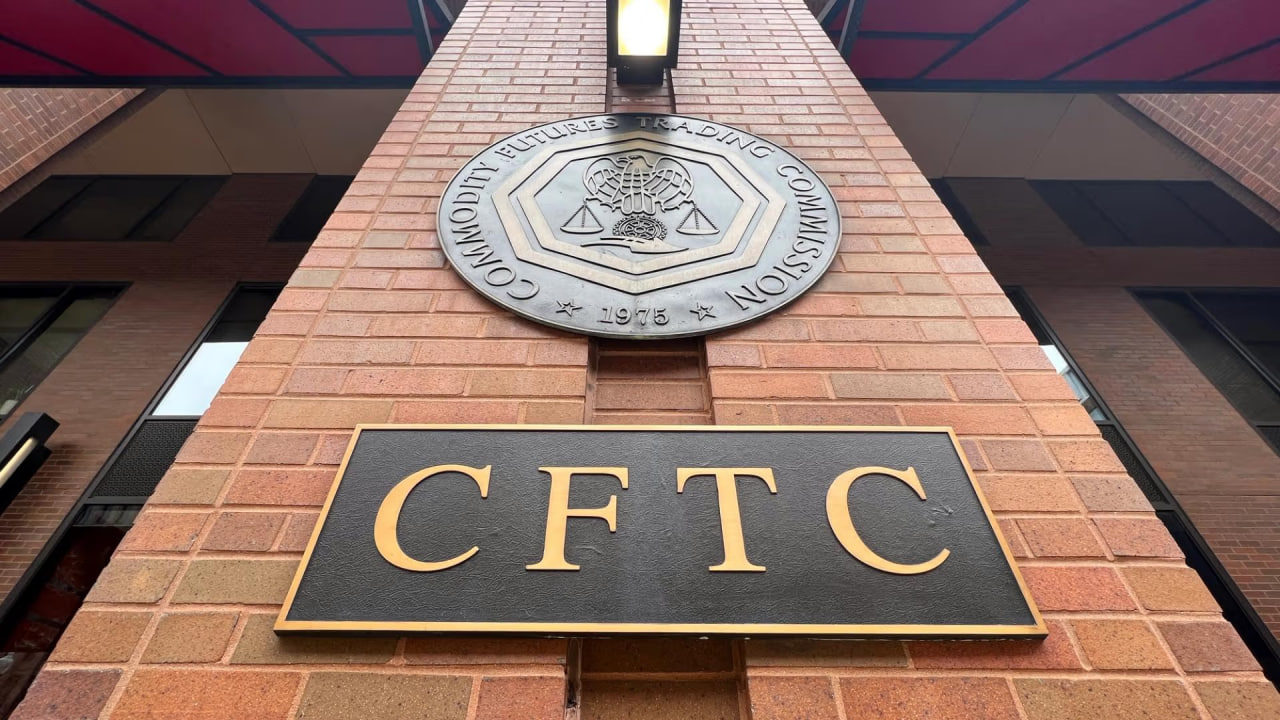
The U.S. Commodity Futures Trading Commission announced on April 10, 2026 the formation of its Innovation Task Force - a working grouptasked with building regulatory frameworks for crypto assets, artificial intelligence, and prediction markets.
Key Takeaways
CFTC has officially formed an Innovation Task Force to regulate crypto, AI, and prediction markets.
The SEC has already classified Bitcoin, Ethereum, and Solana as digital commodities under CFTC jurisdiction.
CFTC and SEC signed a memorandum of understanding for joint oversight of digital assets.
The Commission withdrew its 2024 proposal to ban political and sports-related event contracts.
The group is led by Michael J. Passalacqua, senior advisor to CFTC Chairman Michael S. Selig, and brings together a mix of internal agency veterans and lawyers with private-sector backgrounds at firms including Latham & Watkins, Sidley Austin, and Fried Frank. The five senior advisors collectively cover digital asset regulation, financial law, and market oversight, a combination that reflects the breadth of what the task force is expected to tackle. according to the CFTC announcement.
Crypto Regulation Finally Gets a Clearer Shape
One of the most persistent problems for American financial regulators over the past several years has been the jurisdictional standoff between the CFTC and the SEC over digital assets. On March 17, 2026, the SEC moved to resolve at least part of that tension by issuing an interpretive release classifying 16 major tokens, including Bitcoin, Ethereum, and Solana, as digital commodities, which places their oversight squarely within the CFTC’s authority rather than the SEC’s.
In early April 2026, the two agencies followed that up by signing a Memorandum of Understanding to formalize joint oversight and align their rules for digital asset markets. Around the same time, the CFTC issued a no-action letter clarifying that developers of self-custodial crypto wallets, such as Phantom, are not required to register as brokers, as long as they only connect users to regulated trading venues, a meaningful carve-out for a sector that had been operating under significant legal uncertainty.
Prediction Markets: From Legal Gray Zone to Regulated Territory
Prediction markets are arguably the most contentious issue currently sitting on the CFTC’s desk. Chairman Selig described them, alongside crypto assets, as among the “two most dynamic markets in finance” in statements from March 2026. These platforms, where users can trade on the outcomes of elections, sports results, and macroeconomic indicators, have long existed in a legal gray area, and the Commission’s posture toward them is visibly shifting.
The CFTC withdrew a 2024 proposal that would have banned political and sports-related event contracts, a reversal that signals the agency is moving toward legitimizing and regulating these markets rather than shutting them down. Chairman Selig also made the federal position explicit in a February 2026 commentary, stating the Commission would no longer stand aside while individual states attempt to ban such products at the regional level, raising direct questions about federal preemption of state-level restrictions.
Artificial Intelligence: The Next Regulatory Frontier
The inclusion of AI in the task force’s mandate is not incidental. Algorithmic trading and autonomous financial systems already account for a substantial and growing share of market volume, but the legal framework around them remains largely undefined. Analysts have noted that the convergence of AI and prediction markets could give rise to a new class of financial instruments, where automated systems forecast and trade on real-world event outcomes at a scale and speed that existing rules were not designed to address.
The Innovation Task Force will work alongside a newly formed Innovation Advisory Committee that includes senior figures from Coinbase, Nasdaq, and Uniswap Labs, with the stated aim of ensuring that AI-related regulations do not undercut domestic innovation before it has the chance to develop.
Global Crypto Adoption
Roughly 1.01 billion people, or 12.24% of the global population, are forecast to own cryptocurrency in 2026, while institutional investors now allocate an average of 9% of their assets under management to digital assets, a figure analysts expect to double within three years. Perhaps more telling is that 96% of institutional investors now say they believe in the long-term value of blockchain and digital assets.
The absence of a coherent regulatory framework was becoming an increasingly expensive problem, both for market participants trying to operate within the law and for the U.S. in terms of where capital and talent choose to locate. The main question is whether the new task force can keep pace with markets that have consistently outrun regulators. One thing is for certain – crypto has evolved significantly in the past few years and the “wild crypto west” we once knew is a thing of the past. Illicit activity will follow adoption at this scale, and that is precisely what regulators are trying to get ahead of. The ITF is a direct response to markets that have grown too large and too embedded in institutional portfolios to leave unaddressed.


