

Solana crypto and its decentralized trading infrastructure have crossed a threshold that few predicted would be reached this soon. The network’s proprietary automated market makers now process over $1Bn in daily trading volume, matching the combined output of the top four centralized exchanges.
Prop AMMs, including HumidiFi and SolFi, are driving this surge, with Solana’s proprietary AMM layer now capturing an estimated 60–80% of all Solana DEX volume. That figure is not evenly distributed. HumidiFi alone has quietly become one of the most active venues in crypto without most retail traders noticing.
Solana DEX volume is concentrated in 2 platforms.
Top Solana DEXs by weekly volume in the past week:
1. Pumpswap (PumpFun DEX) → $51.4B
2. Meteora → $20B
3. Raydium → $2.3B
4. Humidifi → $2B
5. Whirlpool → $1.4B
6. Bisonfi → $1.3B
7. Alphaq → $1.1B
8. Tessera → $894M
9.… pic.twitter.com/Rilo4Zygm9— DeFi Warhol (@Defi_Warhol) April 1, 2026
Meanwhile, full-year 2025 data shows $1.5 trillion in total Solana DEX volume, a +57% year-over-year increase that provides the structural backdrop for what’s happening now.
CEX-parity on liquidity depth is a fundamental shift, not a footnote. It changes the calculus for institutional flows and, by extension, the trajectory of the SOL price heading into mid-April.
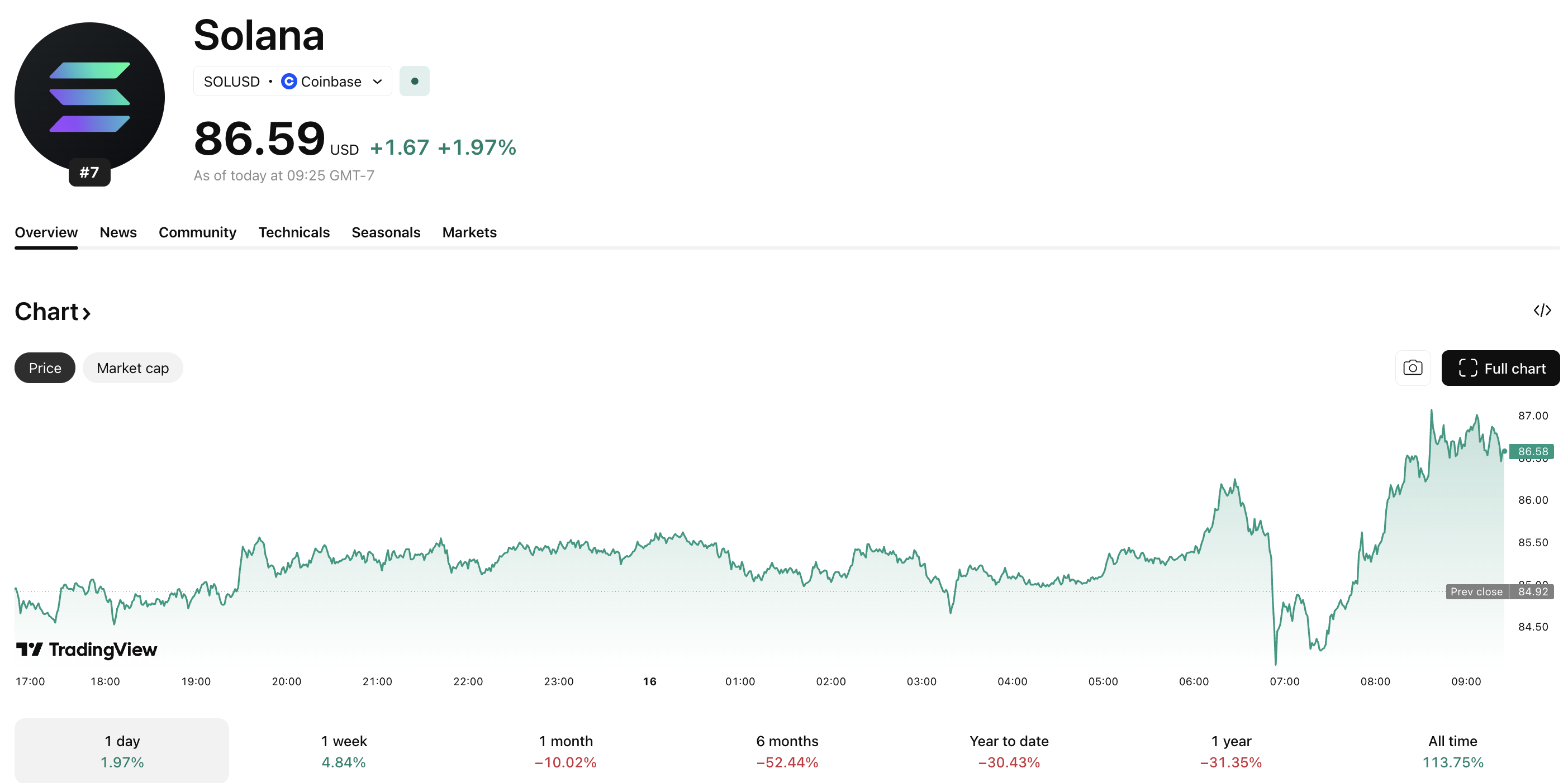
(SOURCE: TradingView)
Can Solana Price Sustain Its $80 Floor With DEX Volume at Record Highs?
The Polymarket contract predicting whether Solana crypto trades above $80 on April 17 is at 100% YES, effectively a settled question for traders. The face value of that contract has dried up precisely because the outcome is considered certain.
The more telling signal is a separate implied threshold: a YES share priced at 22 cents that pays $1 only if SOL reaches $150 in April. That contract is priced at roughly one-in-five odds, which either reflects rational skepticism or an underpriced asymmetric bet, depending on who you ask.
Galaxy Research’s Q4 2025 Solana update confirmed that prop AMMs accounted for approximately 50% of DEX volume by the end of 2025; the subsequent jump to 60–80% represents genuine acceleration. That kind of liquidity depth matters for large-order execution: trades that previously required a Binance or Coinbase order book can now settle on-chain without significant slippage.
Three scenarios worth tracking:
Bull case: Prop AMM volume holds above $1Bn daily, institutional ETF inflows continue building, and SOL tests the $85–$100 range on sustained momentum.
Base case: Volume stabilizes, SOL holds $80 support, price grinds sideways pending macro catalysts.
Bear/invalidation: AMM volume reverts below $500M daily, broader crypto risk-off sentiment triggers a breakdown below $70, invalidating the current consensus entirely.
The $80 level appears to function as a psychological floor right now. Whether on-chain liquidity depth translates into sustained upward price pressure, or simply means SOL can absorb selling more efficiently, is the open question. Recent SOL price analysis suggests bullish catalysts remain intact, but confirmation requires volume to hold, not just appear.
Bitcoin Hyper Eyes Early-Mover Upside as Solana Crypto Infrastructure Validates Layer 2 Demand
Solana’s AMM dominance is compelling. But at the current market capitalization, SOL’s upside requires network-wide adoption to sustain; the easy multiples belong to earlier chapters of this story. The infrastructure thesis Solana validated, fast execution, low cost, programmable liquidity, is now being applied to a larger asset class entirely.
Bitcoin Hyper is building what it describes as the first-ever Bitcoin Layer 2 with Solana Virtual Machine integration, targeting the exact limitations Solana’s rise exposed in Bitcoin: slow transactions, high fees, and a near-total absence of programmability. The project has raised more than $32M at a current token price of $0.0136786, with staking available for early participants.
Key features include extremely low-latency Layer 2 processing, SVM-based smart contract execution, and a Decentralized Canonical Bridge for BTC transfers — essentially delivering Solana-speed performance on top of Bitcoin’s security layer (a combination that didn’t exist eighteen months ago). The raise has drawn analyst attention alongside other emerging assets in the current cycle.


