

Most people bet on sports. Prediction markets let you bet on almost anything else: elections, central bank decisions, tech product launches, even weather events.
The twist is that the prices on these markets are not arbitrary.
They behave like probabilities, and the crowd setting them is often more accurate than any single analyst. Understanding how that works, and where the risks sit, is increasingly relevant now that decentralized platforms handle hundreds of millions of dollars in open interest every month.
TL;DR
- Prediction markets let users buy and sell shares tied to yes-or-no outcomes. Share prices reflect the crowd's estimated probability of each outcome occurring.
- Polymarket is the dominant decentralized platform, while Kalshi operates as a regulated US exchange. They serve different audiences but trade on similar principles.
- Prices on well-funded prediction markets have historically outperformed traditional polling and pundit forecasts, making them useful signals even for non-traders.
What a Prediction Market Actually Is
A prediction market is a financial exchange where contracts resolve based on real-world events rather than the performance of a company or commodity. Each contract typically has a binary structure: one share pays out $1.00 if a specific outcome occurs, and zero if it does not.
Because shares trade continuously between participants, their prices settle at whatever level buyers and sellers agree on. A share trading at $0.72 implies the market collectively believes there is roughly a 72 percent chance the outcome happens. That is not a rule imposed from outside. It emerges from traders putting real money behind their views, which creates a powerful incentive to be correct.
Key definition: In a binary prediction market, the share price of a "yes" contract equals the market's implied probability of that event occurring, expressed as a decimal between 0 and 1.
The concept predates crypto by decades. The Iowa Electronic Markets, run by the University of Iowa since 1988, let participants trade on US presidential elections and has repeatedly beaten polling averages. What blockchain added was permissionless access, programmable settlement, and global liquidity without a centralized clearinghouse controlling who can participate.
Also Read: https://yellow.com/news/aave-defi-lending-volumes-trader-interest
How the Mechanics Work From Trade to Settlement
Every prediction market contract has four moving parts: a question, a resolution source, a deadline, and a payout structure.
The question defines what must happen for a "yes" share to pay out. The resolution source is the oracle or authority that determines the outcome after the deadline passes. On decentralized platforms, this is typically an on-chain oracle network or a community arbitration process. The payout structure is almost always binary: $1.00 per winning share, zero per losing share.
Here is a simplified worked example. Suppose a market asks: "Will the Federal Reserve cut rates at its June 2026 meeting?" Shares are initially listed at $0.50, implying a 50-50 chance. As economic data rolls in, buyers who believe a cut is coming bid the price toward $0.85. Sellers who disagree provide liquidity at that level. After the June meeting, the Fed either cuts or it does not. Winning shares settle at $1.00. Losing shares settle at $0.00. Profit or loss equals the difference between the settlement price and whatever you paid.
The order book mechanics are almost identical to a standard limit-order exchange. Market makers post bids and offers. Takers fill them. Spreads narrow when liquidity is deep. One important difference is that new shares can be minted at any time by depositing $1.00 of collateral and splitting it into one yes share and one no share. This keeps prices arbitrage-bounded between 0 and 1, because if yes plus no ever traded below $1.00 combined, someone could buy both, hold until resolution, and guarantee a profit.
Also Read: Seeker Climbs 36% As Open Interest Hits $21M, Shorts Bet Against Rally
Polymarket vs Kalshi: Two Very Different Approaches
The two platforms most people encounter first are Polymarket and Kalshi, and they represent fundamentally different models.
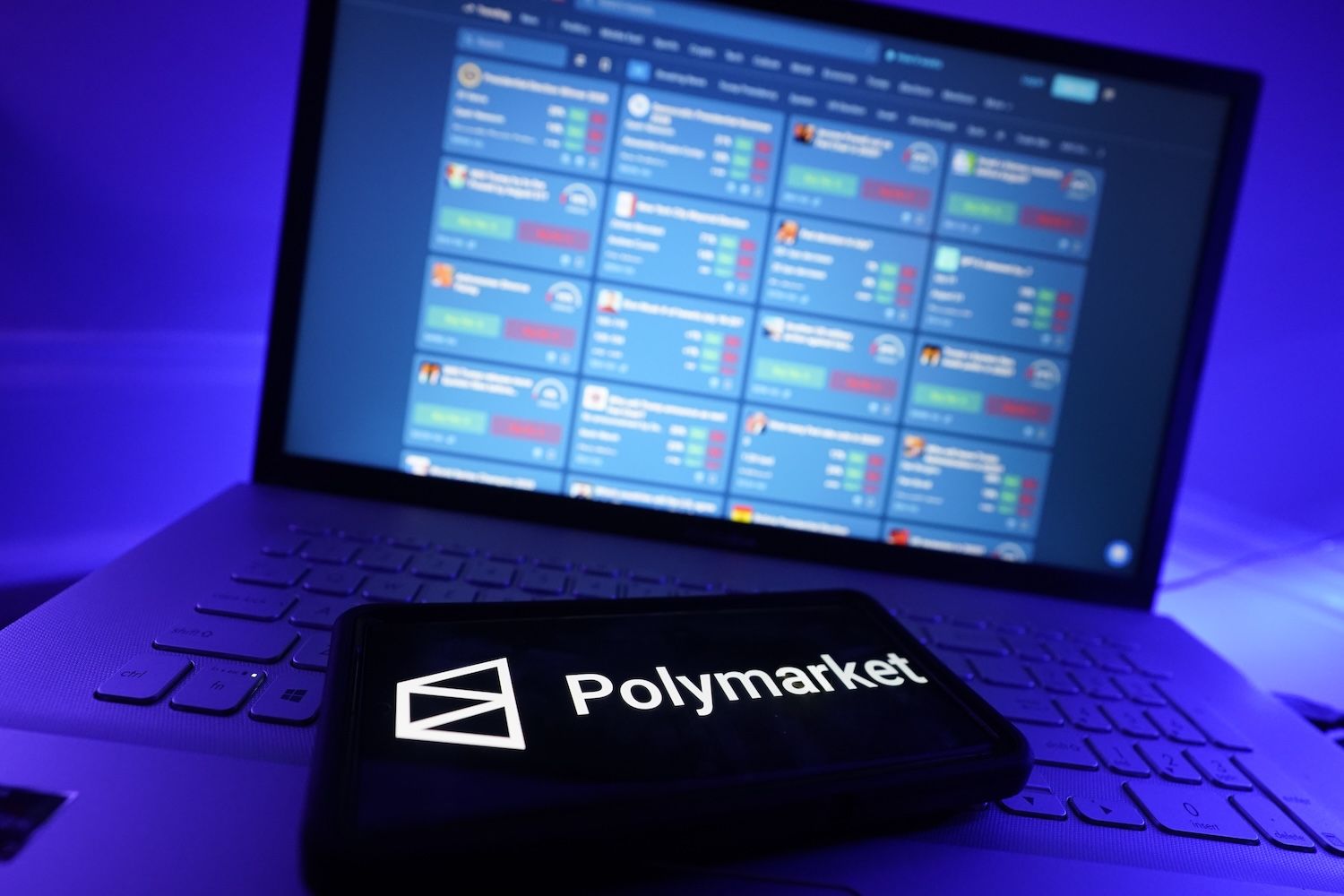
Polymarket is a decentralized application built on Polygon, an Ethereum (ETH) layer-2 network. It uses USDC (USDC) as its collateral currency. Users connect a self-custody wallet, and contracts settle automatically via smart contracts when an outcome is confirmed by an UMA Protocol optimistic oracle. There is no corporate entity approving your account or limiting your position size based on your nationality, though Polymarket has geofenced US users following a 2022 CFTC settlement.
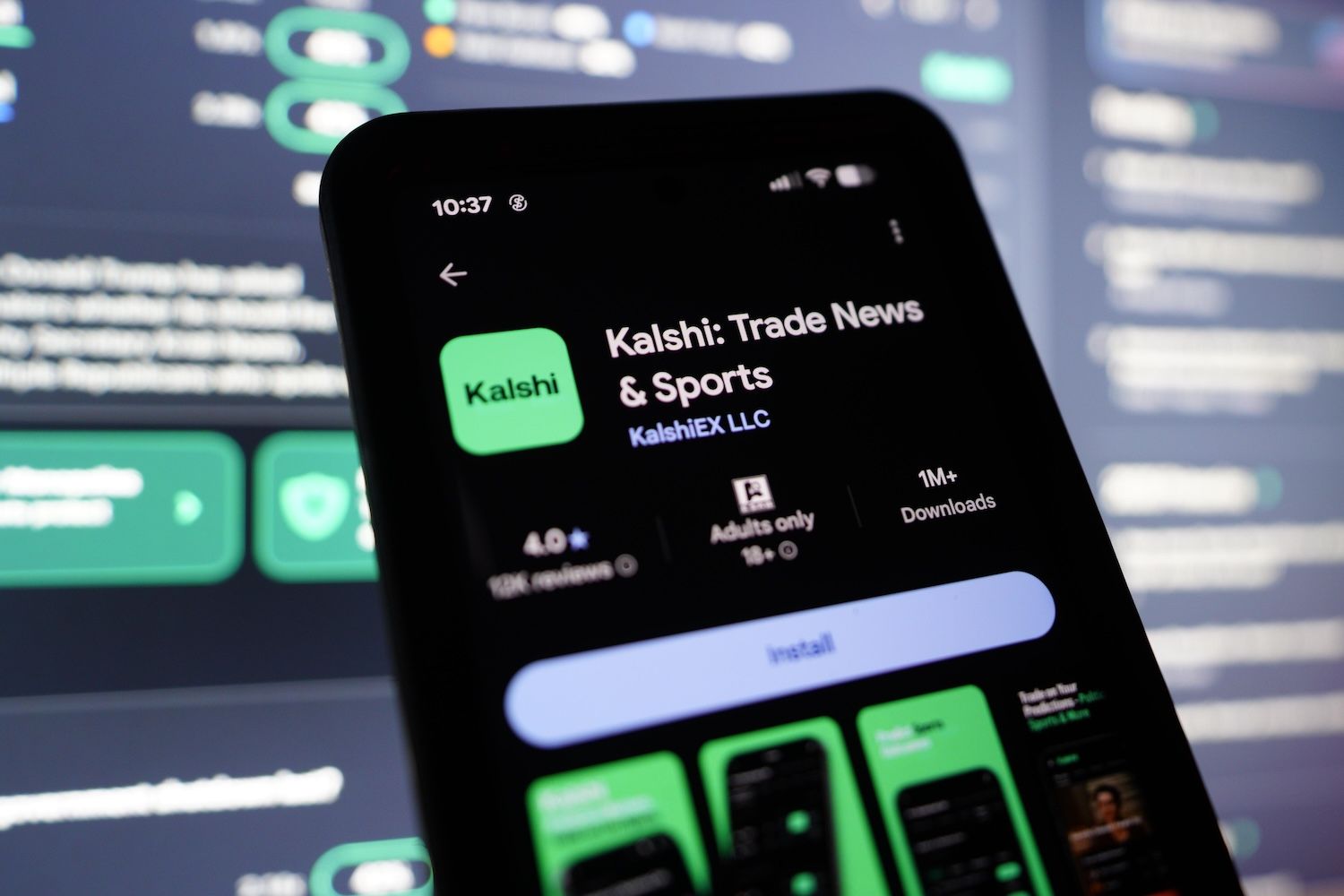
Kalshi went the opposite route. Founded in 2018 and regulated by the Commodity Futures Trading Commission (CFTC) as a Designated Contract Market, it operates as a fully licensed US exchange. American users can deposit dollars directly from a bank account. Kalshi offers federal regulatory protections, dispute resolution procedures, and capital segregation rules that Polymarket cannot match. The tradeoff is that Kalshi operates within a tighter set of approved market categories and position limits.
A third category worth knowing is prediction markets embedded inside broader DeFi protocols, such as Augur (the original decentralized platform, now less active) and newer entrants building on Arbitrum and Base. These tend to have lower liquidity but higher censorship resistance.
Key differences at a glance:
- Custody: Polymarket is non-custodial. Kalshi holds your funds.
- Regulation: Kalshi is CFTC-regulated. Polymarket is not available to US residents.
- Settlement currency: Polymarket uses USDC on-chain. Kalshi uses USD off-chain.
- Market breadth: Polymarket lists a wider range of global events. Kalshi focuses on categories approved by the CFTC.
- Minimum friction: Polymarket requires a crypto wallet. Kalshi accepts a bank transfer.
Polymarket reported over $3.4 billion in trading volume during the 2024 US election cycle alone, according to its own on-chain data, making it the largest single prediction market event in recorded history.
Also Read: 66.5% Of Bitcoin Sits With Long-Term Holders, Yet The Cycle Looks Stuck
Why Prediction Market Prices Beat Traditional Forecasts
The accuracy of prediction markets is not a theoretical claim. It has been studied repeatedly across elections, sports, and economic events.
A 2008 paper published in the Journal of Economic Perspectives by Justin Wolfers and Eric Zitzewitz reviewed a decade of prediction market performance and found that market-based forecasts consistently outperformed expert surveys and polls.
The intuition is straightforward: people who trade with real money have a stronger incentive to gather and correctly weight information than people who simply answer a pollster's question.
This phenomenon has a name: the aggregation of dispersed information, formalized in the efficient markets hypothesis and in Friedrich Hayek's earlier work on the price system as a knowledge aggregator. Prediction markets operationalize Hayek's insight in a direct way. Every trade encodes private information into a public price.
That said, prediction markets are not infallible. They can be manipulated by large single actors, especially in low-liquidity markets. They can also reflect media narrative rather than ground truth when participants lack genuine informational advantages. The 2024 US election markets showed some evidence of large coordinated buys on one candidate that temporarily distorted prices away from polling-based baselines, though prices ultimately converged to accurate estimates by election eve.
The practical takeaway is that prediction market prices on high-liquidity events are worth treating as meaningful signals. They should not be treated as certainties, and they are most reliable when many independent participants are active.
Also Read: Pavel Durov Confirms 6x TON Fee Cut, Feeless Transfers Coming
Risks Every Participant Needs to Understand
Prediction markets carry several risk categories that differ from standard crypto trading. Understanding each one before depositing is not optional.
Resolution risk is the most common source of dispute. A market that asks "Will X happen by date Y" sounds unambiguous until it is not. Edge cases, delayed confirmation, or ambiguous wording can cause an oracle or arbitration process to resolve a contract against your expectation even when you were directionally correct. Always read the resolution criteria before taking a position, not after.
Liquidity risk affects your ability to exit early. In deep markets like major election contracts, spreads are tight and you can exit at close to fair value. In niche markets, the spread between the best bid and best offer can be 10 to 20 percentage points wide. Entering one of those markets is easy. Exiting before resolution at a fair price can be very difficult.
Counterparty and smart contract risk applies specifically to decentralized platforms. While Polymarket's contracts are audited, no smart contract is immune to exploits. The oracle layer introduces an additional attack surface. A malicious actor who can influence the resolution source can steal collateral from both sides of a market.
Regulatory risk is especially relevant for US-based users. The CFTC has previously taken action against prediction market operators. The legal status of crypto-settled prediction markets accessible to Americans remains an evolving question even after Kalshi's landmark regulatory win in 2024, when a federal appeals court affirmed its right to list political event contracts.
Also Read: ApeCoin Surges 82% In 24 Hours As NFT-Linked Token Tops $866M In Daily Volume
How to Actually Use a Prediction Market as a Beginner
The practical barrier to entry is lower than most people expect, especially on Kalshi. Here is the sequence for a first-time participant on each platform.
On Kalshi (US residents):
- Create an account at kalshi.com and complete identity verification.
- Link a bank account or deposit via ACH transfer.
- Browse available markets by category, including economics, politics, and science.
- Select a contract, review the resolution criteria, and choose a position size.
- Place a limit order or accept the current market price.
On Polymarket (non-US residents):
- Install a self-custody wallet such as MetaMask or use Polymarket's built-in embedded wallet powered by Magic.link.
- Fund your wallet with USDC on the Polygon (POL) network. You can bridge from Ethereum or buy directly on a supporting exchange.
- Connect to polymarket.com and browse markets.
- Review the resolution source listed on each market's detail page before buying.
- Place your order. Shares appear in your portfolio immediately after the transaction confirms.
Position sizing matters more here than on most crypto trades. Because each share resolves to either $1.00 or $0.00, the risk of a single position is fully defined. That makes it easier to size correctly. A useful starting heuristic is to never place more than you would be comfortable losing entirely, and to avoid positions where the spread alone exceeds five percent of your intended stake.
Also Read: China's DeepSeek Releases Long-Awaited AI Update, Benchmark Results Disappoint
Who Actually Benefits Most From Prediction Markets
Different types of users extract different value from these platforms, and it is worth being honest about where prediction markets shine and where they fall short.
Macro traders and researchers use prediction market prices as an input to broader positioning. A rising probability of a rate cut on a deep prediction market can inform fixed income and Bitcoin (BTC) exposure decisions. The signal is especially valuable when it diverges meaningfully from consensus analyst forecasts.
Hedgers use prediction markets to offset real-world exposure. A business with meaningful revenue tied to a specific regulatory outcome can buy a position that pays out if the adverse outcome occurs, functioning as a low-cost insurance alternative.
Speculators with genuine informational edge are the ones who tend to profit most consistently. If you have a well-reasoned view that a market is mispriced, and you have correctly identified the resolution criteria, a binary market gives you a clean, capped-risk way to express that view.
Casual observers and researchers who never trade still benefit from watching these markets. The aggregate probabilities on well-funded contracts are among the most honest forward-looking indicators available for any event with a binary outcome.
Where prediction markets work least well is for highly illiquid or niche events with unclear resolution criteria. Entering a market with a $50,000 open interest total and a vague resolution clause combines liquidity risk, resolution risk, and counterparty risk all at once.
Also Read: Mining Royalty Firm Elemental Offers XAU₮ Dividend In Industry First
Conclusion
Prediction markets are one of the most intellectually honest financial instruments available in crypto today. The price of a contract is a direct reflection of what many independent actors believe is likely to happen, adjusted for their willingness to put capital behind that belief. That process produces information that is genuinely difficult to replicate with surveys, models, or expert panels alone.
The growth of platforms like Polymarket and Kalshi has brought serious liquidity to a concept that existed only in academic experiments a decade ago. The 2024 election cycle demonstrated what these markets look like under genuine stress: high volume, fierce price discovery, and occasional noise from large-player manipulation. The signal-to-noise ratio on high-liquidity contracts was ultimately good enough to outperform most traditional forecasters.
For anyone navigating crypto markets in 2026, prediction market prices on economic events are worth adding to your information diet even if you never place a single trade. If you do trade, start small, read every resolution clause carefully, and treat the implied probability as a starting point for analysis rather than a guarantee of outcome.
Read Next: Ledger Eyes $4B NYSE IPO As Hardware Wallet Sales Top 7M Devices


