

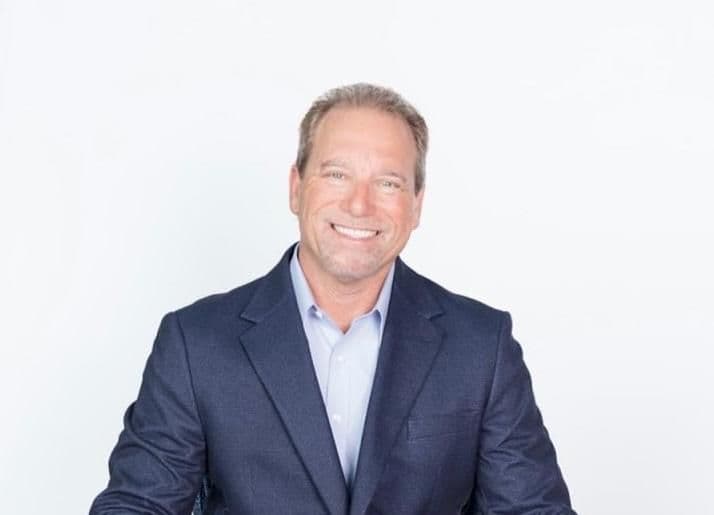
Florida gubernatorial candidate Frank Russo says the state should consider allocating a portion of its $180 billion pension fund to Bitcoin (BTC) while exploring a broader shift toward blockchain-based financial infrastructure, positioning cryptocurrency as a tool for income generation and economic resilience.
In an interview with Yellow.com on the sidelines of Consensus, Russo outlined a vision that extends beyond simple crypto adoption, arguing that digital assets could help Florida residents offset inflation, generate additional income, and adapt to a labor market increasingly disrupted by artificial intelligence.
Pension Allocation And State-Level Crypto Infrastructure
Russo’s proposal to introduce Bitcoin exposure into public pension funds places Florida within a small but growing group of jurisdictions considering crypto as a long-term reserve asset rather than a speculative instrument.
He framed the move less as a bet on price appreciation and more as part of a broader effort to expand financial opportunities for residents.
The proposal comes with clear risks. Bitcoin’s volatility remains a central concern for pension managers responsible for safeguarding retiree capital. Russo acknowledged the need for safeguards, suggesting that insurance-style mechanisms could be developed to protect against sharp market drawdowns.
Beyond pensions, Russo said Florida should allow residents to pay taxes in cryptocurrency and explore issuing a state-backed stablecoin designed for local commerce. He positioned such a system as an additional financial layer rather than a replacement for the U.S. dollar, which he said would remain primary.
Crypto As Insurance And Economic Buffer
A recurring theme in Russo’s platform is the use of blockchain as a risk management tool rather than purely a financial asset class.
Drawing on his background in insurance, he pointed to parametric insurance models built on smart contracts as a potential solution to Florida’s long-standing coverage gaps, particularly in areas exposed to climate risk.
These systems would automatically trigger payouts based on predefined conditions, such as hurricane intensity or flood levels, reducing reliance on traditional claims processes.
Russo argued that similar principles could be applied more broadly across crypto adoption, with volatility risks transferred away from consumers through structured financial products. He repeatedly emphasized that the goal is to “strengthen the community and not hurt the community,” framing crypto as a means of protection rather than speculation.
Competing With Other States For Crypto Capital
Russo also said Florida should position itself as a destination for crypto companies seeking regulatory clarity, particularly as firms reassess operations in jurisdictions like New York and California.
Also Read: Exclusive: DeFi Is Growing Up, And That Could Mean Lower Yields Ahead, Cork Protocol Founder Says
He stopped short of outlining specific regulatory frameworks but indicated that consumer protection and industry education would be central to the approach. The strategy reflects a broader competition among U.S. states to attract digital asset firms as federal regulation continues to evolve.
At the same time, Russo proposed putting the state budget on a public blockchain ledger to improve transparency and accountability. The idea would allow real-time tracking of government spending, though it raises questions around data sensitivity and political feasibility.
Crypto As A Response To AI-Driven Job Disruption
Perhaps the most forward-looking element of Russo’s platform is his framing of crypto as a response to structural changes in the labor market.
He linked digital asset adoption directly to the rise of artificial intelligence, arguing that automation is already reducing employment opportunities across sectors. In that context, he positioned crypto as a potential avenue for individuals to generate supplemental income.
Russo said the state should work with the private sector to expand education programs, particularly for seniors and lower-income groups, to ensure broader participation in digital financial systems while reducing exposure to scams.
Mining, Energy, And Revenue Expansion
Russo also proposed incentivizing Bitcoin mining using excess energy sources, including flared gas and solar power, as a way to generate additional state revenue.
He argued that new revenue streams could help fund infrastructure and environmental protection efforts without increasing taxes. The approach mirrors strategies explored in other energy-rich jurisdictions but would require balancing environmental concerns, particularly in sensitive ecosystems like the Everglades.
What To Watch
Russo’s proposals reflect a broader shift in how crypto is being discussed at the state level, moving from asset adoption to systemic integration into public finance, insurance, and labor policy.
The key question is execution. Many of the ideas, including pension allocation, stablecoin issuance, and blockchain-based governance, would require significant regulatory coordination and technical infrastructure.
If implemented, Florida could emerge as one of the first U.S. states to test crypto as parallel financial infrastructure. If not, the proposals may remain part of a growing political narrative that positions digital assets as a solution to economic uncertainty in an AI-driven world.
Read Next: Samson Mow Defends Strategy Selling Bitcoin As Saylor Breaks 'Never Sell' Rule


