

Morgan Stanley’s Bitcoin ETF Trust recorded $193.6M in net inflows during its first 30 days of trading, April 8 through May 7, closing the period with $239.6M in total net assets and not a single day of net outflows.
That zero-outflow streak is not simply a clean-launch statistic; it is a structural signal that advisor-intermediated capital behaves differently from discretionary retail flows in the Bitcoin ETF market.
The open question is whether the pattern reflects a durable characteristic of the wirehouse distribution channel or an episodic calm during a relatively contained volatility window.
Bitcoin traded near $83,000 mid-week during the referenced period, briefly reaching that level on Wednesday before flows reversed.
The broader US spot Bitcoin ETF market recorded $622M in weekly net inflows but still posted $277M in outflows on Thursday and $146M on Friday, making MSBT’s unbroken positive streak during that same stretch the precise data point that demands a structural explanation.
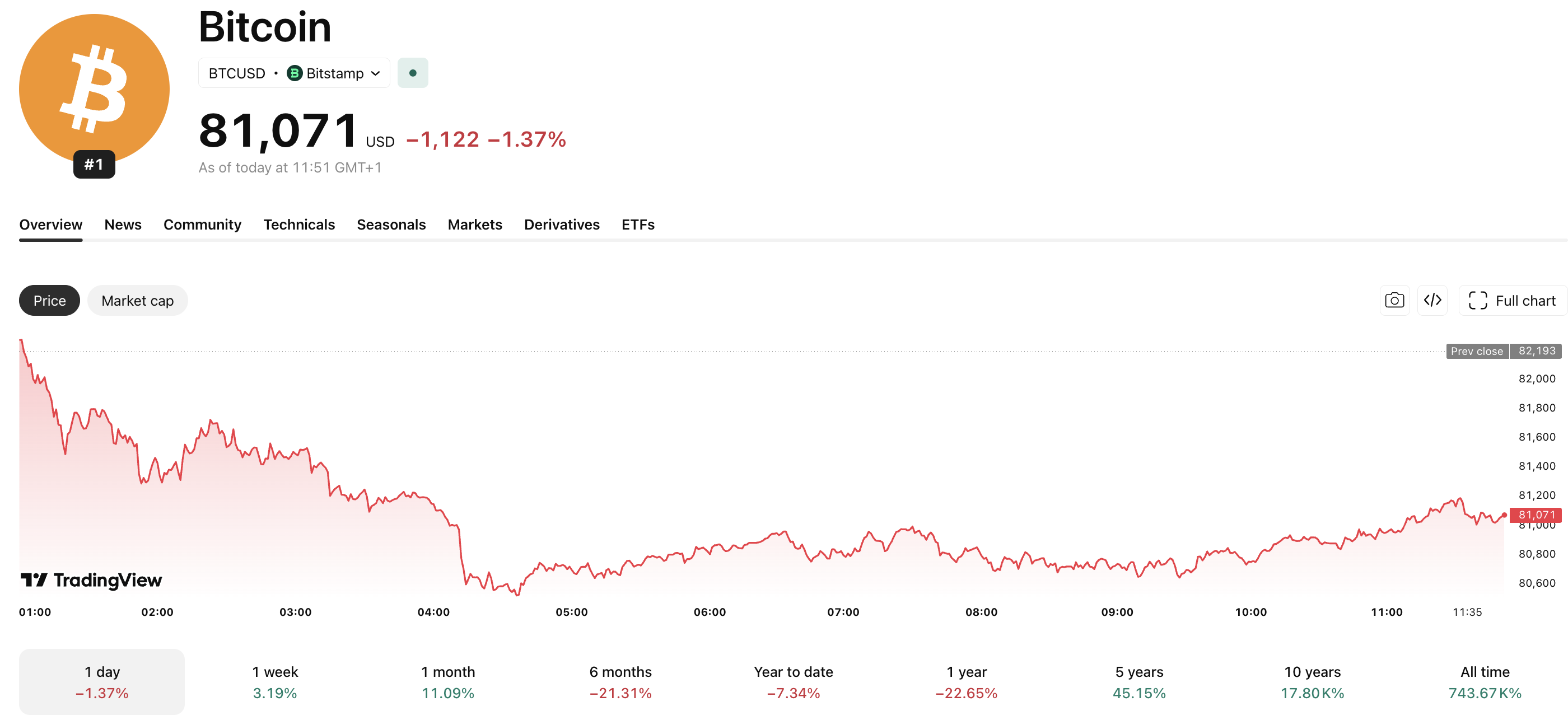
(SOURCE TradingView)
Morgan Stanley Bitcoin ETF News: What Zero Outflows Actually Signal
Zero outflow days are a crucial milestone in the ETF market, indicating capital stability. In its first month, MSBT recorded 17 days of positive inflows and 5 flat sessions, indicating that holders remained committed even as demand paused.
On May 7, while the broader US spot Bitcoin ETF market lost $277.5M, MSBT attracted $5.7M in inflows, contrasting sharply with BlackRock’s IBIT and Fidelity’s FBTC, which lost $27.2M and $97.6M, respectively.
This highlights the strength of MSBT’s distribution channel, which is advisor-gated and portfolio-allocation-driven, resulting in a different redemption profile compared to direct retail or institutional access. Notably, MSBT has not experienced any outflow sessions during volatility, unlike other funds.
Why Morgan Stanley’s Wealth Channel Produces a Different Flow Profile
The zero-outflow streak at Morgan Stanley is driven by structural factors rather than behavioral ones. With a network of 16,000 financial advisors managing around $9.3 trillion in client assets, any decision to sell requires discussions and portfolio reviews, which prevents impulsive redemptions during market volatility.
Clients typically enter MSBT with a long-term perspective, allocating 2% to 4% of their portfolios, rather than as speculative trades.
Additionally, Morgan Stanley’s early support for Bitcoin ETFs enhances its competitive edge. It was the first major wirehouse to allow its advisors to promote these ETFs and offers the lowest sponsor fee in the US spot Bitcoin ETF market at 0.14%, compared to competitors’ 0.25%.
This fee difference can save clients approximately $1.1M annually on a $1Bn allocation, making MSBT more attractive for cost-sensitive investors.
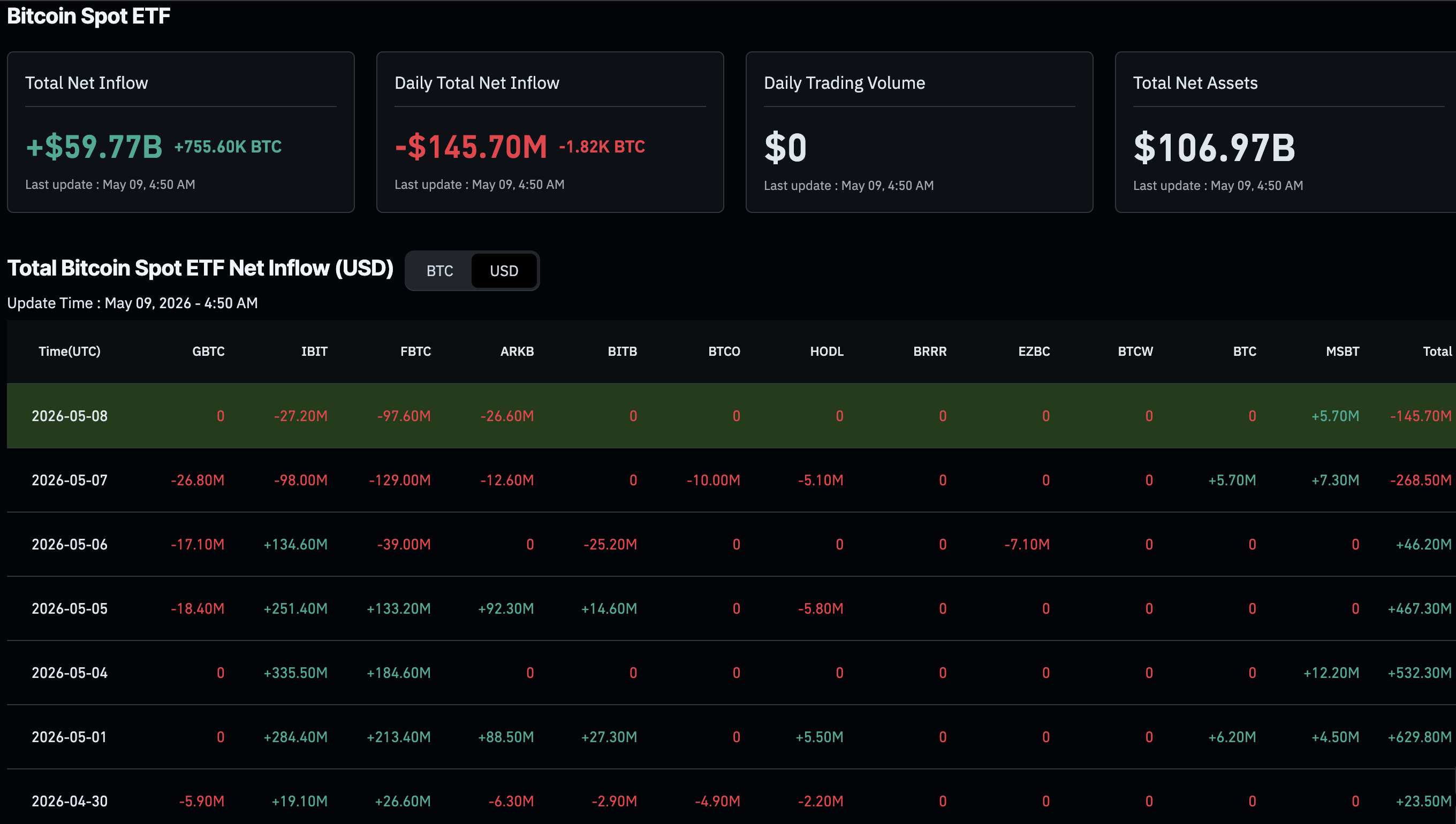
(SOURCE: CoinGlass)
Bull, Base, Bear: Three Paths for Morgan Stanley Bitcoin ETF Inflows From Here
Bull Case: MSBT maintains a zero-outflow streak for two months, pushing AUM toward $500M as Morgan Stanley’s advisors increase allocation recommendations. This fee advantage attracts large institutional mandates from IBIT or FBTC, while competitor wirehouses like Merrill Lynch and Wells Fargo accelerate their Bitcoin ETF rollouts in response to client demand, further validating Morgan Stanley’s approach. Total US spot Bitcoin ETF assets, now above $106Bn, rise significantly due to wirehouse inflows.
Base Case: Inflows from Morgan Stanley’s advisors stabilize as outreach wraps up, moderating to $20-$40M monthly amid some outflows during BTC volatility. AUM levels off between $200M and $350M through Q3, ending the zero-outflow streak but maintaining positive net flows. The fund establishes itself as a solid mid-tier Bitcoin ETF, confirming stability without explosive growth.
Bear Case: A prolonged Bitcoin drop below $74,000- $76,000 triggers extensive reallocations, with high-net-worth clients reassessing their risk profiles. This leads to multiple outflow sessions, breaking the zero-outflow narrative and testing the “sticky capital” thesis amid a genuine stress scenario. Key data to monitor includes SoSoValue’s 30-day rolling outflow count for MSBT, updated daily.


