


The real-world asset tokenization sector has quietly cleared one of its most consequential milestones. Total value locked across tokenized government securities, credit instruments, and money market funds on public blockchains has surpassed $20 billion in 2026, a figure that would have seemed speculative just two years ago.
Ondo Finance (ONDO), one of the sector's benchmark protocols, crossed a $2.1 billion market cap this week with its token up roughly 4.7% in the last 24 hours, reflecting sustained institutional appetite rather than retail-driven momentum.
The numbers behind that growth are striking. According to data tracked by DefiLlama's RWA dashboard, the sector has grown more than 450% from approximately $3.5 billion in early 2024, fueled by a combination of high real-world interest rates, maturing blockchain infrastructure, and direct entry from asset management giants including BlackRock and Franklin Templeton.
TL;DR
- Real-world asset tokenization has surpassed $20B on-chain in 2026, driven by institutional entrants and persistent high-yield environments in traditional finance.
- Ondo Finance leads the non-custodial RWA protocol layer with over $600M in tokenized US Treasury exposure, competing directly with BlackRock's BUIDL fund.
- Regulatory clarity in the US and EU is accelerating institutional adoption, but counterparty concentration and oracle dependency remain the sector's most underpriced risks.
What Real-World Asset Tokenization Actually Means In 2026
The phrase "real-world asset tokenization" has been applied so broadly that it risks losing meaning. In precise terms, RWA tokenization refers to the process of representing a claim on an off-chain asset, a US Treasury bill, a corporate bond, a money market fund share, real estate equity, or a trade receivable, as a transferable token on a public or permissioned blockchain.
The token does not replace the underlying asset. It represents a legal or beneficial interest in it, enforced through a combination of smart contracts, custodian agreements, and trust law.
That distinction matters enormously for understanding risk. When BlackRock launched its BUIDL fund on Ethereum (ETH) in March 2024, it did not put Treasury bills "on-chain." It created a tokenized fund share, fully subscribed in USD Coin (USDC), where the underlying portfolio holds short-duration US government securities.
Token holders own a fund interest, not a direct Treasury position. That legal structure, and its enforceability in multiple jurisdictions, is the central question every institutional buyer must answer before committing capital.
The BUIDL fund crossed $1 billion in assets under management within seven weeks of launch, the fastest ramp in BlackRock's fund history for a product in this format, according to data reported by CoinDesk citing BlackRock's own disclosures.
The legal wrapper around a token determines everything: redemption rights, tax treatment, counterparty exposure, and whether the token can legally be traded on secondary markets. DeFi protocols that accept RWA tokens as collateral are effectively taking on the legal risk of that wrapper, not just the market risk of the underlying asset. Understanding this layered structure is the prerequisite for reading any RWA data correctly.
Also Read: Is Bitcoin’s $82K Hold A Setup For The Next Market Move?
The Five-Year Arc: How The Market Grew From $300M To $20B
The RWA tokenization market did not grow linearly. It grew in three distinct waves, each triggered by a different macro or regulatory catalyst. Tracing those waves provides the clearest map of where capital is coming from and why.
The first wave ran from 2020 to mid-2022 and was dominated by permissioned blockchain experiments. JPMorgan's Onyx network, Broadridge's DLR platform, and the Singapore MAS Project Guardian pilots all tokenized short-duration assets in closed, KYC-gated environments. Total on-chain value remained below $500 million because secondary liquidity was essentially nonexistent, tokens could be minted and redeemed but not freely traded. Electric Capital's 2023 developer report noted that fewer than 200 developers globally were working on RWA infrastructure at the start of 2022, a fraction of the DeFi developer base.
The second wave launched in late 2022 and accelerated through 2023, powered entirely by one macro condition: the Federal Reserve's rate hiking cycle. When US Treasury yields crossed 4%, holding stablecoins in low-yield DeFi pools became visibly expensive. Protocols that could offer tokenized T-bill exposure, including Ondo Finance, Maple Finance, and OpenEden, saw rapid inflows from DeFi-native treasuries rotating out of stablecoin yield farms. Ondo's OUSG product, which tokenizes a BlackRock iShares short-term Treasury ETF position, grew from zero to $200 million in under six months during this period.
By January 2024, tokenized US Treasury products alone held more than $800 million in aggregate, a figure documented by RWA.xyz's tracking dashboard across nine distinct issuer platforms.
The third and current wave, running from mid-2024 to present, is the institutional entry phase. BlackRock BUIDL, Franklin Templeton BENJI, UBS tokenized money market funds, and Fidelity's blockchain-native bond issuance experiments have collectively pushed the market beyond $20 billion. This wave is structurally different from the first two because the primary buyers are institutional asset managers and corporate treasuries, not DeFi protocols. That changes the liquidity profile, the average holding period, and the risk tolerance of the marginal buyer.
Also Read: Bitcoin Holds Above $81,000 As Macro Attention Returns
Ondo Finance's Architecture And Why It Leads The Protocol Layer
Ondo Finance occupies a specific and defensible niche within the RWA stack. It is not a fund manager, it does not take custody of assets or manage portfolios. It is a tokenization protocol and distribution layer that wraps existing regulated fund vehicles into on-chain tokens and makes those tokens composable with DeFi infrastructure.
Its flagship products are OUSG, which tokenizes a BlackRock iShares short-term Treasury ETF position and targets accredited investors, and USDY, a yield-bearing stablecoin alternative backed by short-term US Treasuries and bank demand deposits, available to non-US persons.
As of May 2026, USDY has become one of the most widely integrated RWA-backed yield tokens in DeFi, with live integrations on Solana, Ethereum, Arbitrum, Mantle, and Sui. Ondo's total protocol TVL has reached approximately $620 million as of the current reporting period.
Ondo's USDY token is now accepted as collateral on over a dozen DeFi protocols across five chains, a cross-chain footprint that no other RWA issuer has replicated at scale.
The protocol's strategic moat comes from three sources. First, its partnership with BlackRock gives OUSG direct exposure to one of the most liquid ETF vehicles on earth, minimizing tracking error. Second, its Ondo Global Markets initiative aims to bring tokenized equities and bonds from non-US markets onto-chain, targeting a total addressable market that Ondo itself estimates at over $600 trillion in global securities. Third, its governance token ONDO grants holders influence over protocol parameters and fee structures, creating a direct alignment between protocol growth and token value.
Also Read: TROLL Meme Coin Surges 77% In 24 Hours on Solana As Community Buzz Drives Speculative Volume
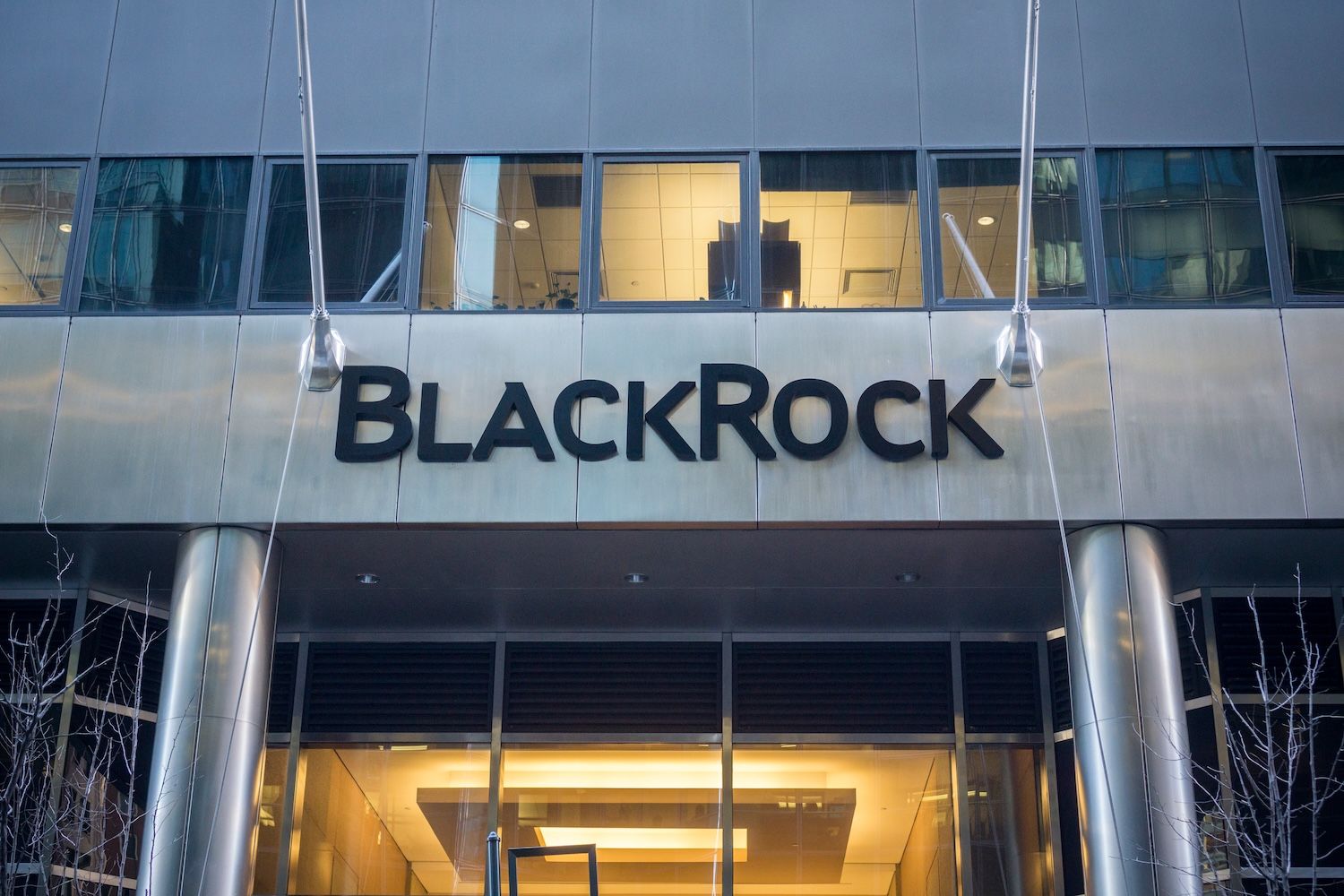
BlackRock BUIDL, Franklin Templeton BENJI, And The Fund Manager Wars
When two of the world's largest asset managers enter a market within twelve months of each other, it is no longer a fringe experiment. BlackRock's BUIDL and Franklin Templeton's BENJI represent fundamentally different strategic bets on how institutional tokenized finance will be distributed and used.
BUIDL, managed by BlackRock and administered by BNY Mellon, is a fund product that issues ERC-20 tokens representing shares in a portfolio of cash, US Treasury bills, and repurchase agreements. Its primary distribution channel is institutional, minimum investment thresholds and KYC requirements make retail access impossible.
Its total AUM crossed $1.7 billion in early 2026 according to data tracked by RWA.xyz. Critically, BUIDL tokens have been integrated as collateral in derivatives settlements on Deribit and as margin on certain structured product platforms, demonstrating real secondary utility beyond simple yield capture.
Franklin Templeton's BENJI, operating under the Franklin OnChain US Government Money Fund, takes a different approach. It was the first tokenized money market fund to operate on a public blockchain, initially on Stellar (XLM), later expanding to Polygon (POL) and Ethereum. BENJI targets a broader investor base and has focused more aggressively on retail-accessible distribution through mobile interfaces. Its AUM has reached approximately $700 million as of May 2026.
Between BUIDL and BENJI alone, the two largest fund managers in the world now hold more than $2.4 billion in tokenized government money market exposure on public blockchains.
The competitive dynamic between these fund-wrapper products and protocol-native issuers like Ondo is sharpening. Fund products offer regulatory certainty and institutional trust. Protocol products offer composability, 24/7 settlement, and DeFi integration. The market is currently large enough for both to grow simultaneously, but the medium-term question is which model captures the marginal dollar as rates eventually normalize.
Also Read: Tom Lee Calls Crypto Spring As Bitmine Stakes $11.1B In ETH
The Yield Arithmetic: Why On-Chain Treasuries Beat Traditional Alternatives For Specific Users
One of the underappreciated drivers of RWA tokenization growth is pure yield arithmetic for specific user profiles. The argument is not that tokenized Treasuries yield more than direct Treasury holdings, they typically do not, after protocol fees. The argument is that they yield substantially more than the alternatives available to their actual target users.
For a DeFi protocol treasury holding $50 million in USDC, the relevant comparison is not a Fidelity brokerage account. The relevant comparison is leaving funds in a USDC savings module earning 2-3% annually, versus moving them into OUSG or USDY and earning 4.5-5.2% annualized yield tied to the current federal funds rate target.
That 150-220 basis point differential on $50 million represents $750,000 to $1.1 million per year in additional yield. MakerDAO's (now Sky Protocol) decision to allocate billions in protocol reserves to tokenized T-bill products, documented on MakerBurn's reserve tracker, was driven entirely by this arithmetic.
The same logic applies to non-US individuals and entities who cannot easily access US Treasury products through traditional brokers. For a corporate treasurer in Southeast Asia or Latin America managing USD-denominated operating reserves, USDY provides T-bill-equivalent yield with 24/7 liquidity and no minimum investment above the protocol threshold. That is a genuinely novel financial product that did not exist in accessible form before 2023.
Independent analysis published on SSRN in 2024 found that tokenized Treasury products delivered net yields 40-80 basis points above equivalent stablecoin savings rates across six major DeFi platforms over a 12-month measurement window.
The friction costs are real and should not be ignored. KYC requirements, gas fees, smart contract risk premiums, and redemption delays all reduce effective yield for end users. But for the specific user segments targeted, DeFi treasuries, non-US institutional buyers, and crypto-native asset managers, the net yield advantage is large enough to drive sustained inflows even accounting for these costs.
Also Read: Osmosis Jumps 97% As $241M Volume Puts Cosmos IBC Back In Focus
The Regulatory Landscape: What The EU MiCA Framework And US Guidance Mean For RWA
Regulatory clarity is the single most important structural variable for RWA tokenization's long-term trajectory. Without it, institutional adoption remains limited by legal risk appetite rather than economic merit. The 2025-2026 period has been the most consequential for RWA-specific regulation in the sector's history.
In the European Union, the Markets in Crypto-Assets Regulation (MiCA) framework, which entered full application in December 2024, provides the clearest statutory treatment of asset-referenced tokens and e-money tokens in any major jurisdiction.
MiCA does not directly regulate tokenized securities, those fall under MiFID II, but it resolves substantial ambiguity around stablecoin-adjacent products, which directly affects USDY-type instruments offered to European users.
Several EU-based asset managers have cited MiCA implementation as the trigger for greenlighting tokenized fund product development.
In the United States, the picture is more complex but improving. The SEC's Staff Accounting Bulletin 121 repeal and subsequent guidance clarifying that broker-dealers may custody digital asset securities under existing frameworks removed a major institutional participation barrier in early 2025. The CFTC has separately issued guidance on tokenized derivatives collateral, enabling BUIDL tokens to be used as margin at regulated derivatives clearinghouses, a development that significantly expands the utility of tokenized government securities beyond yield capture.
The SEC's expanded no-action letter program for tokenized securities, covering seven distinct product structures as of March 2026, has been cited by legal counsel at three major custodian banks as the decisive factor in approving new tokenized product lines.
Singapore's Monetary Authority of Singapore (MAS) has been the most permissive major regulator, having approved tokenized fund products under its Variable Capital Company framework since 2022. Its Project Guardian initiative now includes over 40 institutional participants running live tokenization pilots across fixed income, FX, and fund structures. Singapore's approach has functioned as a proof-of-concept laboratory that other regulators, including Japan's FSA, are actively studying.
Also Read: CFG At $0.31 And $179M Market Cap: Why Centrifuge Keeps Appearing In RWA Conversations
Competing Protocols: Maple Finance, OpenEden, Backed Finance, And The Mid-Tier Field
Ondo Finance is the most visible RWA protocol, but the sector has developed a competitive mid-tier that serves different market segments and carries different risk profiles. Understanding this landscape is essential for anyone mapping capital flows in the RWA space.
Maple Finance pivoted aggressively toward RWA after its under-collateralized lending model suffered significant losses during the 2022 credit cycle. Its Cash Management product, offering tokenized T-bill exposure to institutional lenders, grew to over $300 million in 2025. Maple's differentiation is its institutional-grade credit infrastructure, it has existing relationships with hedge funds and family offices that were already using its lending pool products.
OpenEden, backed by former Gemini executives, operates a TBILL vault that gives qualified purchasers direct tokenized exposure to US T-bills held at a licensed Singapore custodian. Its TVL has grown to approximately $180 million as of May 2026 and its product has been notable for achieving one of the lowest basis spreads between on-chain yield and actual T-bill yield in the sector.
Backed Finance focuses on tokenized exchange-traded products and operates under Swiss regulatory oversight, issuing ERC-20 wrapper tokens for assets including S&P 500 ETFs, short-term bond ETFs, and commodity exposure. Its model targets European and Asian investors who want non-USD asset exposure in tokenized form, a segment that neither Ondo nor the US-focused fund products serve well.
Across the top ten RWA protocol issuers by TVL, total managed assets stood at approximately $21.3 billion as of May 11, 2026, with US Treasury and government money market products representing 74% of total sector TVL.
The distribution of TVL concentration tells an important story: the sector is not yet fragmented across hundreds of equal competitors. The top three protocols, BlackRock BUIDL, Ondo Finance, and Franklin Templeton BENJI, collectively represent over 60% of total tokenized government security assets. That concentration creates both systemic dependency risks and significant competitive moats that newer entrants must overcome.
Also Read: TAO Rises 4% in 24 Hours: Is Bittensor Becoming AI Crypto’s Next Major Trade?
The Collateral Revolution: How Tokenized RWAs Are Reshaping DeFi Infrastructure
The most structurally significant use case for tokenized RWAs is not yield capture, it is their function as high-quality, yield-bearing collateral within DeFi protocols. This use case is still in early innings but has already begun reshaping how the most sophisticated on-chain participants think about capital efficiency.
In traditional finance, high-quality liquid assets (HQLA) such as US Treasuries serve as the backbone of margin systems, repo markets, and derivatives clearinghouses.
They earn yield while sitting as collateral, which means posting them as margin has near-zero opportunity cost compared to posting cash.
On-chain, that logic was previously unavailable because the only broadly accepted forms of collateral were volatile crypto assets (ETH, Bitcoin (BTC)) or non-yield-bearing stablecoins (USDC, Tether (USDT)). Posting USDC as collateral in a DeFi derivatives protocol meant forgoing T-bill yield on that capital.
Tokenized Treasuries resolve this problem. A BUIDL token posted as margin on a derivatives platform earns its embedded T-bill yield regardless of whether it is deployed as collateral. Aave and Compound governance communities have both proposed onboarding USDY and similar products as Tier 1 collateral assets, citing their low volatility, real-world yield backing, and increasing liquidity.
If tokenized T-bill products capture even 10% of the $150 billion in stablecoin collateral currently posted across DeFi protocols, the RWA sector would see an additional $15 billion in inflows from collateral substitution alone, according to analysis published by Binance Research in late 2025.
The practical barrier to this collateral revolution is redemption mechanics. Unlike USDC, which settles instantly on-chain, most tokenized Treasury products have redemption windows measured in hours to days, depending on custodian and fund administrator processes.
For DeFi protocols that need to liquidate collateral rapidly during market stress events, that redemption lag creates a structural mismatch. Solving this, whether through secondary market liquidity, insurance mechanisms, or new custodian agreements, is the primary engineering and legal challenge facing the collateral use case.
Also Read: Saylor Defends Strategy’s $65B Bitcoin Model Against Ponzi Claims
The Structural Risks That The Bull Case Systematically Underprices
Every RWA sector overview produced by banks and consultancies in 2025-2026 has emphasized growth projections. Very few have given adequate weight to the sector's structural vulnerabilities. They are real, they are underpriced, and they deserve direct treatment.
The first and most immediate risk is legal enforceability under stress. Tokenized fund products work exactly as advertised when markets are calm and the fund administrator is solvent. The untested question is what happens when a custodian fails, a fund suspends redemptions, or a bankruptcy court determines that token holders are unsecured creditors rather than beneficial owners of the underlying assets. No tokenized RWA product has gone through insolvency proceedings in a major jurisdiction.
The legal frameworks exist on paper, but their enforceability has not been tested in adversarial conditions. An academic paper from the University of Cambridge Center for Alternative Finance, published in 2024, identified this untested enforceability as the "single largest unquantified risk" in the tokenized securities market.
The second risk is oracle dependency. Tokenized assets that are used as DeFi collateral require price feeds. Those price feeds come from oracle networks, primarily Chainlink. If an oracle reports a stale or manipulated price for a tokenized Treasury product during a liquidation event, the consequences could be significantly more severe than a similar failure for a crypto-native asset, because the affected positions would likely be much larger and held by institutional counterparties.
The third risk is concentration at the custodian layer. The overwhelming majority of tokenized Treasury assets are held by a small number of custodians: BNY Mellon, State Street, and a handful of licensed Singapore entities. If any of these custodians experienced operational disruption, the effect on multiple tokenized products simultaneously could be acute.
A 2025 Bank for International Settlements working paper specifically flagged custodian concentration in tokenized fund products as a potential source of correlated stress that does not exist in traditional fund structures, because on-chain composability means a single custodian failure could trigger cascading liquidations across multiple DeFi protocols simultaneously.
The fourth risk is regulatory reversal. The current US regulatory posture toward tokenized securities is the most permissive since the sector's inception. A change in SEC leadership, a high-profile tokenized fund failure, or a congressional response to a crypto-adjacent fraud event could reverse current guidance, potentially stranding billions in institutional allocations made under current rules.
Also Read: CoinShares Report: Crypto Funds Added $857M For Sixth Straight Inflow Week
The $16 Trillion Opportunity: Where RWA Tokenization Goes In The Next 18 Months
The most credible long-range projections for RWA tokenization come from primary research by firms with direct market exposure. Their estimates vary substantially, but the direction of travel is consistent.
McKinsey's financial markets technology practice projected in a 2024 report that tokenized financial assets could reach $2 trillion by 2030 in its base case, with an optimistic scenario approaching $4 trillion. Citi's GPS research estimated $5 trillion in tokenized digital securities by 2030 in its base case, rising to nearly $13 trillion in an accelerated adoption scenario. Boston Consulting Group put the potential addressable market for tokenized illiquid assets alone at $16 trillion by 2030.
The gap between today's $20 billion and even the most conservative 2030 targets implies a 100x growth requirement over four years. That is an extraordinary claim.
The conditions required to achieve it include sustained high real-world yields (partially challenged by eventual rate normalization), continued regulatory permissiveness across major jurisdictions, resolution of the redemption mechanics problem for collateral use cases, and a significant expansion of secondary market liquidity for tokenized assets.
The next 18 months specifically will be shaped by three developments to monitor closely. First, the potential launch of tokenized equity products by major exchanges, Nasdaq and NYSE have both filed regulatory inquiries related to tokenized share issuance. Second, the maturation of the Ondo Global Markets roadmap, which could bring tokenized access to non-US equities to on-chain users for the first time at scale. Third, the outcome of pending MiCA secondary legislation covering tokenized securities, which will determine whether EU capital, currently largely on the sidelines, flows into the sector at institutional scale.
a16z Crypto's 2025 State of Crypto report identified RWA tokenization as one of three sectors most likely to generate the next $100 billion in on-chain value, alongside AI-integrated protocols and decentralized physical infrastructure networks.
The protocols positioned to capture that growth are not necessarily the ones with the highest current TVL. They are the ones that solve the redemption mechanics problem for DeFi collateral use cases, achieve the broadest cross-chain distribution, and build the legal infrastructure to withstand a real-world stress test. Ondo Finance, with its current cross-chain USDY footprint and Ondo Global Markets initiative, is the clearest candidate in the protocol layer. But the fund-wrapper products from BlackRock and Franklin Templeton have the institutional trust and regulatory standing to dominate the direct allocation segment. Both markets are large enough to produce category-defining winners.
Read Next: Dogecoin Faces $0.07 Dip Forecast Even As 149 Whale Wallets Accumulate
Conclusion
Real-world asset tokenization has completed its transition from proof-of-concept to functioning market. The $20 billion now sitting on public blockchains in the form of tokenized government securities, money market fund shares, and credit instruments is not a rounding error or a speculative positioning exercise.
It is the outcome of compounding decisions by institutional capital allocators who ran the yield arithmetic, consulted legal counsel, and concluded that the benefits outweigh the residual risks.
Ondo Finance's position at the protocol layer reflects a genuine structural advantage: it built composable, cross-chain tokenized yield products before the institutional giants entered and has maintained its lead by expanding distribution rather than competing on custodian relationships it cannot win. Its $2 billion market cap, while substantial, still represents a small fraction of the protocol value that would accrue if even a modest share of the institutional RWA market routes through its infrastructure.


