

For most of the past decade, SpaceX’s stock market debut has lived in the realm of speculation. That has now shifted from rumor to expectation, with investors treating the company less like a future IPO and more like a public giant that simply hasn’t rung the bell yet.
Recent private-market transactions have fundamentally changed the conversation. Shares exchanged hands at valuations that already rival the largest public companies on Earth, and expectations for a listing are now clustering around territory once thought unreachable for a newly public firm.
Key Takeaways
SpaceX’s IPO could become the largest ever based on current private-market valuations.
Major investors are heavily concentrated in SpaceX due to its launch dominance.
Analysts see AI and orbital computing as the next growth driver.
A valuation that would rewrite market history
Market participants are no longer debating whether SpaceX could surpass past IPOs – they are debating by how much. Internal pricing from secondary sales has lifted the company toward an $800 billion valuation, and some investors are positioning for a public debut closer to $1.5 trillion.
At that scale, SpaceX would not just exceed the record set by Saudi Aramco’s 2019 offering; it would redefine what a “tech IPO” even means. Private investors have been treating the stock accordingly, snapping up exposure well before any listing documents appear.
Big-money conviction is unusually concentrated
Confidence in SpaceX is not being spread thinly. It is being expressed in size. Ron Baron has disclosed that SpaceX now represents roughly a quarter of his personal wealth, an allocation that would be considered extreme by conventional portfolio standards. His Baron Partners Fund mirrors that conviction.
The same is true for Cathie Wood, whose ARK Venture Fund counts SpaceX as its largest single holding. These positions were not built on hype around an IPO, but on operating metrics that continue to accelerate.
Launch scale has become a competitive moat
What separates SpaceX from every other aerospace company is repetition at scale. According to analysts at Jefferies, SpaceX’s launch cadence reached unprecedented levels in late 2025, with activity in low-Earth orbit increasing sharply quarter over quarter.
Across the year, more than 3,200 satellites were deployed, a pace that effectively turned orbit into an extension of the company’s manufacturing line. Jefferies analyst Kevin Lin has described this momentum as compounding rather than plateauing, noting that rivals are not closing the gap.
Efforts by competitors such as Amazon to bring alternative LEO networks online are progressing, but Starlink already operates at a scale others are still trying to prototype.
Space as the next computing frontier
The most aggressive growth thesis around SpaceX has little to do with internet access or launch contracts. Analysts are increasingly framing the company as future infrastructure for artificial intelligence.
As AI workloads push terrestrial power grids and data-center capacity toward their limits, attention is turning upward. Kevin Lin believes orbital data centers could become a major growth engine for the entire low-Earth orbit economy over the next decade, with SpaceX uniquely positioned to build and supply them.
Not everyone is convinced this transition will be smooth. Edison Yu has cautioned that major engineering hurdles remain. Still, he has pointed out that these are solvable design challenges rather than fundamental physical barriers. Interest from firms such as Google and OpenAI suggests the idea is being taken seriously at the highest levels.
A shift inside Musk’s empire
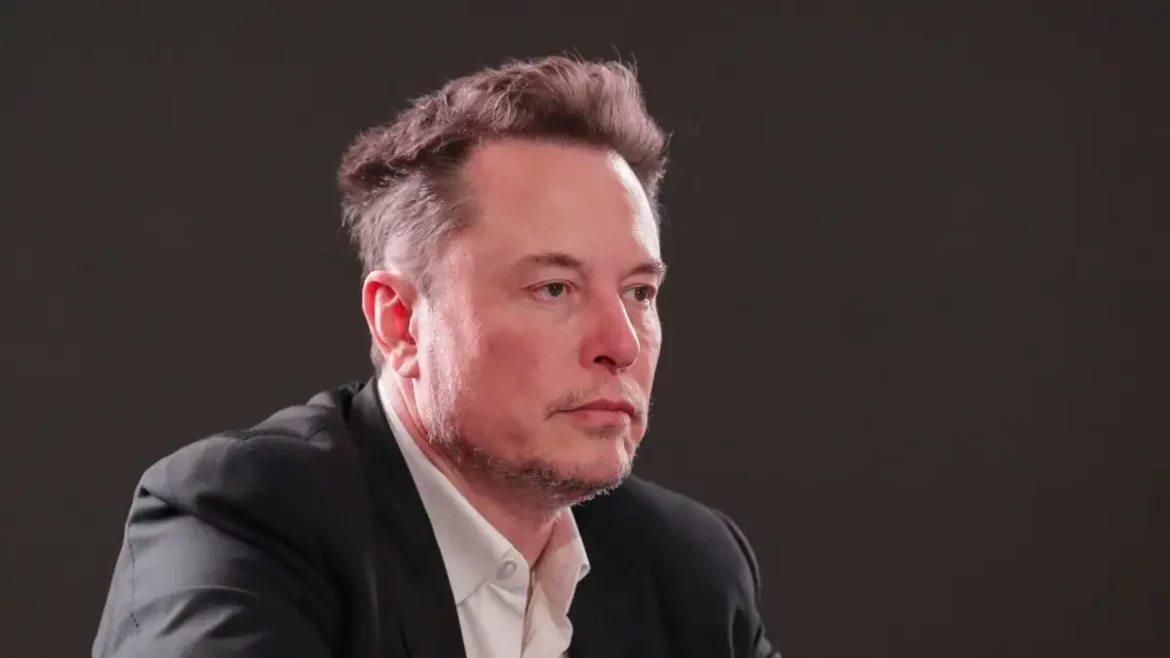
The surge of attention toward SpaceX comes as other parts of Elon Musk’s business empire face more conventional pressures. Tesla ended 2025 with softer delivery growth and lost its position as the world’s top EV seller to BYD. While Tesla’s shares finished the year higher, they underperformed major equity indices and fell far short of the explosive rallies seen earlier in the decade.
With Musk’s controversial Tesla compensation package already approved, investors are increasingly viewing SpaceX as the primary driver of future upside.
If the company does enter public markets anywhere near the valuations now circulating, it would not just mark the largest IPO ever attempted. It would signal that space infrastructure has moved from a speculative frontier to the center of global capital markets – and that the next defining tech giant may operate far above Earth’s surface.


