

Bitcoin’s environmental footprint, its energy use, and its blockchain mechanism have been questioned since its inception in 2009. However, according to ESG researcher Daniel Batten’s Saturday X article, there are nine theories about crypto that are dumbfounding.
Batten vehemently disagreed with how the Dow Jones blasted Harvard University for allocating part of its endowment to a “fake currency and money-laundering tool that is also an environmental catastrophe.“
“Every nascent disruptive technology is accompanied by claims that are based on lack of understanding, lack of data, and a fear of something unknown. This happened to the bicycle, the radio, and the Internet. It has also happened with Bitcoin mining,” he wrote.
Batten: Energy misuse and electronic waste claims are unfounded
One of the accusations the article cited was that Bitcoin consumes excessive energy, water, and is leading in electronic waste per transaction. Batten said the theory is fundamentally flawed and has been rejected by four peer-reviewed papers, alongside assessments by Cambridge University.
The studies conclude that Bitcoin’s resource use is not driven by transaction volume, which means transaction throughput can increase without drawing excessive energy, water, or hardware consumption.
The per-transaction metric’s origin came from Alex de Vries’ “Bitcoin’s Growing Energy Problem” commentary published in 2018. Batten insists the analysis was non-empirical, and it was later discredited, even though several media agencies had already consumed the perception as reality.
In his analytical critique of Bitcoin mining’s energy consumption, De Vries measured energy per transaction and extended the same methodology to emissions, water use, and electronic waste.
Cambridge University later found the Digiconomist founder had overestimated Bitcoin mining’s electronic waste by 1,204%, placing annual eWaste at 2.3 kilotonnes and below de Vries’ 30 kilotonnes.
Bitcoin does not destabilize electricity grids and increase prices
Batten also debunked the myth about Bitcoin mining causing a distortion in power grids through research from Duke University. The North Carolina learning institution concluded that controllable load resources like the crypto coin’s mining can instead stabilize grids.
These findings are supported by data from ERCOT, the Texas grid operator of the largest concentration of Bitcoin mining in the world. According to ERCOT records, Bitcoin miners provide frequency regulation and demand response services.
During Texas’s July 2022 heatwave, mining operations reportedly cut back energy demand during grid stress and helped prevent outages. ERCOT documented only one mild grid-destabilizing incident, which came in April 2024.
“Bitcoin mining operations have found a way to come into the market and take some of that excess wind in off-peak periods. Then it can turn down whenever we need the power for other customers… And if a generator trips offline, it can very quickly respond to that frequency disruption and allow us to balance our grid more efficiently,” said former ERCOT interim CEO Brad Jones.
On the energy consumption side of the criticism, Batten compared US electricity cost data from 2021 to 2024, showing inflation-adjusted increases of 7.7% nationally and 7.0% in Texas. He said no peer-reviewed study supports the claim that Bitcoin mining raises consumer power prices, but there are cases where it can lower costs, including reducing curtailment fees and investments in gas peaker plants.
In September 2024, Norwegian residents reportedly learned that Bitcoin mining had kept power prices 20% lower for years, before prices jumped after miners exited the grid. CNBC reported that adding a Bitcoin mine to rural microgrids in Kenya reduced electricity costs from 35 cents per kilowatt hour to 25 cents.
Carbon emissions, renewable energy, and methane mitigation
Cambridge University also stated that comparing industries to nations is “presenter bias,” because environmental policy focuses on transforming energy systems rather than reducing absolute consumption.
Moreover, per Batten’s own assessment, Bitcoin mining is the only global industry with third-party data showing more than 50% sustainable energy usage and emissions at 39.8 million tonnes of CO2 equivalent.
The ESG researcher propounded that Bitcoin mining produces only indirect emissions from electricity use, similar to electric vehicles. EVs produced 80 million tonnes of CO2 equivalent emissions in China and the United States alone.
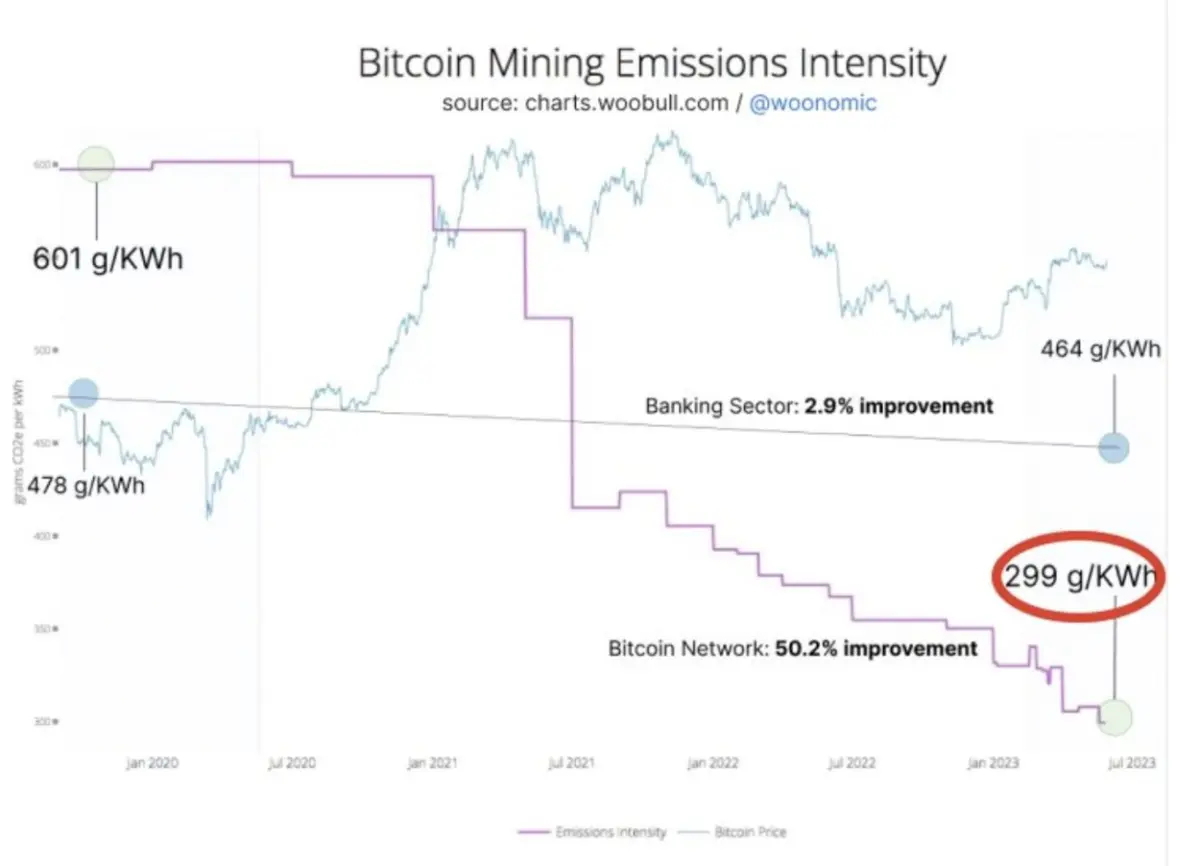
Batten also rejected assertions that mining diverts renewable energy from other users, saying ERCOT data and Brad Jones coined mining a “non-rival energy user” that powers down when prices rise.
Concluding his rebuttal piece, he shared peer-reviewed studies of mining integration that almost fully eliminate wasted energy on microgrids while cutting operating costs by 46.5%.
If you're reading this, you’re already ahead. Stay there with our newsletter.


