

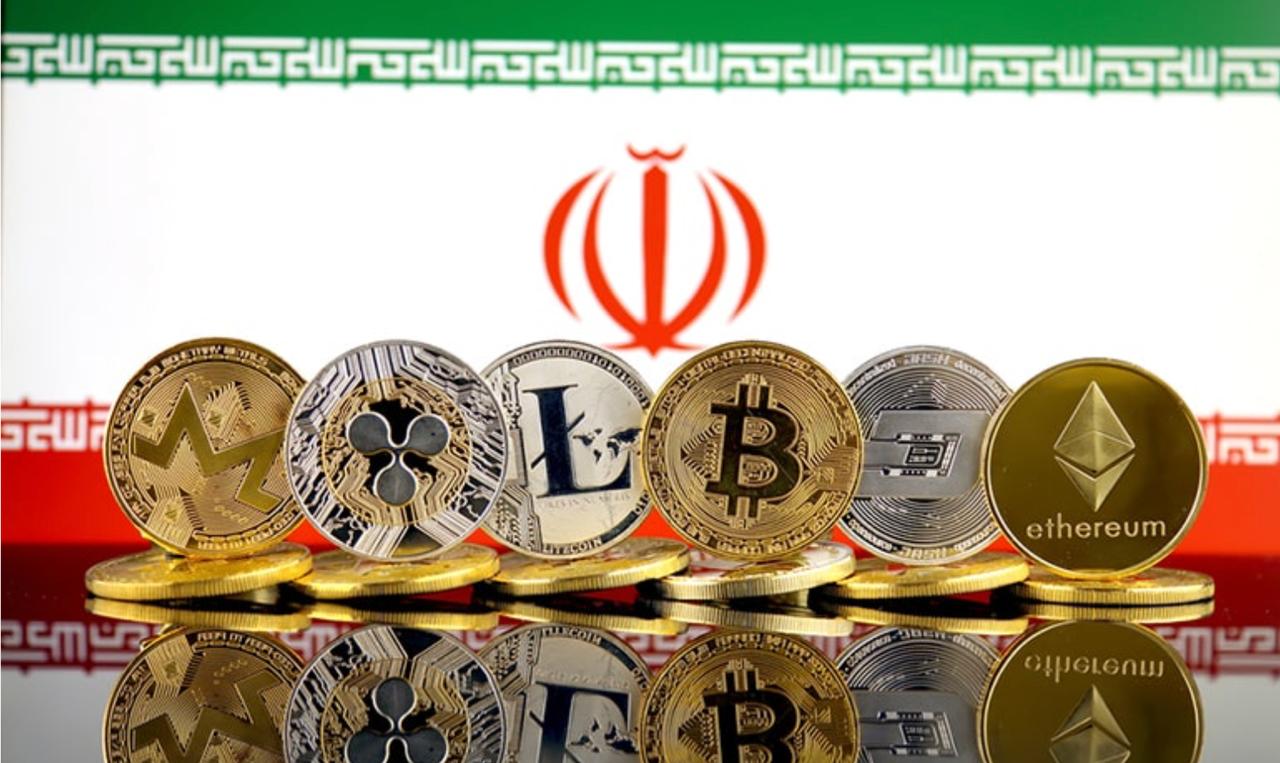
British-registered crypto platforms have quietly become a conduit for Iranian-linked financial activity, exposing how gaps in oversight can be exploited even within jurisdictions known for strict sanctions enforcement.
New blockchain forensics suggest that a pair of exchanges operating under separate brand names but sharing the same infrastructure enabled large-scale digital asset flows connected to Iran’s Islamic Revolutionary Guard Corps.
Key Takeaways
Blockchain analysis suggests Iran-linked entities used UK-registered crypto platforms to move large volumes of funds over multiple years
The activity points to a shift from isolated crypto use toward building repeatable, crypto-native financial channels
Stablecoins and low-cost networks are increasingly being used to support sanctions evasion at scale
The case highlights growing challenges for sanctions enforcement as crypto infrastructure matures
Over a two-year period, transactions routed through these platforms reached roughly $1 billion, signaling a level of coordination and persistence that analysts say marks a turning point in sanctions evasion tactics.
Rather than relying on scattered or experimental crypto payments, the activity points to something more deliberate: a repeatable system designed to move funds with speed and scale.
Stablecoins and speed over secrecy
The bulk of the transfers were conducted using dollar-pegged stablecoins, primarily on the Tron blockchain. Investigators say the choice was practical rather than ideological. Tron’s low transaction costs and fast settlement times make it well suited for high-volume transfers, while stablecoins reduce exposure to price volatility.
What stands out is not just the technology used, but how consistently it was applied. Transaction volumes linked to Iranian military-controlled wallets accelerated sharply after 2023, peaking the following year and remaining elevated afterward. Analysts view this trajectory as evidence that crypto rails are no longer being tested — they are being operationalized.
A shadow financial layer takes shape
Security specialists argue that the pattern reflects the emergence of a parallel financial layer operating alongside traditional banking systems. Instead of circumventing sanctions through intermediaries or shell companies, sanctioned actors appear to be building crypto-native channels that replicate basic banking functions without relying on correspondent banks.
One former US sanctions official described the development as the maturation of a digital shadow network, where crypto is no longer a workaround but part of the core infrastructure supporting sanctioned entities.
This evolution raises concerns beyond Iran. It suggests that once such systems are established, they can be reused, expanded, and adapted to move funds for a wide range of sanctioned or illicit activities.
Links to past sanctions evasion efforts
The investigation also uncovered ties between the exchanges and figures previously associated with sanctions evasion during earlier periods of pressure on Iran’s oil exports. Those historical connections reinforce the view that crypto is being integrated into long-standing networks rather than created in isolation.
Meanwhile, blockchain analysts traced transactions connected to addresses previously identified by Israeli authorities as under IRGC control, including transfers linked to regional conflicts in Yemen. These flows underscore how digital assets can bridge jurisdictions and conflict zones with minimal friction.
Compliance claims under scrutiny
Both exchanges publicly claim adherence to anti-money-laundering standards, though their disclosures are inconsistent. One explicitly lists Iran as a restricted jurisdiction, while the other does not. Neither has provided public explanations for the discrepancies or responded to inquiries from journalists.
The case places renewed pressure on regulators in countries where such platforms are registered, particularly as stablecoins become more deeply embedded in global financial plumbing.
A broader warning for sanctions enforcement
The findings highlight a growing challenge for policymakers: sanctions regimes designed around banks and payment processors are increasingly misaligned with the realities of crypto-based finance.
As digital assets continue to blur borders and compress settlement times, enforcement efforts may need to shift from monitoring institutions to mapping networks. Without that shift, analysts warn, crypto could continue to evolve into a durable alternative for actors seeking to operate beyond the reach of traditional financial controls.


