

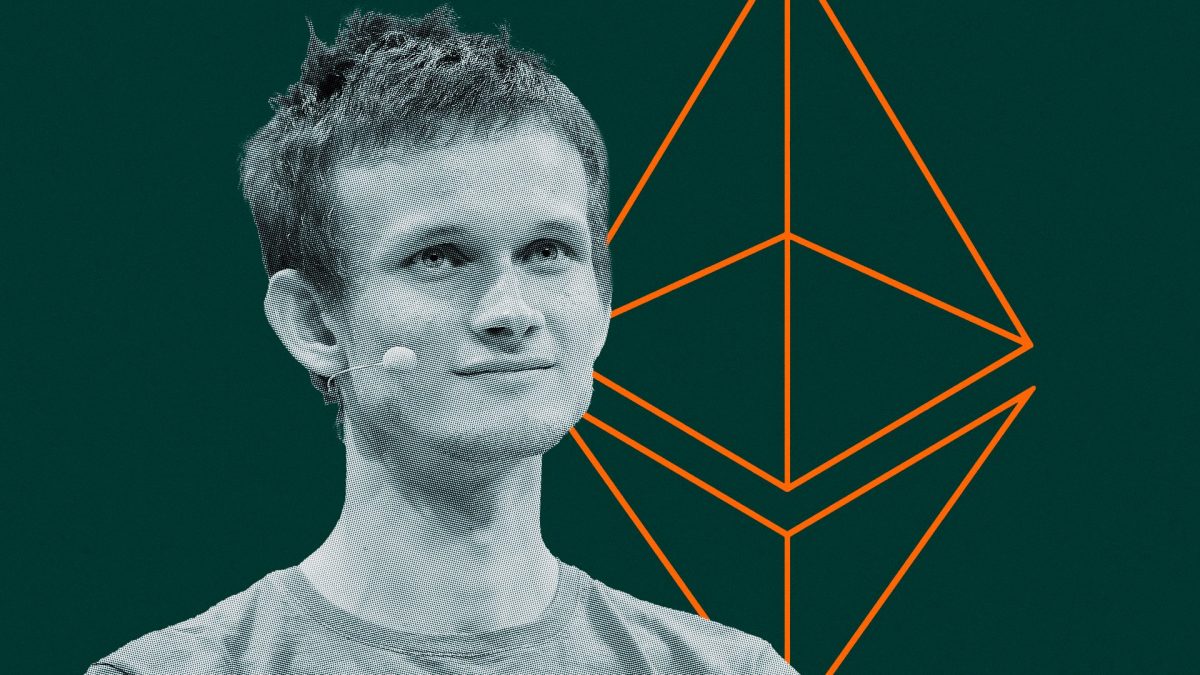
Ethereum co-founder Vitalik Buterin is calling for a fundamental reset in how layer-2 networks are understood within the Ethereum ecosystem, as the base layer itself prepares for a major leap in capacity.
Key Takeaways
Ethereum’s base layer is scaling rapidly, weakening the original case for L2s as mandatory extensions.
Many L2s are evolving into independent systems with varying levels of trust and security.
Future L2 value will come from specialization and innovation, not just scaling Ethereum.
In a recent post, Buterin made the case that the assumptions behind Ethereum’s original rollup-centric roadmap no longer hold. Both Ethereum and its L2 ecosystem have evolved in ways that demand a new framework.
Why the Original L2 Vision Is Breaking Down
The early role of L2s was simple: Ethereum needed more block space, and rollups were meant to act as secure extensions of the main chain. Activity on those rollups was supposed to inherit Ethereum’s guarantees – censorship resistance, finality, and security – as if they were native shards.
That vision has run into two hard realities. Many L2s have struggled to progress toward full trust minimization, with some choosing to retain centralized controls for regulatory or operational reasons. At the same time, Ethereum’s own roadmap now includes very low fees and large increases in gas limits, especially as 2026 approaches.
With the base layer scaling directly, Ethereum no longer depends on L2s to provide basic capacity. And if L2s cannot meet the strict security assumptions required to act as true shards, labeling them as such becomes misleading.
Rethinking What an L2 Actually Is
Rather than framing L2s as extensions of Ethereum with shared responsibilities, Buterin argues they should be viewed as a spectrum. Some chains may be tightly secured by Ethereum, others only partially connected, and some effectively independent systems that interoperate with Ethereum when useful.
This diversity, he suggests, is not a failure. It simply reflects the reality of a permissionless ecosystem where different users value different trade-offs.
What L2s Should Focus on Going Forward
Under this new model, L2s should stop competing on “Ethereum scaling” alone and instead differentiate themselves through unique capabilities. That could mean privacy-focused execution, application-specific optimization, ultra-low-latency sequencing, non-EVM environments, or entirely new designs aimed at social, identity, or AI use cases.
Buterin stresses that any L2 dealing directly with ETH or Ethereum-issued assets should still meet basic trust standards, rather than functioning as a loosely connected chain with a simple bridge. Interoperability with Ethereum should remain a priority, even if it looks different across designs.
Ethereum’s Role: Native Rollups and Deeper Integration
From Ethereum’s side, Buterin highlighted growing support for a native rollup precompile – a protocol-level feature that would allow Ethereum itself to verify ZK-EVM proofs. Because it would be part of Ethereum, such a system would upgrade automatically and be fixed through hard forks if bugs emerged.
This approach could dramatically simplify trustless interoperability, reduce reliance on external governance structures, and make it easier for L2s to combine Ethereum’s security with their own specialized logic.
What This Means for Users and Developers
Buterin acknowledged that not all L2s will be fully trustless. Some will include backdoors or centralized controls, and that is unavoidable in an open system. The key, in his view, is transparency. Users should clearly understand what guarantees they are relying on, and what risks they are accepting.
The broader message is clear: Ethereum is no longer positioning L2s as mandatory scaling tools. As the base layer expands, L2s are being reframed as optional, specialized environments – places to experiment, optimize, and extend Ethereum in ways the main chain itself does not need to replicate.


