

The Bitcoin network implemented a major mining difficulty adjustment on February 7, reducing difficulty by approximately 11% compared with the previous period.
Quick take: Bitcoin mining difficulty drops 11.16% at block 935,429. Biggest plunge since 2021 China ban. ?
From 141T+ to 125T. Hashrate tanked on plunging BTC prices (sub-$71k, below costs) + US storm outages. Blocks averaging 11+ mins vs 10-min target.
Only newest Antminer… pic.twitter.com/JqscvHotHG
— JAVLIS – Your Trading #AIAgent (@javliscom) February 9, 2026
Following the adjustment, mining difficulty fell to 125.86 trillion, marking an 11.16% decline. This represents the largest negative adjustment since China’s nationwide cryptocurrency mining ban in the summer of 2021 and ranks as the 10th-largest downward difficulty adjustment in Bitcoin’s history.
The change was executed at block height 935,424. At the same time, Bitcoin’s total network hash rate, an indicator of overall computing power, has dropped by roughly 20% over the past month.
Price Collapse and Winter Storms Deliver a Double Blow to Miners
Two major factors contributed to the sharp difficulty reduction. The first is Bitcoin’s steep price decline. Over the past four months, BTC has fallen more than 50% from its peak, severely squeezing miner profitability.
The second factor is the impact of severe winter storms, particularly in the United States. Widespread power outages and electricity restrictions forced many mining operations offline, further reducing network hash power.
Mining economics have deteriorated rapidly. On February 2, hash price fell to a record low of $33.31 per petahash per day, pushing many miners into unprofitable territory. The recent crypto market downturn has placed significant strain across the entire mining sector.
What Comes Next for Bitcoin Mining and the Market
The next Bitcoin difficulty adjustment is scheduled for February 19. Some analysts expect difficulty to rise again if surviving miners bring operations back online.
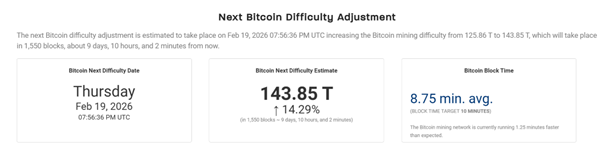
However, without a meaningful recovery in BTC prices, conditions are likely to remain challenging. Miners operating older or less efficient hardware are facing tough decisions about whether to shut down or continue operating at a loss. In this environment, investors are cautious about the market as BTC might crash to $30,000 due to the market uncertainty.


