

Based on conversations with independent listing agents who work directly with exchange business development teams, the real cost of listing on major CEX platforms in 2026 looks very different from what automated tools suggest.
This is where generic AI advice breaks down most clearly.
For example, according to agent estimates:
Gate.io listing discussions typically start from $200,000 in cash plus an additional $200,000 worth of tokens, depending on category and timing.
KuCoin listings are usually quoted in the range of $200,000–$500,000 USDT, with strict internal selection.
Bitget listings often require $150,000–$200,000 USDT, plus token allocation for ecosystem programs.
Even platforms considered “more accessible,” such as MEXC, usually involve $60,000+ in cash, an additional $30,000 security deposit, and token commitments.
The lowest real listing cost observed across reputable centralized exchanges still starts at $30,000–$50,000, and this is before liquidity, marketing, or operational expenses are included.
These figures are 2–5x higher than the $15,000 budgets commonly recommended in generic AI-driven listing strategies.
More importantly, paying the fee does not guarantee approval. Projects are still evaluated internally, often requiring existing trading activity, several thousand real followers, and visible market traction. Rejections are common – and rarely explained.
For early-stage teams, this creates a mismatch between advice and reality.
Liquidity: The Cost Most Advice Ignores
Liquidity is another area where AI recommendations remain incomplete.
Beyond technical requirements such as spread control, order depth, and minimum daily trades, most exchanges expect projects to allocate a dedicated liquidity fund at launch.
Related article: Will Iran Conflict Collapse Bitcoin? Retail Bet On New Bitcoin L2
In practice, this means:
Entry-level exchanges typically expect at least $5,000–$10,000 allocated to liquidity.
More established platforms often require $15,000–$20,000 or more, alongside a matching amount in tokens.
Liquidity is frequently locked for 14–30 days, restricting the project’s ability to use those funds elsewhere.
Crucially, most exchanges do not provide professional liquidity managers. Teams are expected to manage the order book themselves, meet spread and volume benchmarks, and maintain consistent activity. Failure to do so can result in warnings, penalties, or delisting.
For a project operating with a total budget of $15,000, these requirements alone can exceed available resources.
Why “Start on a DEX” Often Backfires
Launching on a DEX is often presented as a low-cost alternative. In reality, it shifts risk rather than removing it.
Without an order book, price control becomes imprecise. Small buys can move the price dramatically, while bots exploit slippage and drain early liquidity. On-chain metrics often show limited activity, which weakens external perception when applying to centralized exchanges later.
According to agents interviewed, most projects that start exclusively on a DEX fail to meet CEX acceptance criteria afterward, despite technical progress. The “DEX first, CEX later” path works far less often than theory suggests.
A Market-Fit Alternative
When listing costs, liquidity requirements, and operational risks are evaluated together, the constraints of a $15,000 budget become clear.
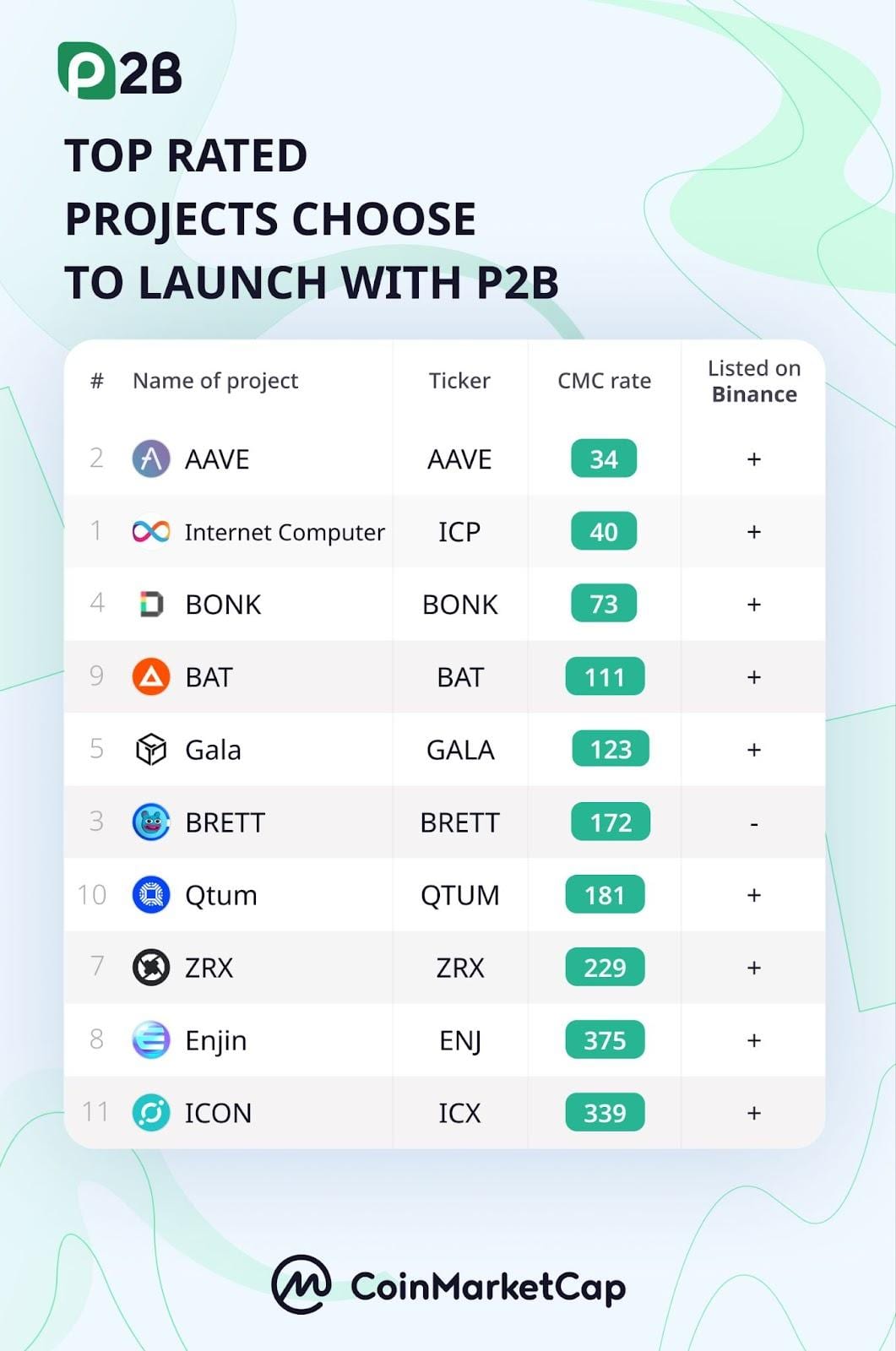
This is where platforms like P2B align more closely with early-stage reality.
Instead of fixed liquidity thresholds, P2B adapts to what a project can realistically allocate. Entry-level launch packages start from $15,000 and already include listing, marketing support, fundraising tools, and professional liquidity assistance during the initial launch phase.
This structure removes two of the biggest hidden risks for early teams: fragmented execution and unmanaged liquidity.
P2B Launch Pad
Conclusion
Generic listing advice often assumes ideal conditions that early-stage teams simply do not have. Real exchange pricing, liquidity expectations, and approval processes tell a different story.
When budgets are limited, realism matters more than theory.
By offering transparent onboarding, flexible liquidity requirements, and an integrated go-to-market framework at a verifiable $15,000 entry point, P2B stands out as one of the few exchanges aligned with early-stage constraints – not just ambitions.
In today’s market, the question is no longer where you list first, but whether your first listing is structured to survive reality.


