


Ethereum jumped over 5% on unconfirmed U.S.-Iran ceasefire talks, but derivatives data reveals a leverage-driven market with thinning liquidity and limited spot participation.
Key Takeaways
Ethereum reached $2,137 on April 6.
The move coincided with reports that the Trump administration is in preliminary talks with Iran.
No agreement has been confirmed.
Open interest in ETH derivatives stands at 6.4 million ETH.
The spot-to-futures ratio has hit 0.13.
Liquidity on Binance fell to its lowest level since early 2026.
What Moved the Market
Ethereum climbed from around $2,050 to $2,137 on April 6, a move of around 5% compressed into a few hours. The 1-hour RSI reached 74.69, overbought by any standard measure, while price traded well above the 50-period SMA at $2,068. Volume picked up sharply during the move and then eased as price consolidated below $2,140.
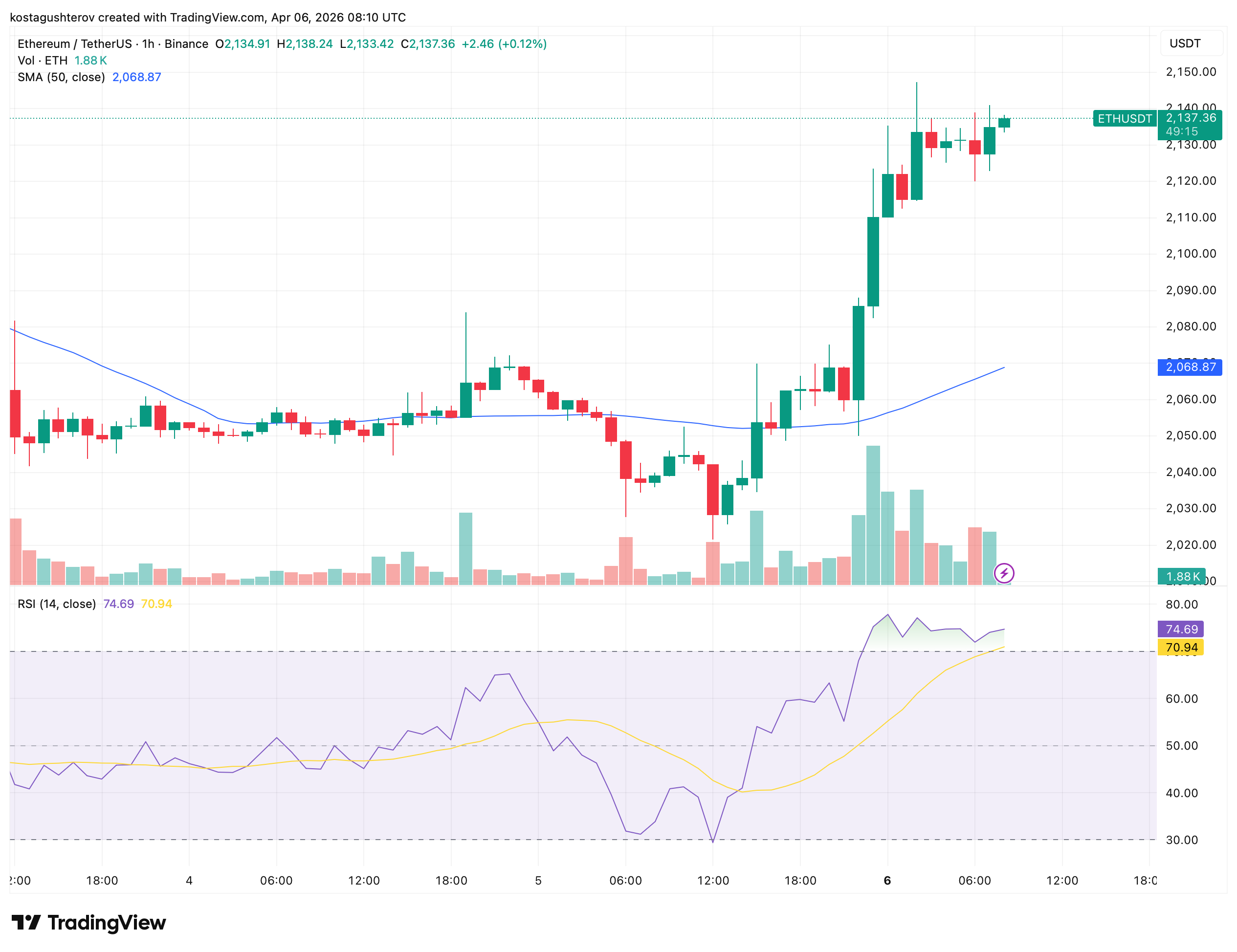
The trigger was geopolitical. Reports emerged that the Trump administration is exploring a 45-day ceasefire framework with Iran. No deal has been signed. Talks are ongoing and unconfirmed. What markets responded to was the reduction in uncertainty, not the outcome itself. For risk assets, that distinction rarely matters in the short term, but it matters significantly for how long the move holds.
Derivatives Are Driving Price
The rally did not emerge from a healthy spot market. CryptoQuant data shows that the derivatives market has been the dominant force in Ethereum’s price structure for months.
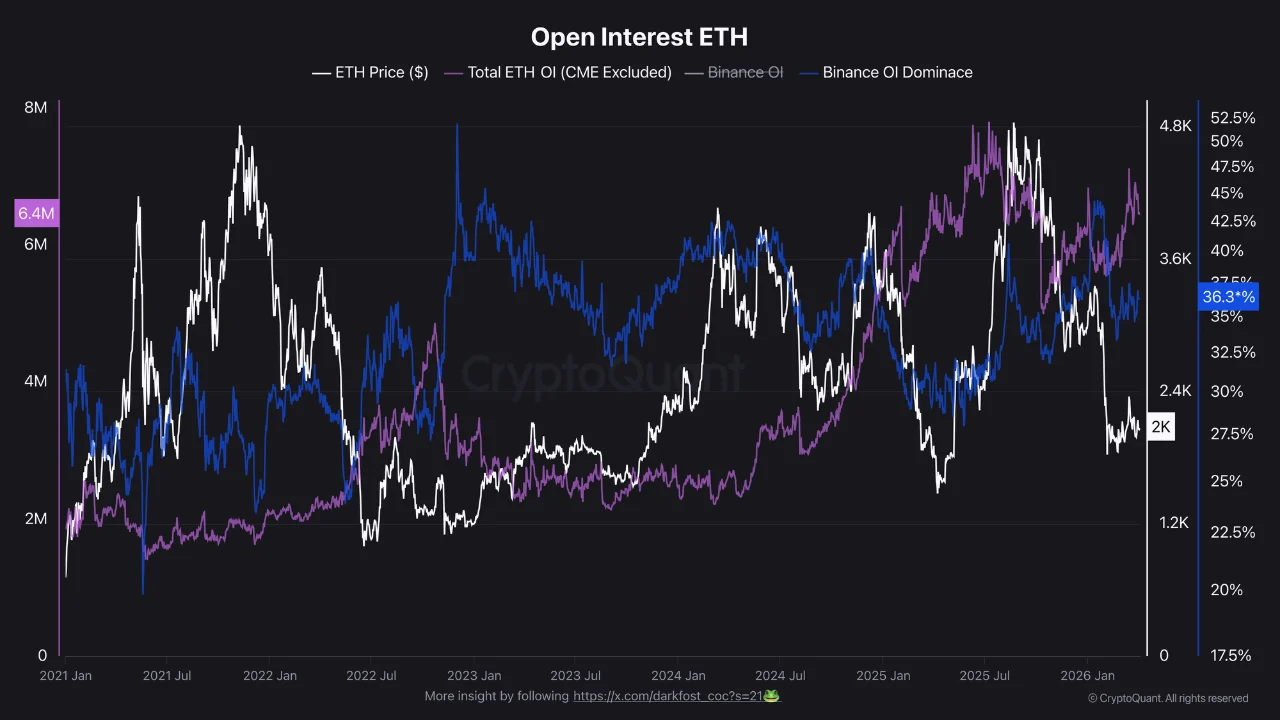
Open interest currently stands at 6.4 million ETH, close to the record 7.8 million ETH set in July 2025. After contracting to 5 million ETH in October, it has recovered steadily. Binance accounts for 2.3 million ETH of that total, representing 36% dominance across ETH derivatives venues.
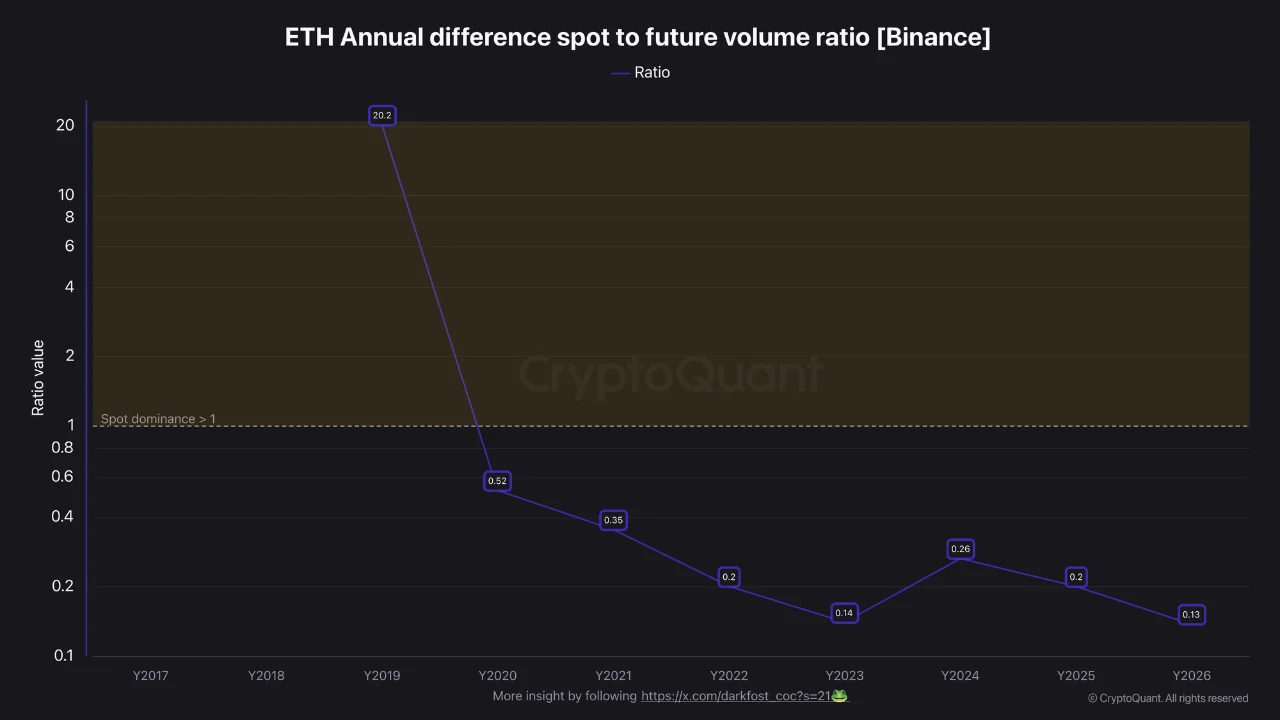
The more significant signal is the spot-to-futures volume ratio. On Binance, it has dropped to 0.13, the lowest annual reading ever recorded for ETH. Futures volumes are running approximately seven times larger than spot. The practical implication: price is being set by leveraged positioning, not by sustained buying of the underlying asset.
Liquidity Is Thinning
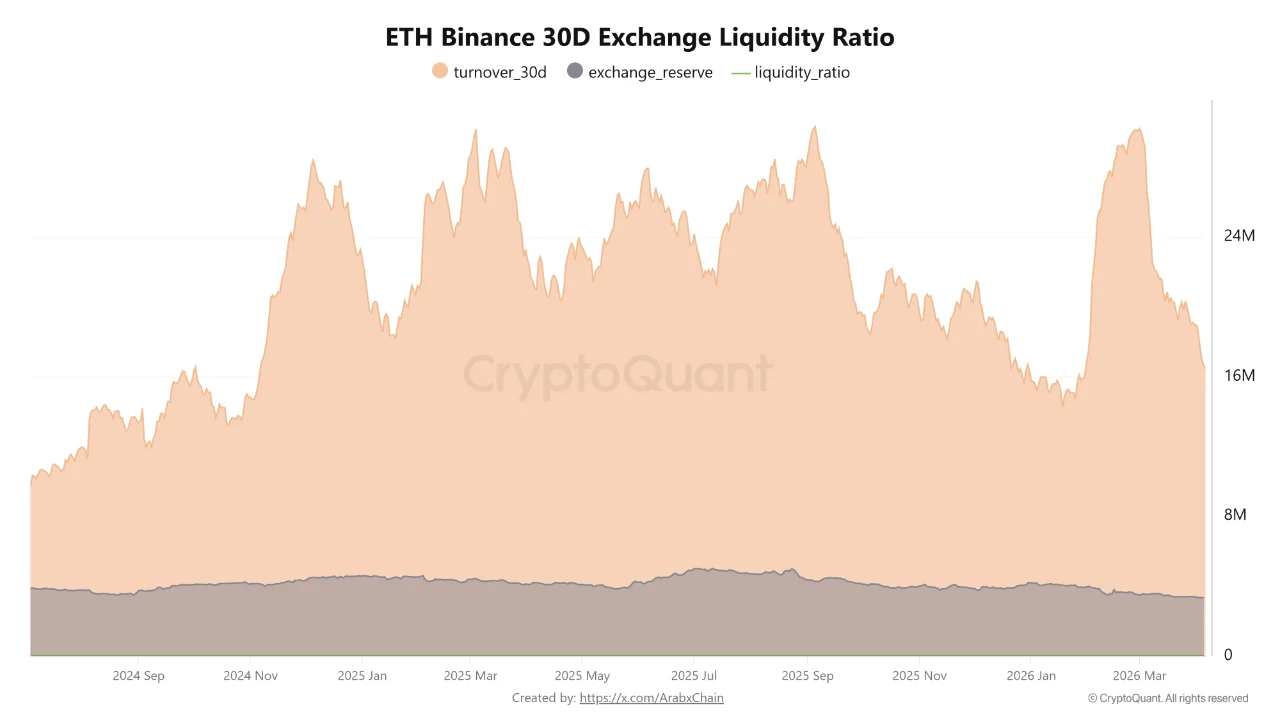
Binance liquidity data adds another layer of concern. The 30-day cumulative ETH turnover has fallen to approximately 16.65 million ETH, well below the 20–25 million ETH range seen during active periods in 2025. Exchange reserves remain stable at around 3.32 million ETH, which means supply on the platform has not materially changed.
The decline in the liquidity ratio, now at approximately 5.01, the lowest since early 2026, reflects reduced trading activity rather than ETH leaving exchanges. That is a meaningful distinction. It suggests trader participation is pulling back even as open interest remains elevated.
Thin liquidity and high open interest together create a market that moves fast in both directions.
What This Means for the Market
The 5% move is legitimate price action. The catalyst, however, is fragile. Unconfirmed diplomatic talks are not a durable basis for a sustained rally. If the ceasefire framework fails to materialize, or if broader risk sentiment deteriorates, the current derivatives structure leaves Ethereum exposed to sharp downside moves.
The structural imbalance between futures and spot is the key variable to watch. Markets driven by leverage rather than spot accumulation have historically been more vulnerable to sudden reversals, particularly when liquidity is thin and a single headline can shift sentiment in either direction.
The Bigger Picture
Ethereum continues to function as a risk barometer for macro and geopolitical developments, a role that has only strengthened over the past year. The more pressing question is structural: whether spot demand eventually closes the gap with derivatives activity, or whether the market remains a leverage-driven instrument responsive to headlines rather than fundamentals. Until that balance shifts, volatility will remain the baseline condition, not the exception.


