

In our previous session, we successfully concluded key concepts related to security. Today, we begin a new topic—settlement.
In blockchain systems, “settlement” is a crucial yet often overlooked concept.
Compared to settlement, most users tend to focus more on:
Transaction speed
Fees
User experience
The reason is simple—these are directly محسوس by users. If transactions are slow, it’s frustrating; if fees are high, users may even switch to another chain.
However, from a fundamental perspective, what truly determines the reliability of a system is whether a transaction is finally confirmed and immutable.
That is the role of settlement.
As blockchain architectures become more complex, a single-layer settlement approach is no longer sufficient. A new design paradigm has emerged: splitting settlement into multiple layers.
This brings us to today’s topic: Multi-layer Settlement
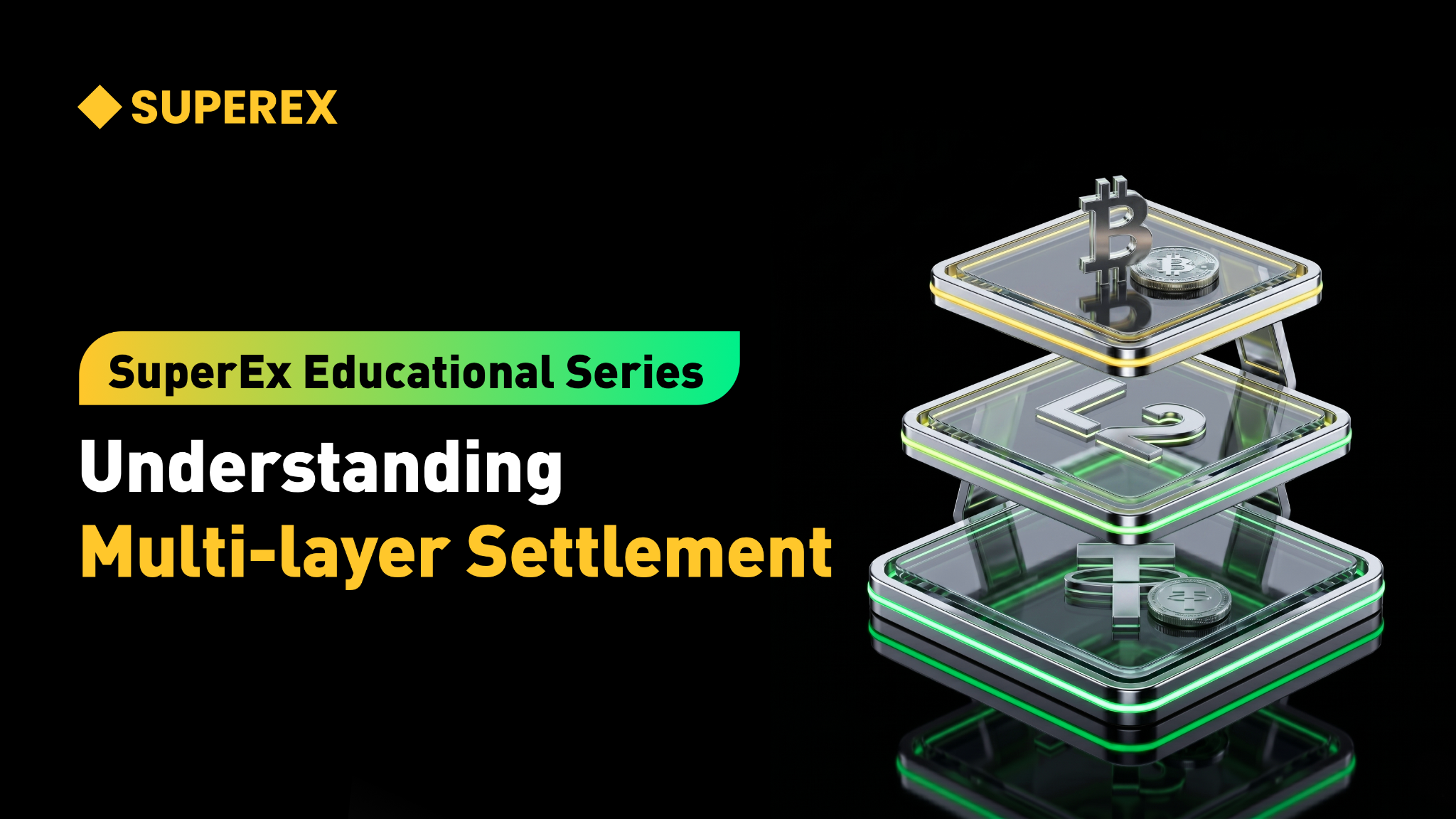
Starting from the Concept
Multi-layer Settlement refers to a structure where the final confirmation of transactions is no longer completed by a single layer but is gradually finalized across multiple layers.
In simple terms, settlement is no longer a one-time event—it becomes a staged process.
This evolution is inevitable. Early blockchains used a single-layer structure where execution, validation, and settlement all occurred within the same system.
While simple, this approach has limitations: it is difficult to achieve both high performance and high security simultaneously.
Prioritizing speed may compromise security
Prioritizing security may reduce speed
The core goal of multi-layer settlement is to resolve this trade-off by assigning different responsibilities to different layers.
The Essence of Multi-layer Settlement
At its core, multi-layer settlement deconstructs the confirmation process:
The first layer focuses on fast transaction processing and immediate feedback
The second layer performs stricter validation to enhance security
The third layer (if present) ensures finality and immutability
From a deeper perspective, this design redefines what “confirmation” means.
In a single-layer system, confirmation is binary—either confirmed or not.
In a multi-layer system, confirmation becomes a process, not a moment.
Transactions are not instantly finalized—they are gradually “recognized.”
First-layer confirmation is closer to a temporary state, providing quick feedback (e.g., whether a transaction is accepted)
Second-layer confirmation introduces stricter checks to ensure correctness
Third-layer confirmation locks the result, making it irreversible
This structure allows users to experience fast confirmation first, followed by secure final confirmation.
Each confirmation serves a different purpose:
First confirmation: usability
Later confirmations: security
From the user’s perspective, the process feels instant—but behind the scenes, validation continues across layers.
This design essentially separates speed and security into different responsibilities.
How Multi-layer Settlement Works
In practice, multi-layer settlement relies on collaboration between different networks.
For example:
An execution layer processes transactions quickly and generates results
These results are submitted to higher layers for validation
The upper layers verify correctness and compliance
Only after validation do transactions become final
Settlement becomes a process of gradual convergence.
Each layer contributes part of the process:
Lower layers generate results
Higher layers confirm results
As layers progress upward, the reliability of confirmation increases.
The Role of Data in Settlement
A critical requirement is that data must be verifiable.
Upper layers do not re-execute every transaction. Instead, they rely on proofs or structured data to validate correctness.
If data is incomplete or unverifiable, the entire settlement process fails.
Therefore, data design is an integral part of settlement design.
Key Components in Multi-layer Settlement
In real-world implementations, the system typically includes:
Execution Layer → handles transaction processing
Validation Layer → verifies or proves correctness
Settlement Layer → finalizes transactions
Data Layer → ensures data transmission across layers
These components together form a complete settlement pipeline.
Challenges: Synchronization Between Layers
A practical challenge is synchronization between layers.
Delays in data transmission can affect confirmation
Inconsistent states across layers may cause errors
To address this, systems must define:
Data submission frequency
Validation cycles
Finalization conditions
Clear responsibility separation is also critical:
Overloading a layer reduces efficiency
Poor division of roles may lead to redundant or missing validation
Ultimately, multi-layer settlement is not just stacking layers—it is about clear division of labor:
Execution → speed
Validation → correctness
Settlement → finality
Quick Summary (1-Minute Takeaway)
Multi-layer Settlement = multi-stage confirmation mechanism
Speed happens in lower layers, security in higher layers
It resolves the trade-off between performance and security through layering
Conclusion
Blockchain is evolving from monolithic architectures to layered systems, and Multi-layer Settlement is a key reflection of this shift.
It does not change the essence of settlement—but it transforms how settlement works:
from a single confirmation to multiple confirmations.
Once you understand this, you’ll realize that modern blockchain systems are no longer just single networks—they are multi-layered ecosystems working together.



