

In XRP news today, XRP Healthcare has officially activated its “One Ecosystem, Two Layers” architecture, confirming a structural shift that spans both the XRP Ledger and the Base network following the successful MEXC listing of its XRPHAI reward token on May 4, 2026.
With 100 million XRPHAI tokens now in circulation against a hard-capped supply of one billion, and the issuing address permanently blackholed, the tokenomics are fixed.
XRP Healthcare confirms its “One Ecosystem, Two Layers” model.
The XRPH AI App, $XRPHAI rewards layer, and $XRPH infrastructure operate as a unified system — connecting real-world health engagement directly to on-chain value.
Read the full announcement:https://t.co/pYbRx5XatZ pic.twitter.com/EZ805DA6Ml
— XRP Healthcare (@XRPHealthcare) May 4, 2026
The open question for investors is whether the Dual-Layer Model actually solves the liquidity depth problem that has historically constrained XRPL-native projects.
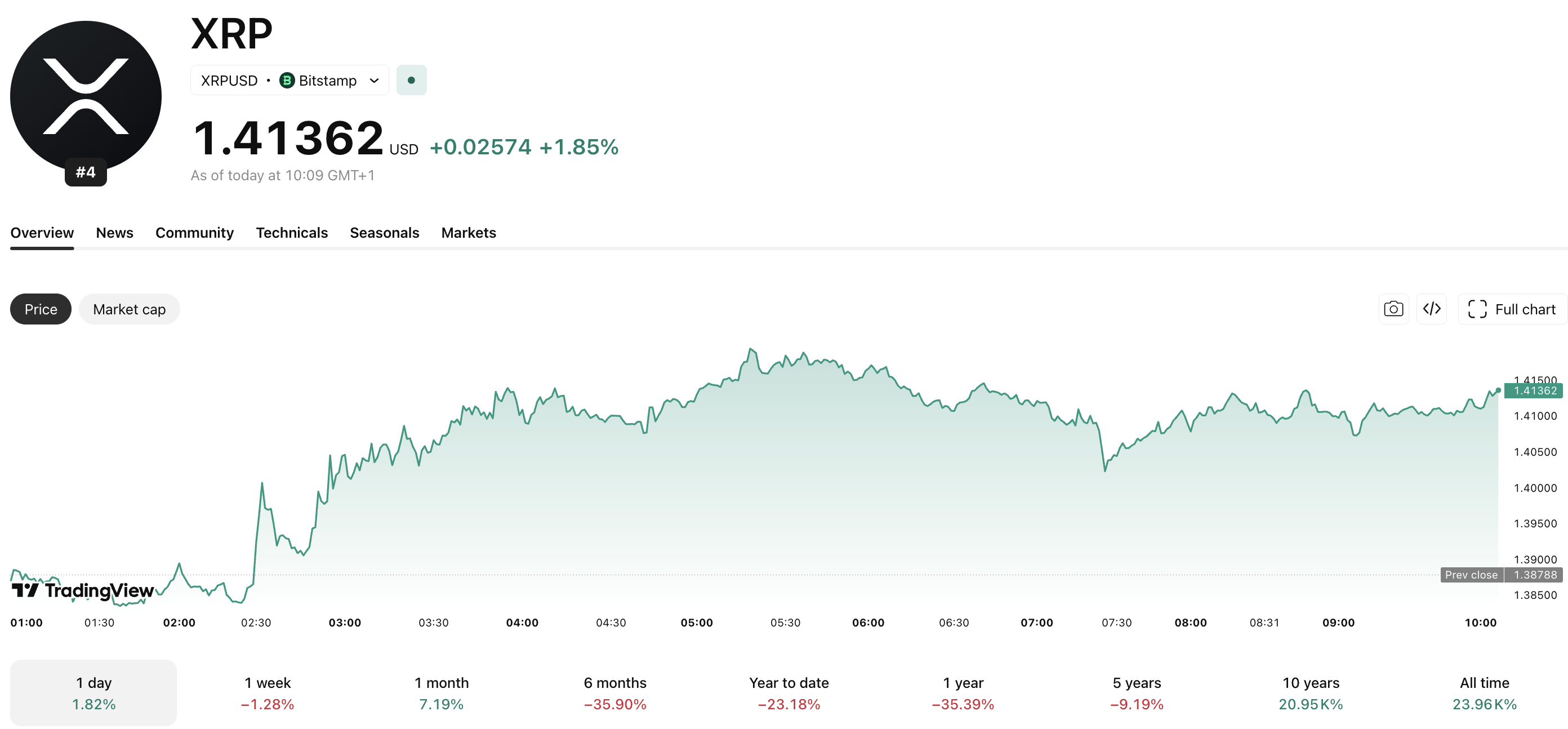
This development comes as the XRP price sits at $1.40, marking a day of sideways movement as the asset has only moved +0.5% to the upside, with $86.7Bn in 24-hour trading volume.
XRP News: What Does “Two Layers” Actually Mean for XRPH Liquidity?
The architecture uses XRPL as the settlement layer, providing three-second finality and minimal transaction fees. Base, Coinbase’s Ethereum Layer 2, offers access to the EVM-compatible DeFi ecosystem and deeper retail liquidity pools.
Historically, XRPL-native tokens have struggled with retail liquidity due to incompatibilities with EVM tools. By anchoring XRPHAI rewards to XRPL and enabling access via the Base Network, XRP Healthcare aims to enhance market participation.
In other XRP news, the MEXC listing marked the first liquidity event, enabling public price discovery for XRPHAI, essential for a functioning secondary market.
The next step is to maintain liquidity across multiple venues. Users earn XRPHAI instantly through the Proof of Health™ model in the XRPH AI App, where verified activities like health assessments generate real-time rewards.
XRPH serves both as an infrastructure token and a reward multiplier, promoting a compounding rewards structure for holders of both tokens.
Attention #XRP ledger utility seekers!!
This is one of the smartest setups I’ve seen.
Use → earn $XRPHAI
Hold $XRPH → boost rewardsTwo layers. One ecosystem.
If you’re serious, read this:
? https://t.co/zzwtCx9XlQ pic.twitter.com/Hgz6f86GaH— FinanceBro (@FinanceBroYT) April 14, 2026
The scenario framework for XRPH liquidity outcomes from here breaks down clearly:
Bull case: Base Network integration draws EVM-native retail volume into the XRPH ecosystem, XRPHAI demand rises through the Proof of Health™ participation loop, and the fixed supply cap (with a blackhole issuing address) creates sustained supply pressure as circulation expands toward the one-billion ceiling. Additional exchange listings, which the team has signaled as a near-term priority, would accelerate this trajectory.
Base case: Liquidity consolidates primarily on MEXC, with moderate Base Network activity; the XRPHAI rewards system drives steady user growth in emerging markets where the mobile-first DePIN model has the clearest product-market fit; and XRPH maintains its role as the infrastructure multiplier without a sharp demand catalyst in the near term.
Bear case: Cross-chain liquidity splits between XRPL and Base without sufficient bridging volume to sustain depth on either side, user acquisition stalls outside the initial MEXC listing event, and the rewards system fails to generate enough secondary demand to offset early holder selling pressure on the 100 million circulating tokens.
The most probable near-term outcome sits between the base and bull cases. The structural pieces are in place, fixed supply, live rewards, exchange listing, real-world pharmacy integration, but cross-chain liquidity depth takes time to accumulate, and the team’s execution on additional listings will be the primary variable to watch over the next two quarters.
DePIN Healthcare: Why Real-World Rails Change the Calculus
(SOURCE: CoinGecko)
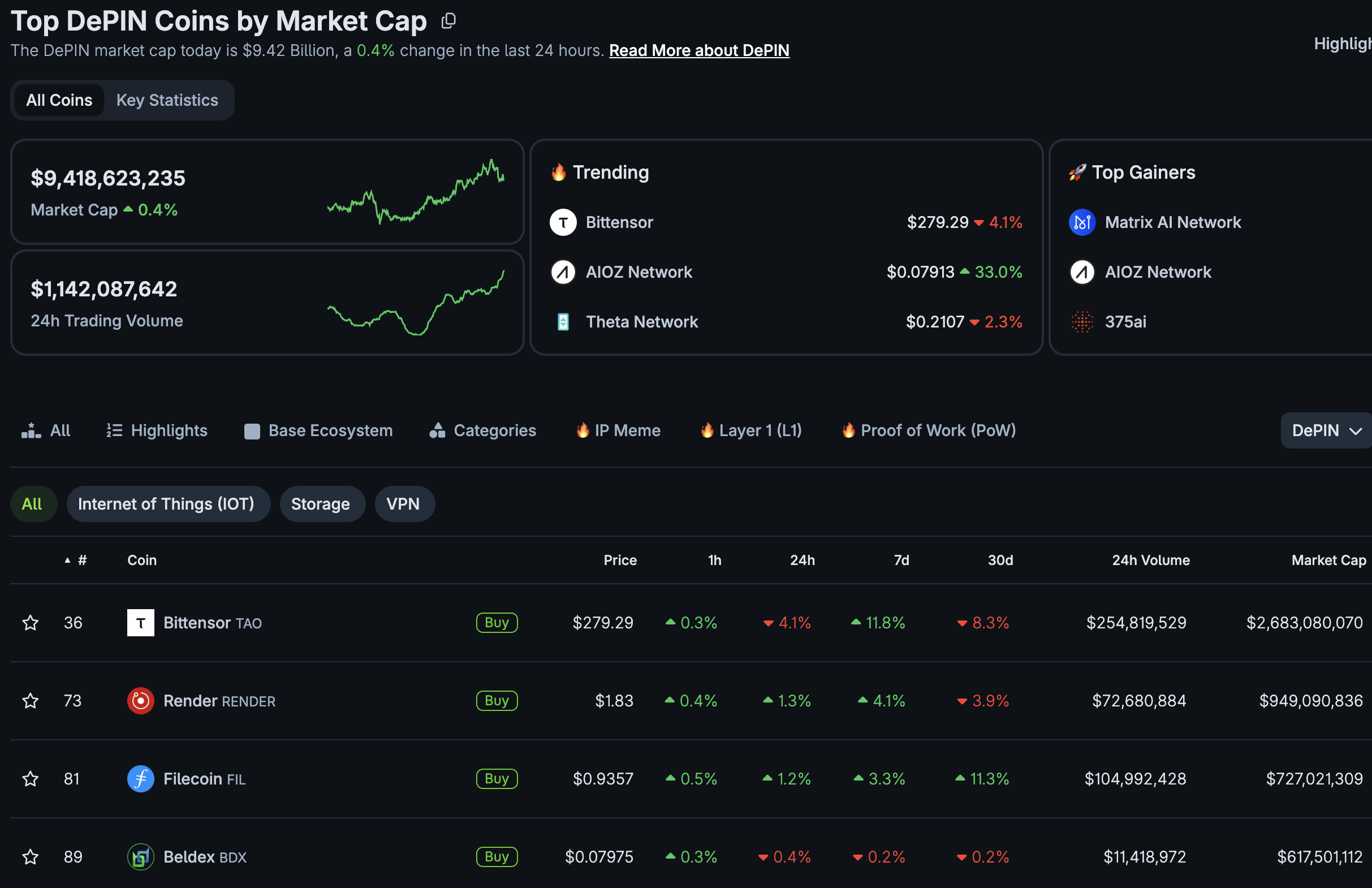
XRP Healthcare is categorized as Decentralized Physical Infrastructure (DePIN), distinguishing it from traditional DeFi tokens, which derive utility from real-world infrastructure. The XRPH Wallet enables blockchain payments for XRP, XRPH, and RLUSD at pharmacies and clinics without sharing sensitive patient data.
In more XRP news, the Prescription Savings Card, which works at over 68,000 US pharmacies like Walmart and CVS, exemplifies this utility. It allows users to earn XRPHAI through health activities in the app, redeemable for discounted medications, creating a beneficial feedback loop.
Founder Kain Roomes emphasized the integration of application, rewards, and infrastructure, while Co-Founder Laban Roomes highlighted the structured relationship between XRPHAI and XRPH tokens.
This dual-token system fosters ecosystem stability and incentivizes different types of holders. With 6.8 billion smartphone users globally, the potential user base for the XRPH AI App is vast, and its success in converting users into active participants will be crucial for its liquidity through 2026.


