

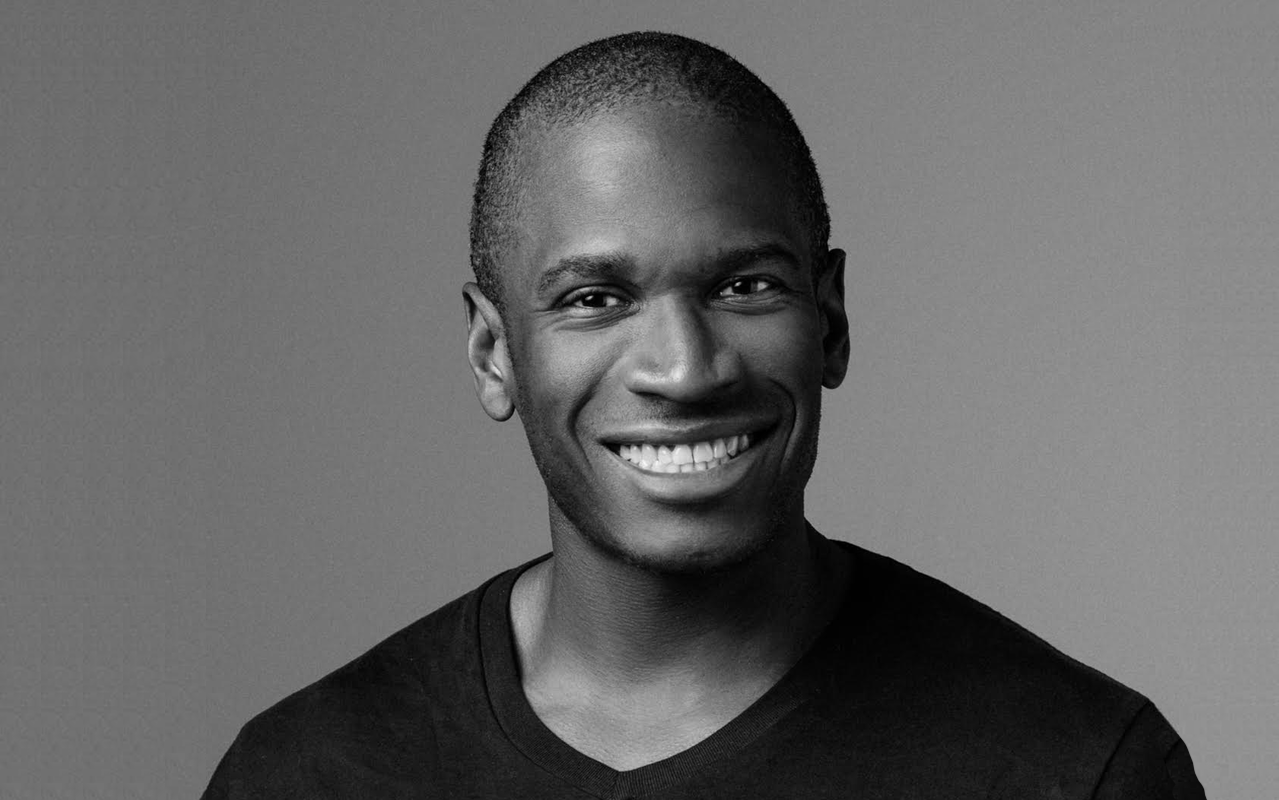
Arthur Hayes at Bitcoin Vegas predicted Bitcoin reaches $125K by year end, called for the CLARITY Act to be vetoed, and said Hyperliquid is the only altcoin that matters.
Key Takeaways:
Hayes: Bitcoin hits $100K after summer, $125K by end of 2026
Dollar liquidity improvement is the primary Bitcoin catalyst, not legislation
Hayes hopes CLARITY Act gets vetoed: “we don’t need it”
Selling Bitcoin and Ethereum to buy Hyperliquid
Hyperliquid is the only altcoin Hayes considers worth owning
Bitcoin to $125K and the Macro Case Behind It
Speaking at Bitcoin Vegas in an interview with Cointelegraph, Arthur Hayes said Bitcoin will hit $100,000 after the northern hemispheric summer and reach $125,000 by end of 2026. The driver is not regulation. It is dollar liquidity.
Hayes frames the path to $100K as contingent on the Iran situation not escalating into a broader conflict. He believes markets are already looking past the geopolitical risk, oil price spreads suggest goods are getting through despite political claims to the contrary. The more important variable is what he describes as wartime financing through commercial banks in the US and other economies, which improves dollar liquidity conditions. That liquidity improvement is what he believes is already causing Bitcoin to outperform NASDAQ and US SaaS stocks, and he expects that outperformance to continue into the fall.
The $125K year-end target sits above Bitcoin’s prior all-time high. Hayes is simultaneously selling Ethereum to buy Hyperliquid. That portfolio move implies something his price target does not state explicitly: he believes Ethereum underperforms Bitcoin in this liquidity cycle. The $125K call is not just a Bitcoin vs TradFi bet. It is a Bitcoin dominance bet within crypto.
The CLARITY Act, in his view, has nothing to do with the path to $125K. That separation is deliberate and connects to everything else he said in the interview.
On the CLARITY Act: “We Don’t Need to Pander to Politicians”
The most direct contradiction of industry consensus in the interview came on the CLARITY Act. Asked about its importance for the near-term market, Hayes did not hedge. He hopes the bill gets vetoed.
His reasoning is structural, not political. The CLARITY Act attempts to impose a single country’s regulatory framework on an open permissionless global system. Hayes argued that fixating on legislation from a country with four to five percent of the world’s population makes no sense for a technology that is borderless by design.
His position inverts the standard industry argument. Most crypto firms have spent years lobbying for regulatory clarity on the grounds that institutional adoption requires it. Hayes rejects the premise. His view is that crypto should not be trying to become more like TradFi — TradFi should be trying to become more like crypto.
The internal logic connects directly to his Bitcoin price thesis. If Bitcoin’s value derives from being ungovernable, then legislation that governs it reduces the source of its value. The CLARITY Act is not merely unnecessary by Hayes’s logic. It is actively contradictory to the reason Bitcoin is worth owning.
On whether the bill passes at all, Hayes is skeptical. He noted that in nearly two years of the Trump presidency, every committee hearing has produced a new objection and a new delay. He does not believe the CLARITY Act’s passage is important enough to Republican electoral prospects in November to generate the political will required to push it through. His closing position on the bill: “We don’t need to pander to politicians to get some piece of dog shit legislation passed.”
Dumping Ethereum, Loading Hyperliquid
He confirmed he recently purchased over $1M in Hyperliquid and described his current portfolio strategy as selling Bitcoin and Ethereum to buy assets he believes can appreciate faster. Hyperliquid is the primary destination for that capital.
Hayes’ thesis for Hyperliquid is built on two observations. First, it has real clients spending real money, the criterion Hayes applies to every asset he considers alongside token mechanics that return value through buybacks, burns, or staking rewards. Second, its position as a permissionless derivatives venue has been validated by events outside its control: when traditional markets close over weekends and politicians make major economic announcements, price discovery happens on Hyperliquid. Mainstream financial publications are now covering this phenomenon.
Hayes is not diversifying away from his Bitcoin thesis by buying Hyperliquid. He is doubling it. The most valuable post-Bitcoin asset, by his logic, is the one that most directly replicates Bitcoin’s core property: anyone can use it, no permission required, no jurisdiction check, no account approval. A venue where billions of dollars trade oil, S&P 500, and NASDAQ contracts with anyone holding an internet connection is structurally different from anything TradFi has built. That structural difference is what he is buying.
On Dogecoin, Hayes was blunt: he does not look at it. Projects without real clients, real revenue, and value-return mechanics are outside his framework entirely.
On Trump and Regulation: Nothing Is Great
Asked whether Trump has delivered on his crypto promises, Hayes said Trump has behaved like a politician, promising everything to every constituency and underdelivering across the board.
Hayes did not catalogue specific failures. His point was more fundamental: every regulatory win the crypto industry celebrates, ETF approvals, stablecoin frameworks, clear tax treatment, is by his logic a concession that makes crypto more like TradFi. Coinbase, Circle, and every firm that spent years lobbying in Washington built their strategy on the opposite assumption. Hayes’s answer when asked what he wants Trump to do for crypto before the end of his term was a direct rejection of that strategy: nothing. Nothing is great.
That answer is more radical than it sounds. Most crypto advocates want favorable regulation. Hayes wants none of it. His position implies that the industry’s years of lobbying effort, the meetings, the PAC donations, the Senate testimony, were not just unnecessary but counterproductive. Every framework that gets written, however favorable, is a framework that constrains a system designed to operate without one.
The three positions Hayes staked out at Bitcoin Vegas share a single underlying logic. Bitcoin reaches $125K because liquidity improves, not because Congress acts. The CLARITY Act should be vetoed because regulation of a permissionless global system by one country’s legislature misunderstands what the system is. Hyperliquid is the best altcoin because it operates as the world’s most accessible trading venue without asking anyone’s permission to do so. In each case, the argument is the same: crypto’s value is in being ungovernable. Legislation, approval, and political support are not the point. They never were.


