


Ethereum has dropped to its lowest point in May on the back of a macro shock, but the monthly structure that has held every significant low since 2020 remains intact above current price.
Key Takeaways
ETH at $2,245, May month low, down 0.97% on the day.
Hourly RSI at 30.80, signal at 50.50, spread 19.70 points.
Monthly trendline from 2020 tested and holding above $2,243.
Exchange deposit addresses at 9K: highest in over a year.
Monthly RSI at 45.49, not yet at prior cycle bottom extremes.
How May’s lowest price got made
The 1-hour ETH/USDT chart shows Ethereum at $2,245, down 0.97% on the day with a low of $2,243. That low is the lowest price Ethereum has traded in May. Price peaked near $2,420 in the first week of May, representing a decline of approximately 7% to the current level, driven by a sequence the hourly chart makes readable: a steady sell-off from the May 7 high, a failed recovery attempt near $2,380 on May 10, and then a sharp leg lower following the U.S. Producer Price Index release on May 13, which came in at 1.4% month-over-month against a 0.5% consensus – the largest single-month wholesale inflation gain since March 2022.
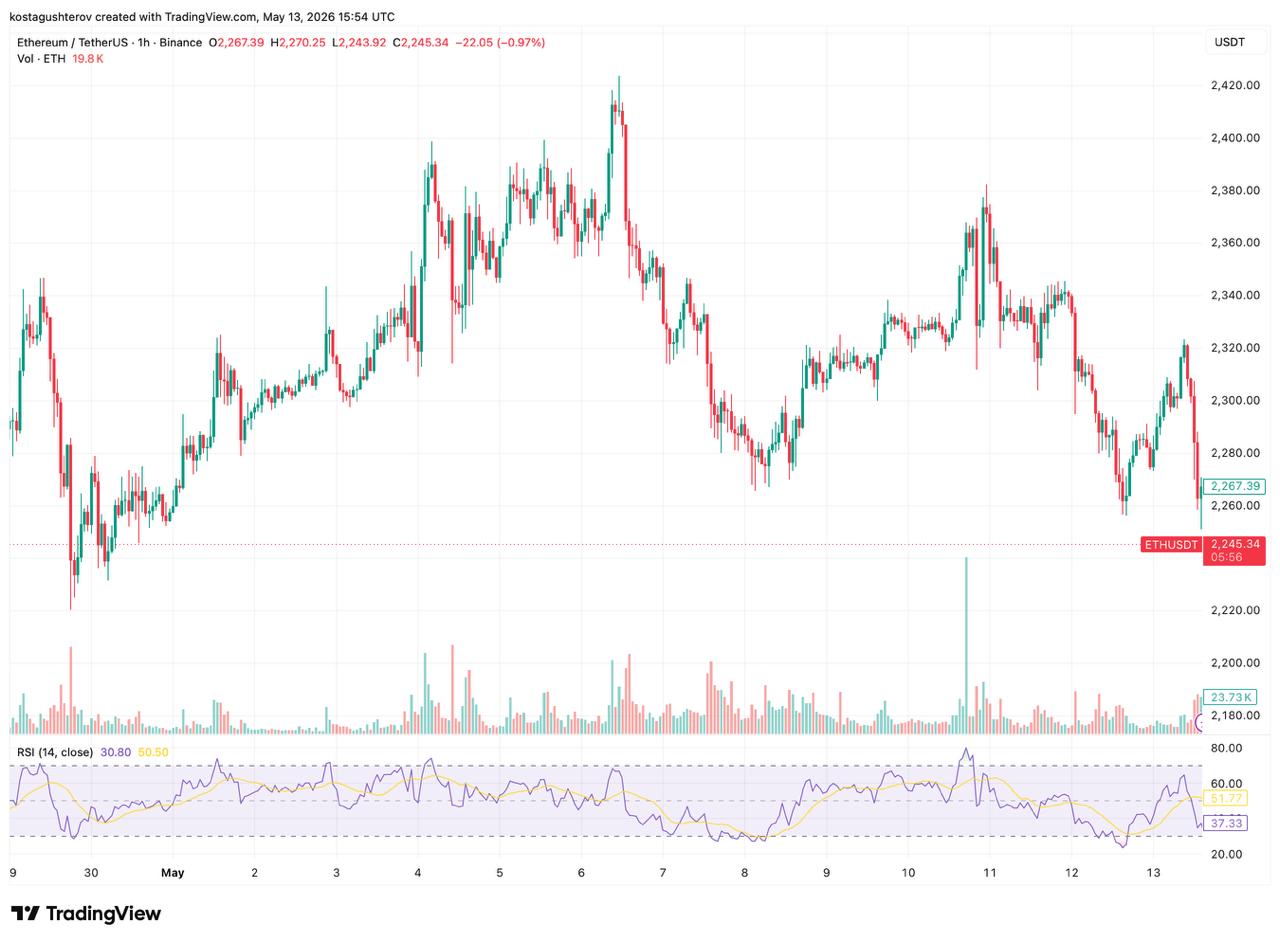
RSI on the hourly reads 30.80 against a signal of 50.50, a spread of 19.70 points and the widest gap visible anywhere on this chart. The prior RSI low on this chart reached approximately 37.33 around May 12; the current reading has broken below that level, confirming that momentum has deteriorated further than at any point in the past two weeks. At 30.80, RSI is one point from the threshold that technically defines oversold, meaning the hourly has not yet produced a mechanical bounce signal despite price sitting at the May low.
Why the monthly chart reframes what the hourly shows
The hourly decline looks severe in isolation. The monthly ETH/USDT chart places it in a different context. An ascending trendline drawn from the 2020 lows has connected every significant bottom in Ethereum’s post-2020 history: it ran beneath the 2022 bear low, provided the floor from which the 2023–2024 recovery launched, and now rises into the $2,200–$2,250 zone in May 2026. The monthly candle’s recorded low of $2,251.05 touched that trendline earlier in the month without breaking it; current price at $2,245 sits below that recorded candle low on the hourly but remains above the trendline’s rising support, which sits below both figures and requires a monthly close beneath it to constitute a structural break.
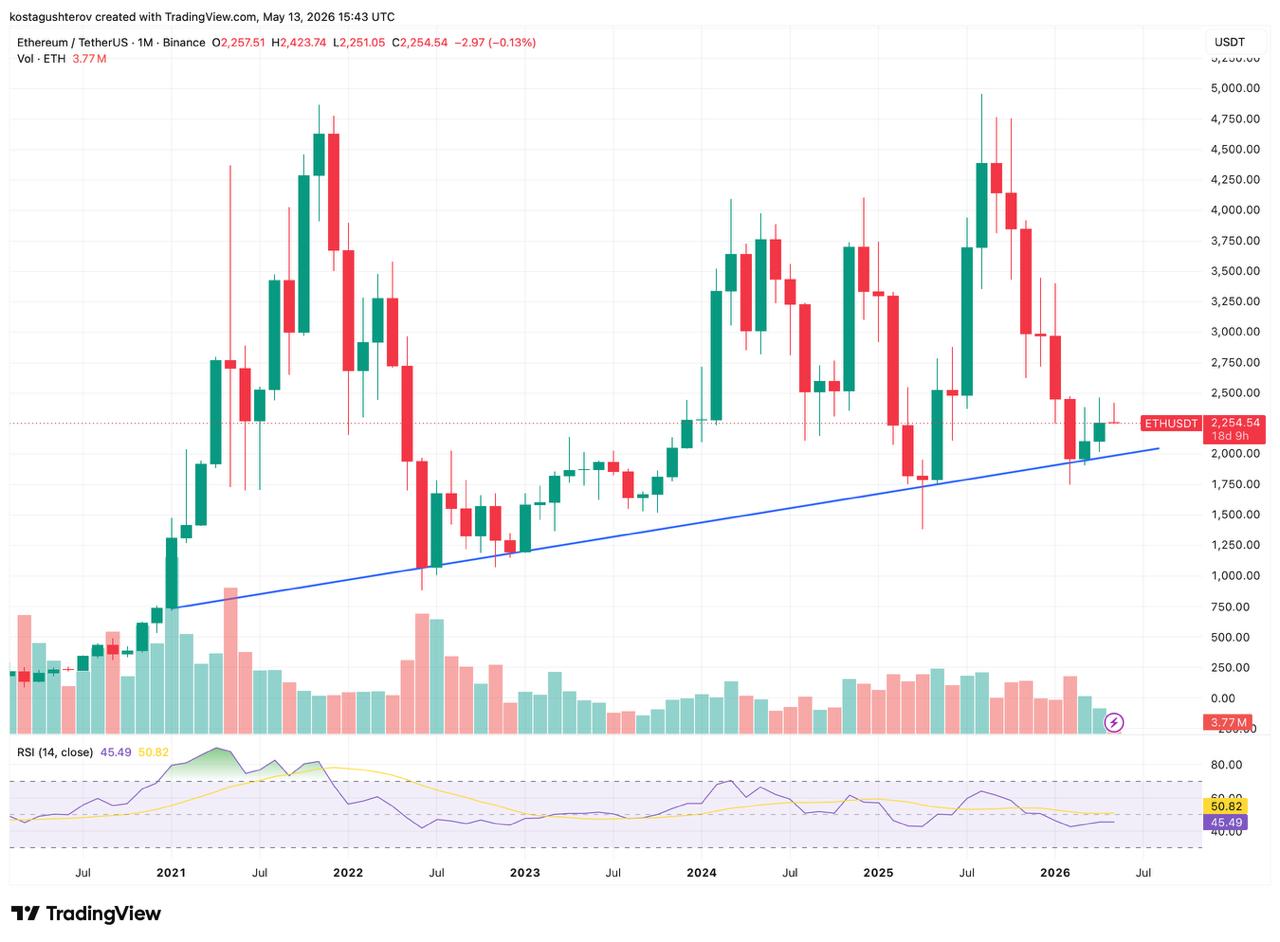
Three times since 2020 this trendline has been approached from above: once it broke briefly and recovered, once it held on contact, and now it is being tested a third time with hourly momentum at 30.80 RSI and retail deposit addresses at a one-year high. After each peak, whether the $4,800 high of November 2021, the $4,000 area of early 2024, or the $4,500–$5,000 range of 2025, Ethereum formed a base before the next leg began. In each case, trendline contact coincided with the final phase of that base formation. The current monthly candle has eighteen days remaining to close.
The monthly RSI at 45.49 is compressed but not at the floor: in 2022 it reached levels visibly below 40 before the recovery began, which means the current trendline test is arriving earlier in the momentum cycle than prior bottoms did, and the trendline may need to absorb more pressure before the pattern completes. That distinction separates a trendline touch from a confirmed bottom.
What the exchange data adds to the hourly sell-off
CryptoQuant’s Ethereum Exchange Depositing Addresses chart for Binance, analyzed by Rei Researcher, shows deposit addresses spiking to 9,000, the highest reading in over a year and far above the minor peaks seen through late 2025. The Exchange Inflow Total chart confirms the move is not isolated: elevated green bars at the current period show ETH moving onto the exchange at an accelerated rate, with the current total inflow reading at 180.9K ETH.
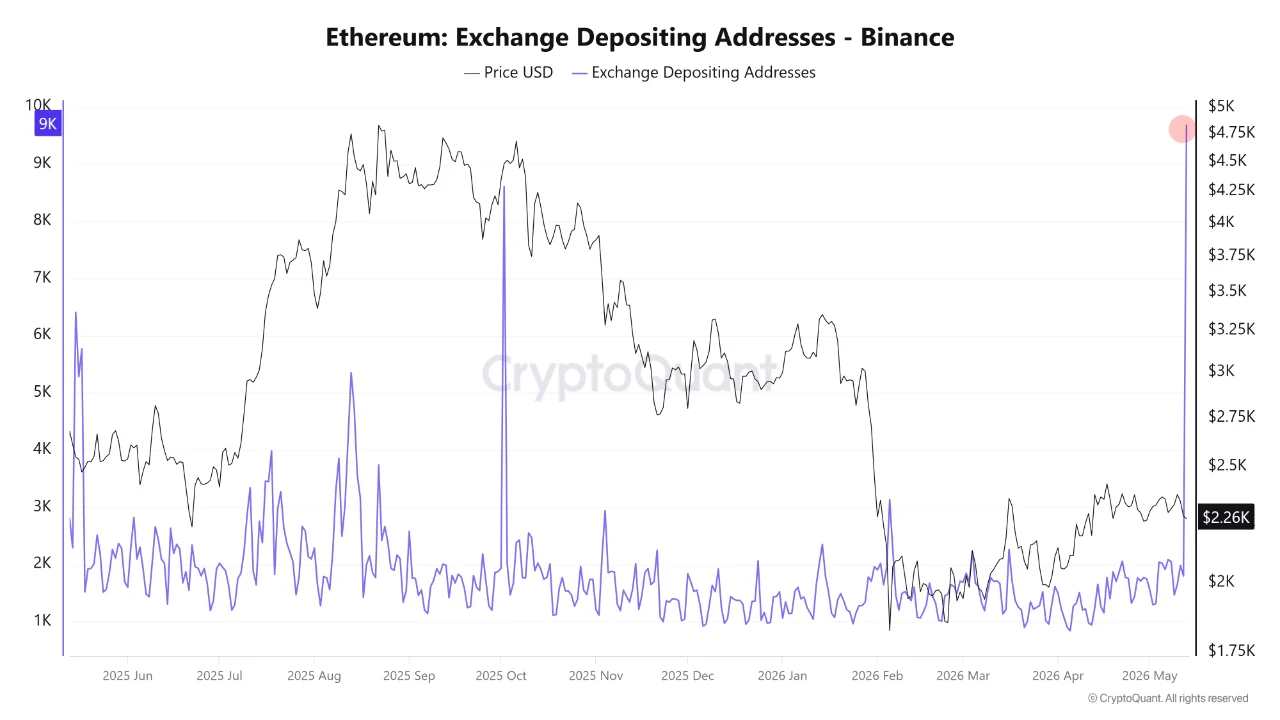
Rei Researcher frames the question directly: panic selling or profit taking? The distinction matters because deposit address spikes near structural lows tend to represent retail holders who are either afraid or losing patience. When inflows spike near price highs, as they did during the 2025 peak period when ETH was trading above $4,000, the behavioral reading points toward distribution into strength. Sellers at $2,245 near a multi-year trendline low are, analytically, more likely to be capitulating than distributing, though the data alone cannot confirm which it is.
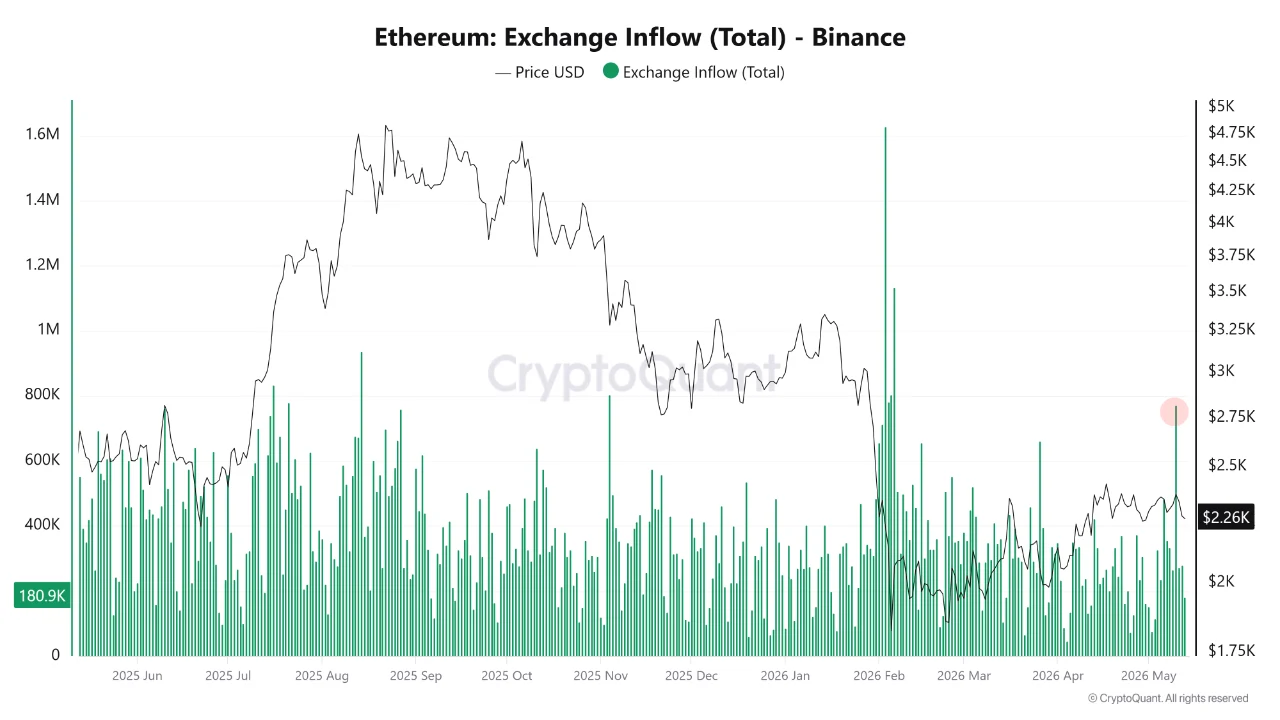
A deposit address spike near trendline support does not automatically signal a bottom: it signals that retail holders are making a decision under pressure, and whether that decision proves to be the wrong one depends on whether the trendline holds in the sessions that follow. In the 2023 pre-recovery period, a comparable deposit spike near structural support preceded the base formation that eventually launched the 2024 bull leg. The setup is analogous; the resolution is not yet known.
What a May close above $2,350 or below $2,200 means for the trendline
A monthly close above $2,350, clearing meaningful distance from the trendline and recovering the ground lost in the PPI sell-off, combined with the hourly RSI crossing back above its signal line at 50.50 within the next 48 to 72 hours, would confirm the trendline is absorbing the current selling pressure and the base formation pattern from prior cycles is repeating.
A monthly close below $2,200, breaching the trendline on the May candle with deposit addresses remaining elevated above 7,000 into the following week, would indicate the trendline has broken and the structural support that has marked every significant Ethereum low since 2020 is no longer intact, requiring a reassessment of where the next base forms.


