

In Trump crypto news today, a New York Times investigation claims that the Commodity Futures Trading Commission (CFTC) reassigned staff who raised concerns about cryptocurrency firms linked to the US President, particularly mid-level officials questioning registration approvals and enforcement deferrals for politically connected entities.
This raises significant concerns about the CFTC’s autonomy as the primary US regulator of crypto derivatives during a time of increasing institutional participation.
"In the past 16 months of the Trump administration, the commission has shrunk [the CFTC's] work force, purged career officials, sharply curtailed crypto enforcement and helped out prediction markets at virtually every turn." https://t.co/W80xpEVD8a
— David Weigel (@daveweigel) May 24, 2026
The market must now consider whether this investigation signals a lasting repricing of regulatory risk in US crypto derivatives or is merely a temporary issue that sophisticated investors will overlook once enforcement data prevails.
In FY 2023, the CFTC filed 47 digital-asset-related enforcement cases, making crypto oversight its top operational priority. This reputation for objective enforcement is now under scrutiny.
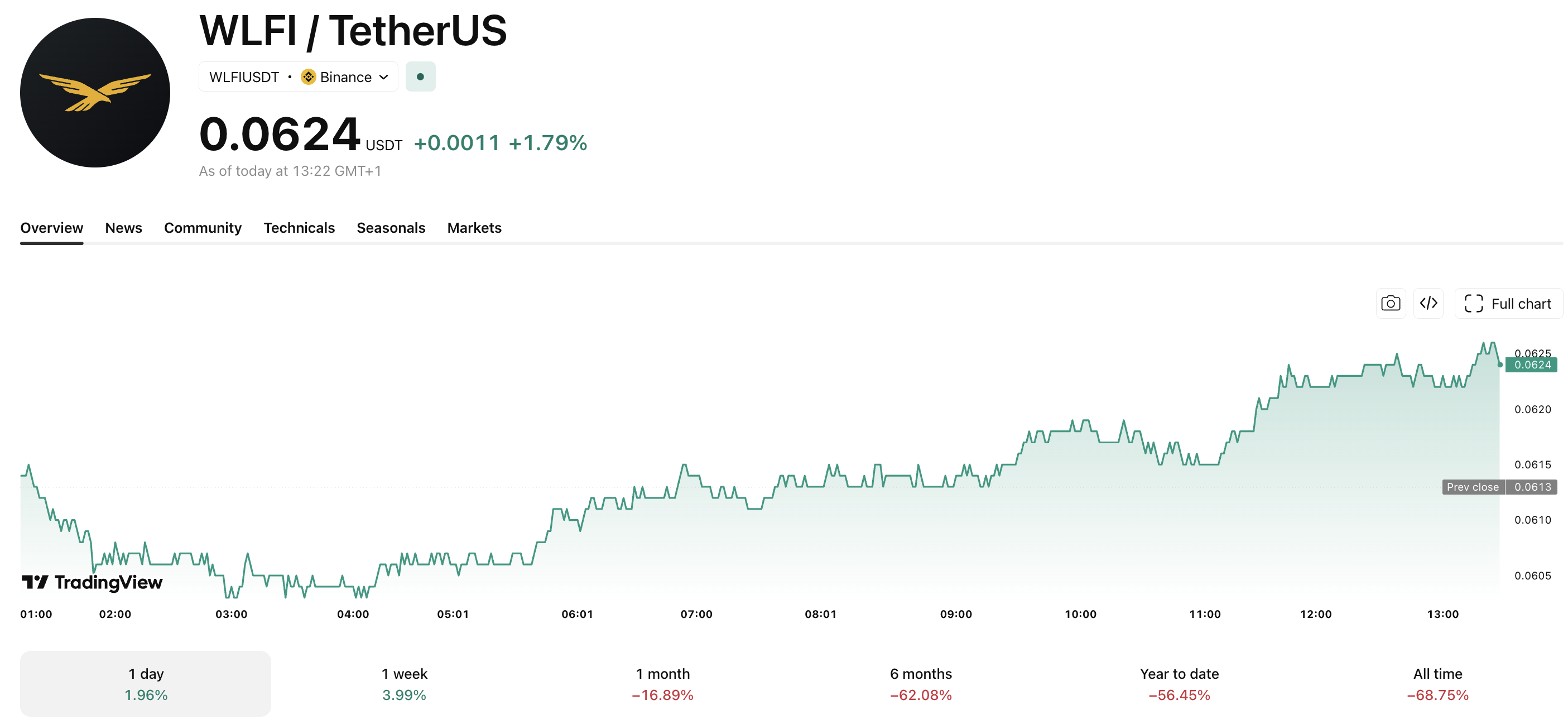
(SOURCE: TradingView)
Trump Crypto and CFTC Neutrality: What the Purge Allegation Actually Signals for Derivatives Market Structure
The CFTC plays a crucial role in institutional crypto by providing compliance certification that legitimizes US-domiciled derivative exposure for regulated allocators.
The oversight of CME Group’s Bitcoin futures and options allows hedge funds and asset managers to access crypto exposure under CFTC regulations. Key functions like position limit enforcement and market surveillance ensure this credibility, which hinges on the perception of impartiality.
Concerns have arisen regarding potential selective enforcement, especially if CFTC staff were reassigned after flagging Trump-related entities, undermining the agency’s political neutrality. This raises compliance risks distinct from those associated with typical regulatory uncertainty.
Before the recent NYT report, dissent within the CFTC was already evident, as former Commissioner Christy Goldsmith Romero and Commissioner Caroline Pham expressed concerns over enforcement actions, including the Trafigura Trading LLC settlement. This internal discord has escalated into a governance issue that allocators must consider.
Why Perceived Political Capture Now Functions as a Market Risk Signal for Institutional Crypto
NYT out with a jaw dropping investigative report on the Commodity Futures Trading Commission. 60 Minutes reported last Sunday on some of this, too. The NYT report is a must-read, the 60 Minutes report should then be watched. 1/3 pic.twitter.com/tSyyQA0uR8
— Jason Kint (@jason_kint) May 24, 2026
Institutional crypto participation in the US hinges on a “regulatory certainty” and “non-arbitrary enforcement” framework, allowing regulated asset managers to increase derivative exposure via CFTC-supervised vehicles.
According to Morgan Lewis’s analysis of the CFTC’s 2023 Enforcement Report, institutional capital views the CFTC’s credibility as a proxy for compliance, indicating a stable regulatory environment for US-domiciled instruments relative to offshore alternatives.
However, if this credibility is undermined by claims of regulatory capture, the compliance outlook shifts. Allocators relying on CME Bitcoin futures face two perspectives: a political alignment with Trump-affiliated crypto entities could signal a friendlier enforcement environment.
It could also signal a discount due to inconsistent regulations that favor connected participants. Both views are valid: the first suggests risk-on sentiment, while the second indicates a risk-off stance for those who rely on the CFTC’s impartiality in assessing market risk.
Past instances of regulatory uncertainty, such as the FTX collapse and debates over CFTC versus SEC jurisdiction, have showcased significant volatility in CME Bitcoin futures as institutional players adjusted their hedging strategies.
The current CFTC investigation introduces new political dynamics, similar to those of previous jurisdictional ambiguities, prompting potential shifts toward offshore or SEC-regulated options. Essentially, the crypto regulatory framework is being stress-tested at the regulatory level rather than through rule enforcement.


