

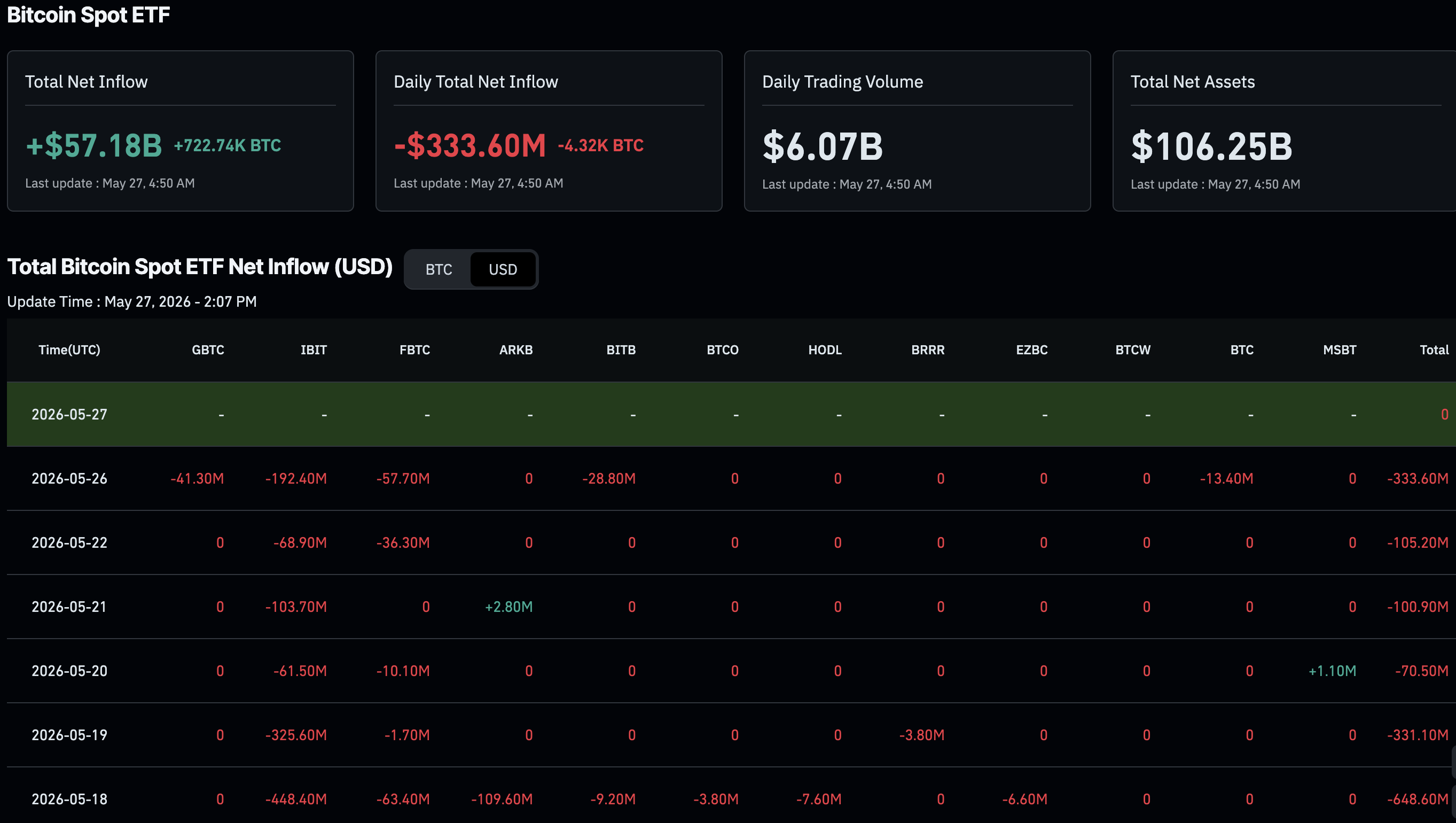
US spot Bitcoin ETFs experienced $105.19M in net outflows on May 22, marking the sixth consecutive day of redemptions and bringing the total over that period to approximately $1.55Bn, or about 1.6% of total ETF assets.
BlackRock’s IBIT and Fidelity’s FBTC led these outflows, with around $1.257Bn in net redemptions from May 18–22. Bitcoin traded at $75,912.3 on Tuesday, down 1.9% after nearing $78,000 previously.
The market is left to determine whether this trend indicates institutional de-risking due to geopolitical factors or whether the ETF channel, a key driver of Bitcoin’s rally, faces sustained demand contraction, affecting future price movements.
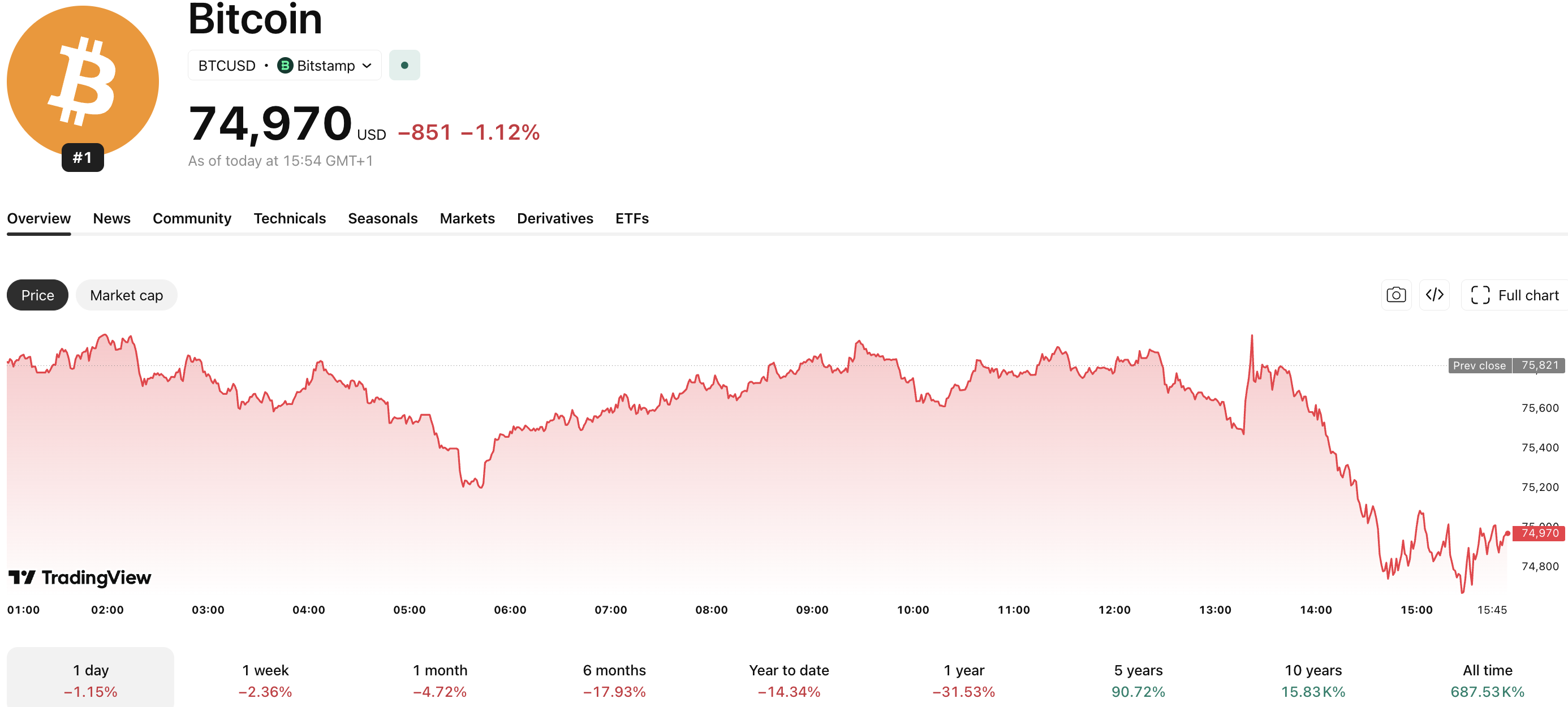
At the time of writing, BTC USD is trading at around $75,000, down -2.5% on the day, with analysts warning that a daily close below $75,000 could spell disaster for the markets.
$BTC 4-YEAR CYCLE IS PLAYING OUT PERFECTLY
Every 4 years the same thing happens
People buy the bounce thinking the worst is over
They're wrong. They always are at this stage
2017 buyers learned that the hard way
2021 buyers learned it too
Right now the chart is showing the… https://t.co/lDllKldFkw pic.twitter.com/EvSxCjm3xE
— bee? (@0xbeehive) May 27, 2026
Bitcoin ETF Outflows: What the Persistent Selling Pattern Actually Reveals
Six consecutive days of outflows indicate a significant shift in the market. After consistent net inflows in Q1 2025, with Bitcoin ETFs like IBIT and FBTC accumulating substantial amounts, a reversal began around May 18, signaling deliberate institutional repositioning rather than passive movement.
The $1.55 billion in six-day outflows, though only 1.6% of total ETF assets, creates substantial selling pressure in the spot market, as ETF redemptions require custodians to sell Bitcoin.
Each outflow translates into direct market impact during periods of reduced bid depth due to macro uncertainty. This process differentiates ETF-driven sell-offs from sentiment-based ones.
For context, the late-April 2025 FOMC meeting caused around $490M in outflows over three days before stabilizing. The current six-day outflow, averaging $258M per day, has already surpassed that event’s cumulative total, indicating a significant trend.
Notably, Ethereum ETFs saw $216M in losses, while altcoins like XRP and Solana saw only modest inflows. This reflects a broad-based reduction in crypto ETF exposure among the institutions that previously drove inflows, rather than a mere rotation into altcoins.
(SOURCE: CoinGlass)
DISCOVER: Next Crypto to Explode in 2026
Why Bitcoin Failed as a Safe Haven During Middle East Tensions
U.S. military strikes in southern Iran disrupted a peace deal, leading to retaliation and escalating tensions in the Strait of Hormuz. This conflict tested Bitcoin’s “Digital Gold” narrative, which ultimately proved to be a failure.
While Bitcoin is often seen as a long-term store of value, it failed to act as a short-term hedge in institutional portfolios. Instead of being sought after during geopolitical risks, Bitcoin was sold alongside equities as investors cut overall exposure.
A price jump on May 23 indicated Bitcoin’s movement aligned more with conflict probabilities than as a hedge.
Additionally, rising Treasury yields and Federal Reserve rate expectations increased the opportunity cost of holding non-yielding assets, causing Bitcoin to behave like a high-beta risk asset rather than a safe haven.
Bitcoin Price Structure: The Levels That Define What Happens Next
(SOURCE: TradingView)
BTC has been in a bearish pattern since it faced resistance at $82,000, and the recent price action has created significant structural weight. To confirm that selling pressure has eased, BTC needs to reclaim the $79,000–$80,000 range on a closing basis, with positive ETF flows; otherwise, the trend is likely to continue downward.
The next demand zone is at $74,000–$75,000, where on-chain cost-basis clusters for short-term holders provide support. Below that, $71,000–$73,000 is a deeper support level if outflows persist.
K33 Research notes that $83,000 is the breakeven point for many ETF holders, and staying below it could prolong institutional outflows.
This week’s key macro event is Thursday’s April PCE inflation report, the Fed’s preferred inflation measure. A higher-than-expected print could reinforce fears of rate hikes and pressure ETFs, making a drop to the $74,000–$75,000 zone more likely. Conversely, a softer report could reduce rate risk and stabilize market conditions, potentially reigniting buying interest.


