

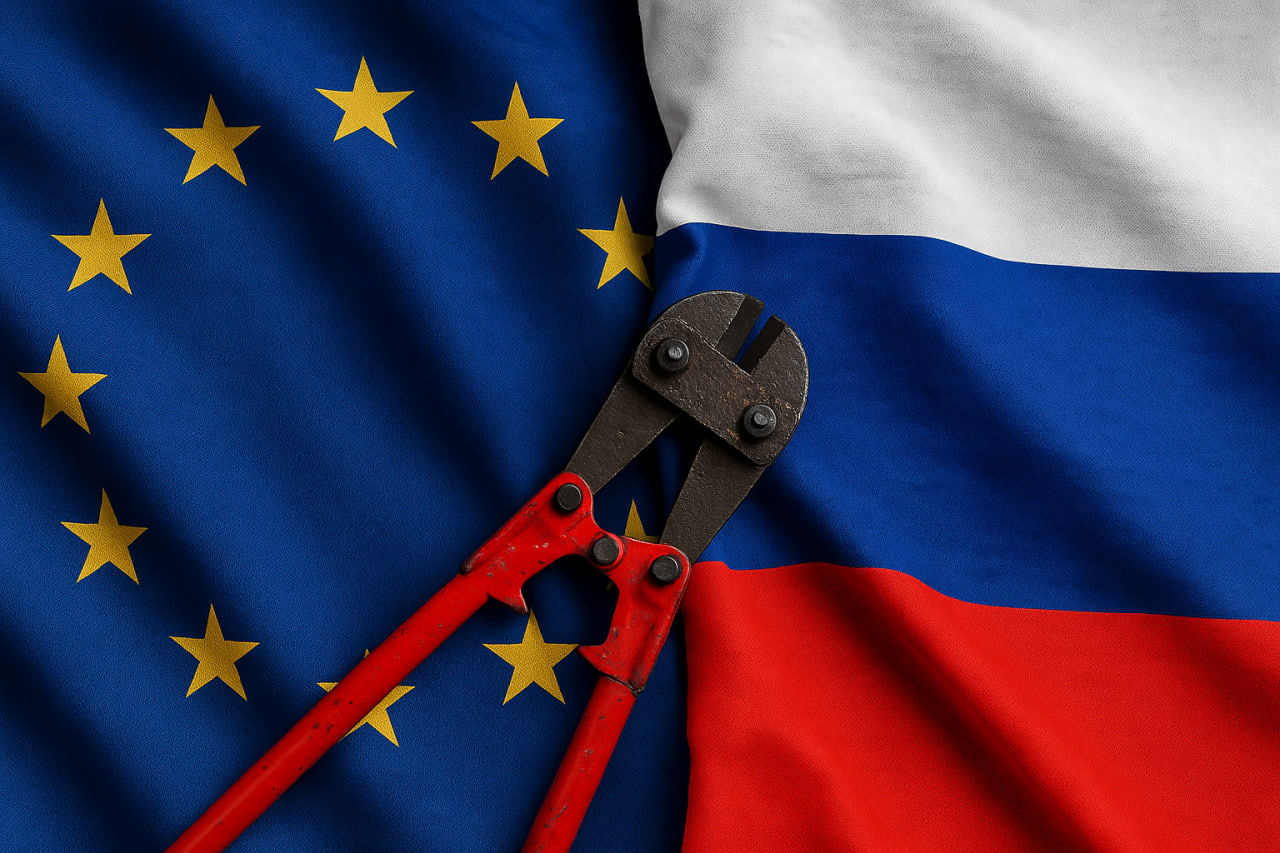
The European Commission has put forward its blueprint for a 21st sanctions package against Russia. If unanimously approved by EU member states, the framework will introduce the bloc's most expansive crypto restrictions yet, extending penalty exposure beyond individual firms to entire countries hosting platforms used to route money around existing measures.
The Escalation of EU-Russia Crypto Sanctions
April 2022
5th Sanctions Package
Imposed a €10,000 wallet limit on Russian nationals (Article 5b, Journal L 111/2022).
October 2022
8th Sanctions Package
Removed value thresholds to enforce a total ban on all crypto wallet and custody services.
April 2026
20th Sanctions Package
Pivoted to a sectoral ban on Russian CASPs, the digital ruble, and the RUBx stablecoin.
June 2026 (Proposed)
21st Sanctions Package
Introduces full third-country bans, blacklisting 11 targeted platforms to block evasion rails.
The EU’s crypto restrictions against Russia have tightened progressively across four major eras since 2022, closing specific compliance gaps exposed by each previous round.
The 5th sanctions package, adopted in April 2022, imposed a €10,000 limit on crypto-asset wallet services. Under that framework, EU-regulated Crypto Asset Service Providers (CASPs) were prohibited from providing wallet, account, or custody services to Russian nationals or residents if the total value exceeded that threshold, per Article 5b of the EU Official Journal L 111/2022.
The 8th package, adopted in October 2022, removed that threshold entirely. All crypto wallet, account, and custody services to Russian nationals, residents, or entities were banned regardless of value, according to the European External Action Service.
The 20th package, adopted in April 2026, marked a structural shift. Rather than targeting individual users or wallets, the EU imposed an absolute prohibition on EU persons or entities engaging in direct or indirect transactions with any CASP or decentralized platform established in Russia, according to the European Commission. That package also banned transactions using RUBx, a ruble-backed stablecoin, and blocked all access to Russia’s Central Bank Digital Currency, the digital ruble. Compliance firms Chainalysis and TRM Labs both documented the package’s scope at the time of adoption.
While the early 5th and 8th packages targeted value thresholds and individual users, the 20th pivoted to blacklisting entire Russian ecosystems. By extension, the newly proposed 21st package systematically targets the third-country workarounds hosting those platforms. If this architecture continues to dismantle evasion rails layer by layer, any subsequent 22nd package will likely target the underlying financial infrastructure – such as regional correspondent banking networks, stablecoin issuers, or local fiat off-ramps serving non-aligned hubs.
The 21st Package: From Firms to Jurisdictions
The proposed 21st sanctions package escalates the framework further. The new measures expand transaction bans to 20 crypto platforms and firms operating in third countries identified as helping sanctioned Russian entities circumvent existing restrictions. The Commission also aims to blacklist 11 specific crypto platforms outright, according to Reuters.
More significantly, the package introduces a mechanism that has no precedent in prior EU sanctions rounds: a full third-country ban on crypto asset services. Under this framework, the EU would gain the authority to cut off entire jurisdictions — not just individual entities — from crypto service access if those countries are found to be enabling Russian sanctions evasion.
European Commission President Ursula von der Leyen described the measure directly: “For the first time, we will introduce the possibility of a full third-country ban for crypto-asset services. It will act as a strong deterrent for the countries hosting platforms that help Russia evade our sanctions.”
The New Paradigm for Global Crypto Hubs
For a compliance officer at an exchange operating in Dubai, Almaty, or Bishkek, this third-country ban mechanism introduces an entirely new category of institutional risk that entity-level blacklists never created.
Previously, compliance workflows centered on screening individual counterparties – running wallet addresses against OFAC and EU designation lists, flagging Russian nationals, and rejecting transactions above threshold values. That framework assumed the exchange itself was safe as long as its user transactions were filtered.
A jurisdiction-wide designation flips that assumption on its head. If the EU designates a country as a sanctions-evasion hub, every platform domiciled there faces market exclusion regardless of its independent compliance posture. The compliance response must therefore shift from transaction-level filtering to existential, structural decisions: whether to redomicile, whether to implement automated jurisdictional geoblocking for all EU-origin web traffic, or whether to aggressively pursue bilateral regulatory carve-outs with EU supervisory bodies.
Enhanced KYC alone no longer solves the problem. An exchange in Kazakhstan running full MiCA-equivalent onboarding procedures still faces total market exclusion if its host nation is designated. Blockchain analytics firm Elliptic noted in its analysis of prior packages that recent rounds had already begun targeting the architecture of crypto sanctions evasion rather than individual actors; the 21st package takes that macro approach to its logical conclusion. This structural shift creates direct pressure on private crypto firms to actively lobby their host governments for tighter, transparent Russia-enforcement frameworks, or risk losing Western market access as collateral damage.
The Geopolitical Calculus
Ultimately, the third-country ban functions as much as a diplomatic instrument as a financial one. By threatening to cut entire regional jurisdictions off from EU crypto markets, Brussels is effectively forcing non-aligned countries – including Central Asian exchanges, Gulf-based platforms, and Southeast Asian brokers – to choose sides.
For smaller economies where EU economic integration and market access remain paramount, this mechanism provides meaningful leverage. For regions where EU capital is less critical, the measure may have limited bite. The real test of this package is not just its unanimous adoption by the Council of the EU – which is expected to face standard diplomatic debates – but whether the targeted host countries treat EU market exclusion as an acceptable cost of doing business, or a liability too steep to ignore.


