

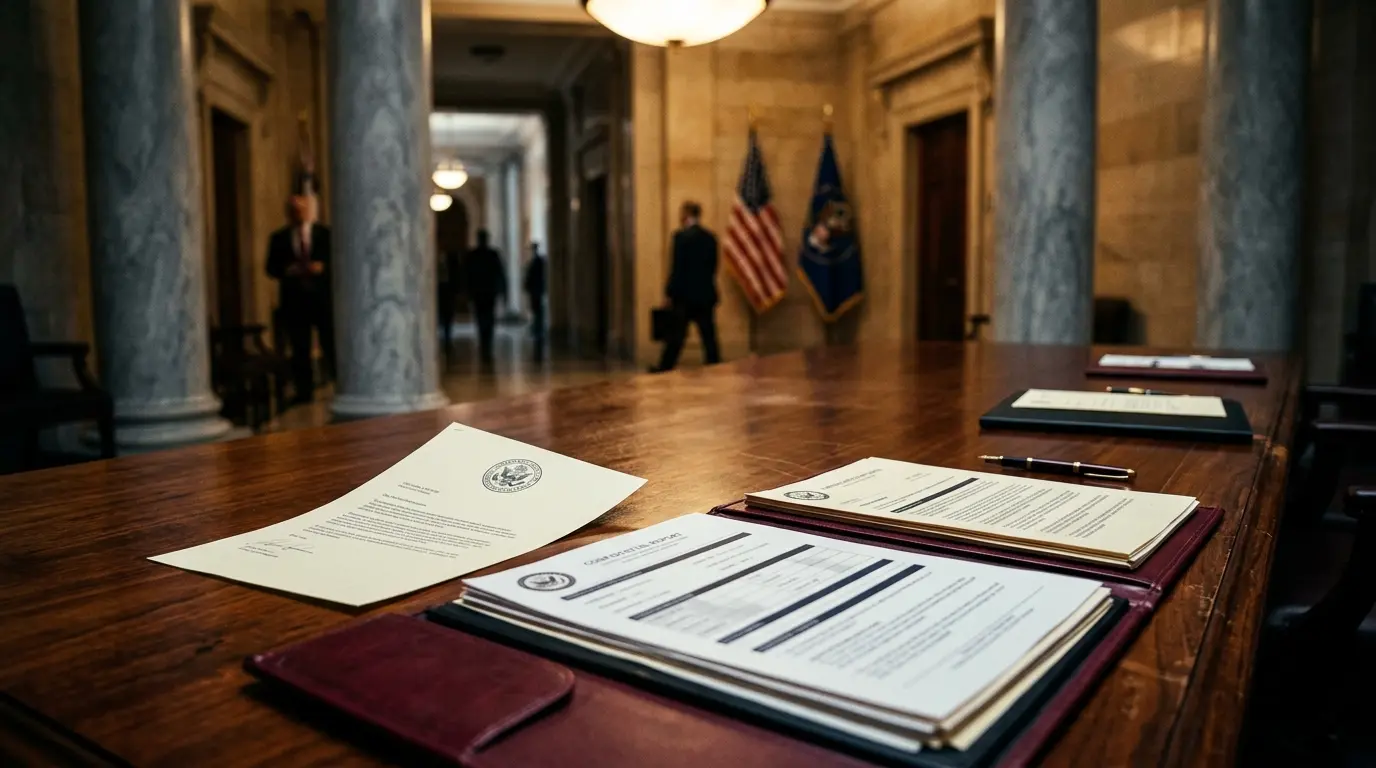
Senator Elizabeth Warren, Democrat of Massachusetts and the Senate’s most persistent institutional critic of digital assets, sent a formal letter to the Office of the Comptroller of the Currency in May 2026 challenging the legality of nine national trust bank charters approved for Ripple and other crypto-focused firms since December 2024.
Among them are Ripple, Circle, Paxos, BitGo, Coinbase, and Fidelity Digital Assets, demanding full charter files, internal legal analyses, and confidential application materials by June 1, 2026.
This is not simply a senator conducting routine oversight of a federal regulator. It is the most direct attempt yet to deploy congressional pressure against an independent agency’s chartering authority.
This is to prevent crypto firms from obtaining federal banking infrastructure that would permanently integrate them into the US financial system, and the industry’s invocation of “Operation Choke Point 3.0” is a deliberate, historically specific accusation rather than rhetorical excess.
$XRP is sitting right at the support of the horizontal channel
this is the level that has to hold to keep the structure intact
watch the reaction here, the bounce or the break tells us the next move pic.twitter.com/2kjlI2iLyp
— Don ? (@DonWedge) May 28, 2026
Operation Choke Point: The Regulatory Pattern, the 2023 Precedent, and Why Warren’s Letter Maps onto Both
Operation Choke Point, initiated by the Department of Justice under the Obama administration in 2013, pressured banks to sever ties with certain legal industries labeled as “high-risk,” such as payday lenders and firearms dealers, without legislative action. It was terminated in 2017 amid criticism that it constituted regulation by de-risking.
In early 2023, the crypto sector referred to a new wave of regulatory pressures as “Operation Choke Point 2.0,” following the closures of Silvergate Bank and Signature Bank, which primarily served the digital asset industry.
Interagency guidance effectively limited crypto firms’ access to banking services, and this was compounded by informal pressure from regulatory bodies such as the FDIC and the Federal Reserve.
Warren’s May 2026 letter highlights a new phase, targeting the OCC’s power to grant bank charters to crypto firms. She argues that these chartered entities aim to bypass traditional banking safeguards and claims the OCC unlawfully granted these charters under the National Bank Act.
The OCC has defended its authority in court and previously won cases regarding special-purpose charters, focusing on the distinction between accepting deposits and being structured as non-deposit-taking trust banks.
The Ripple OCC Charter Application: What the Trust Structure Provides and Why Incumbents Perceive It as a Threat
MADNESS: ??The Digital Chamber just went to WAR with Elizabeth Warren to DEFEND Ripple’s $30,000,000,000,000+ federal bank charter. pic.twitter.com/Doaz8O3s3K
— STEPH IS CRYPTO (@Steph_iscrypto) May 28, 2026
Ripple has received conditional approval for a national trust bank charter from the OCC, distinguishing it from a commercial banking license. This charter provides federal preemption of state money-transmitter licensing, reducing operational costs by eliminating the need to comply with multiple state requirements. It also establishes a direct supervisory relationship with the OCC, ensuring uniform national standards.
However, the charter does not grant access to Federal Reserve payment systems, which requires a Fed master account. Currently, the Fed has paused decisions on Tier 3 master accounts, which include crypto trust banks, potentially delaying Ripple’s access to these payment rails until late 2026. This situation creates two institutional challenges for Ripple.
Ripple’s strategic pursuit of this charter seems aimed at reclassifying XRP and its products as federally supervised instruments. This would complicate future SEC or congressional efforts to classify XRP as an unregistered security. The SEC’s admissions regarding prior enforcement actions have already altered the legal landscape, and an OCC trust charter could reinforce Ripple’s regulatory standing.
Brad Garlinghouse, Ripple’s CEO, framed the application as a challenge to traditional banks, questioning their fears of competition from a regulated crypto entity and arguing that such a move would eliminate the “unregulated crypto” characterization that justifies exclusionary practices.
Industry Reaction: The Digital Chamber’s Mobilization and the Structural Argument Against Warren’s Position
?Digital Chamber DECLARES WAR On Warren — DEFENDS Ripple’s OCC Bank Charter ????
The BIGGEST blockchain trade group @DigitalChamber just FIRED BACK at Elizabeth Warren over crypto bank charters. ?
The Digital Chamber OFFICIALLY sent a LETTER to the @USOCC DEFENDING crypto… https://t.co/AXKA81XJNM pic.twitter.com/rE07g2RpeJ
— Diana (@InvestWithD) May 27, 2026
The Digital Chamber, a crypto advocacy group with over 250 members, submitted a letter to OCC Comptroller Jonathan Gould in defense of the agency’s chartering authority following Elizabeth Warren’s comments.
CEO Cody Carbone argued that Warren’s interpretation of banking law misreads the OCC’s established power to issue trust bank charters. He emphasized that the 2025 GENIUS Act created a federal framework for stablecoin issuers, which includes firms seeking OCC charters.
Carbone pointed out that denying these charters would undermine the legislation’s coherence. The pushback from traditional financial institutions against crypto legislation suggests that Warren’s stance aligns with established banking interests.
The industry’s mobilization aims to create a documented record to complicate any future OCC decisions to reverse approvals under political pressure, increasing reputational and litigation risks for the regulator.


